
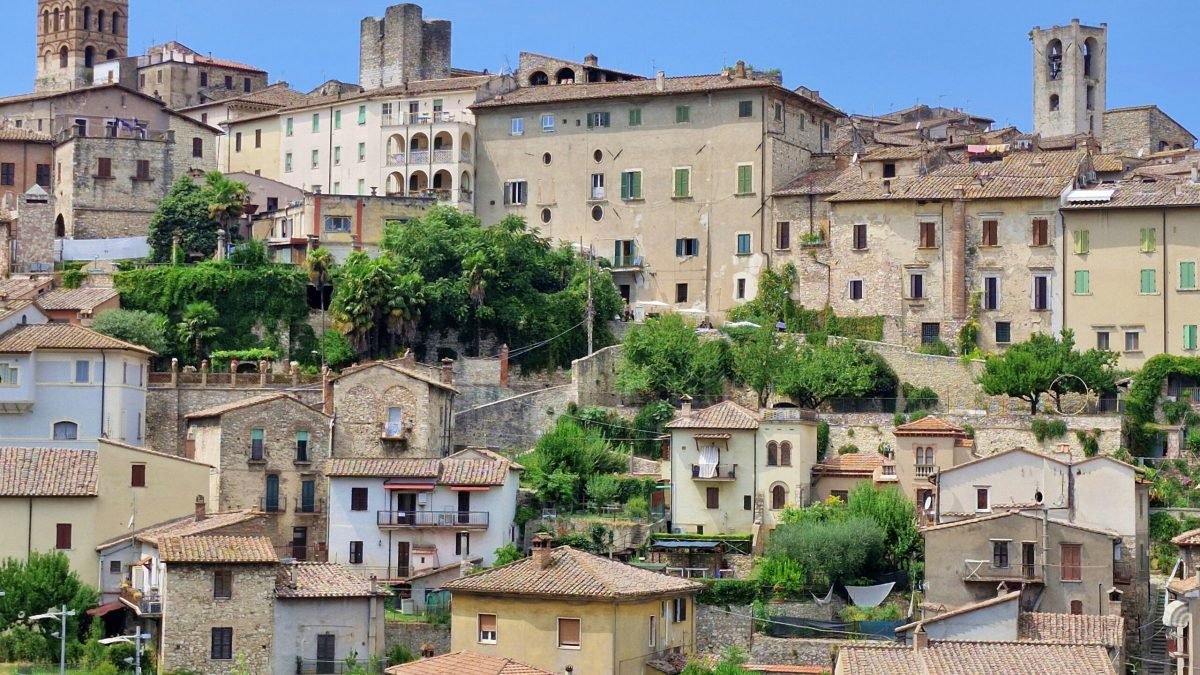
Our Southern Umbria itinerary became less obvious after I had a stupid accident the night before and my knee was hurting. We had to change our plans.
Instead of hiking, we checked out things to do in Narni, the town that inspired C.S. Lewis to write “The Chronicles of Narnia.”
Ponte d’Augusto: The Roman Bridge of Narni
But first, we spent some time admiring the Bridge of Augustus (Ponte d’Augusto), or rather, what remains of it. And quite a lot remains, both standing and lying around.
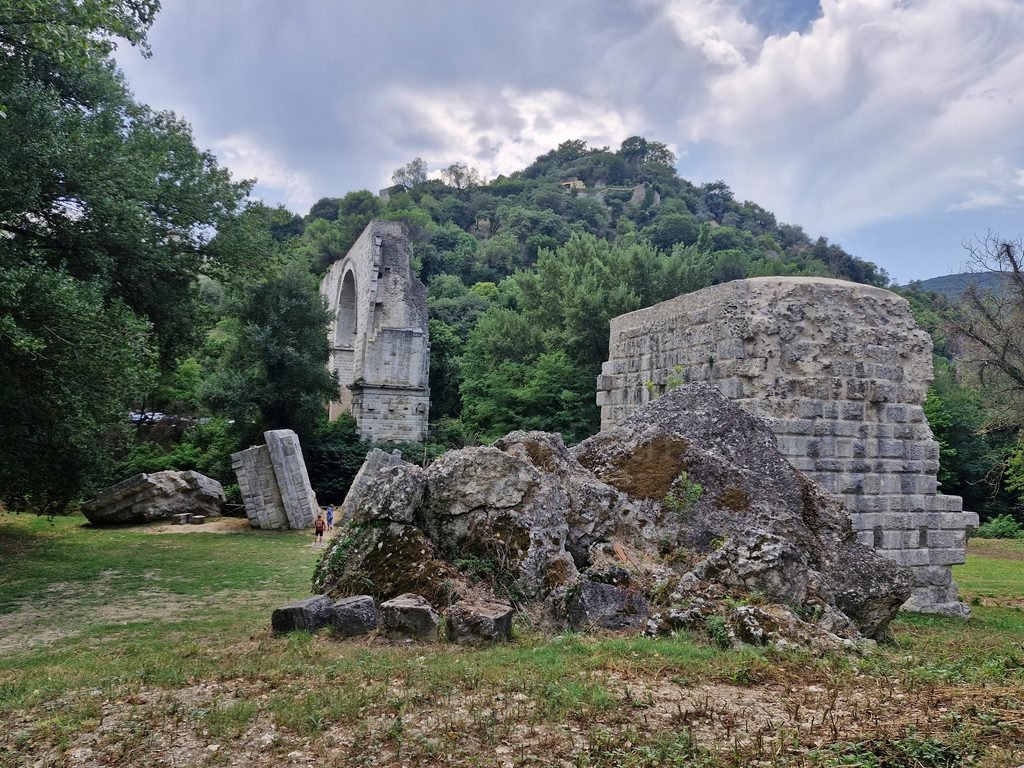
The Bridge of Augustus dates back to around 27 BC and remained passable for centuries. By the way, whenever I look at ancient structures, I always wonder how many modern buildings will still be in at least as good a condition as this bridge after more than 2,000 years.
The bridge had four spans, stood 30 metres high, was 8 metres wide and measured 130 metres in length. It was one of the largest Roman bridges, which explains why even its ruins are impressive. It also had two pedestrian walkways, so the ancient Narnians (i.e the people who lived in the area; there was no such civilisation) could cross the river without any problems.
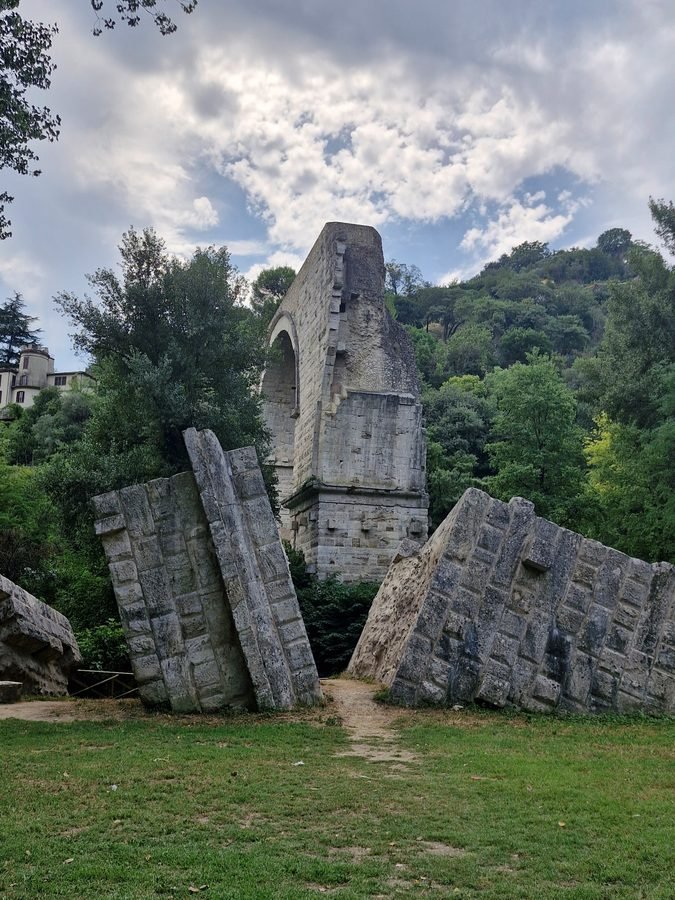
The bridge held up well over the centuries, but earthquakes and floods eventually proved too much for it, and the structure began to collapse.
Today, the first and largest span still stands above the river, while the rest of the bridge lies on the ground in the form of enormous chunks of stone. I felt tiny looking at the arch towering above the river, and not much bigger when I stood next to one of the pieces lying in the grass.
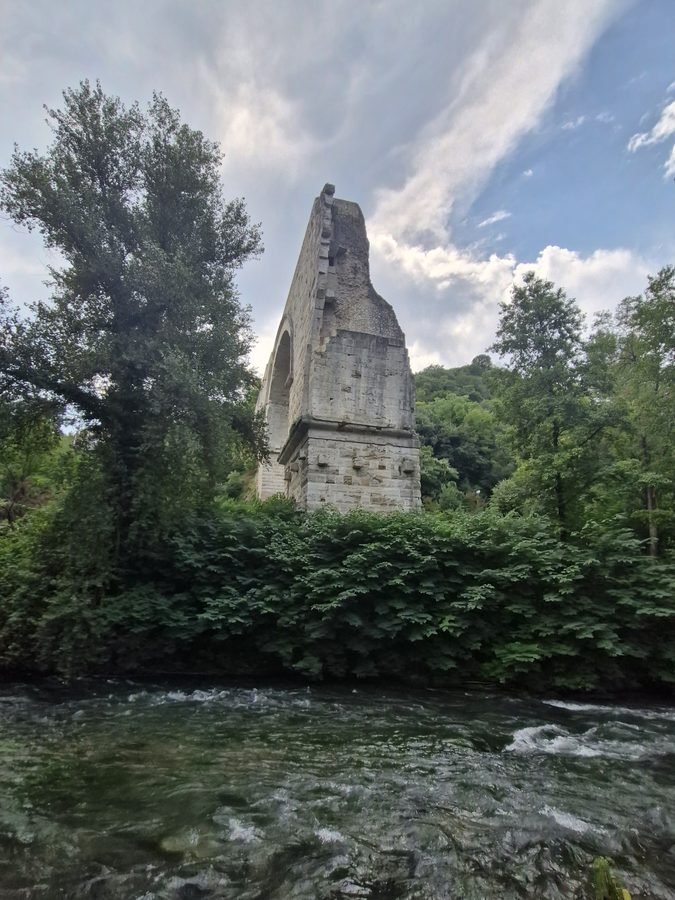
Ruins, yes, but not just any ruins — still majestic, and a reminder of the engineering skills of ancient builders.
A walking and cycling path runs along the River Nera, beneath the remains of the bridge, leading to a fountain and a monastery. We didn’t bother visiting either, as Narni was calling.
Narni – A Brief History of the Town
Originally called Nequinum, the town was conquered by the Romans and renamed Narnia. Hallelujah – otherwise Lewis’s book title would have been hard to remember.
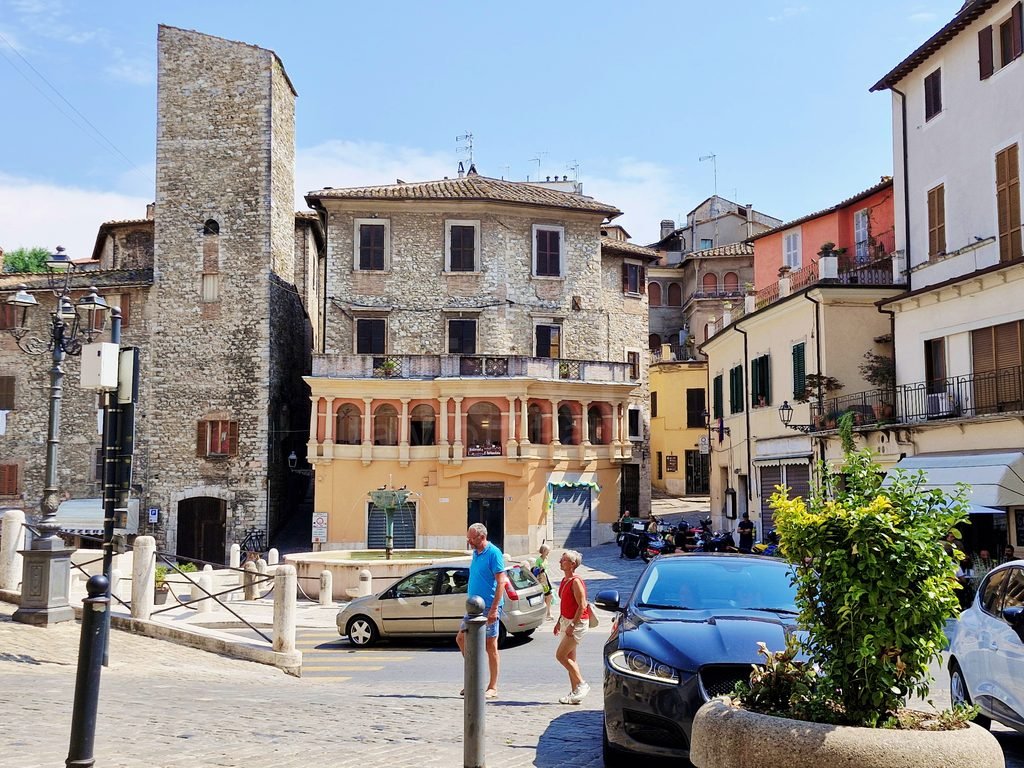
Of course, the town was attacked, conquered, recaptured, attacked again, conquered again, recaptured again, and so on, by pretty much anyone who happened to come along.
After years of this questionable entertainment, it became part of the Papal States in the 17th century, before eventually being incorporated into Italy.
Things to Do in Narni: What to See in and What to Skip)
Narni welcomed us through the beautiful medieval Porta Ternana gate.
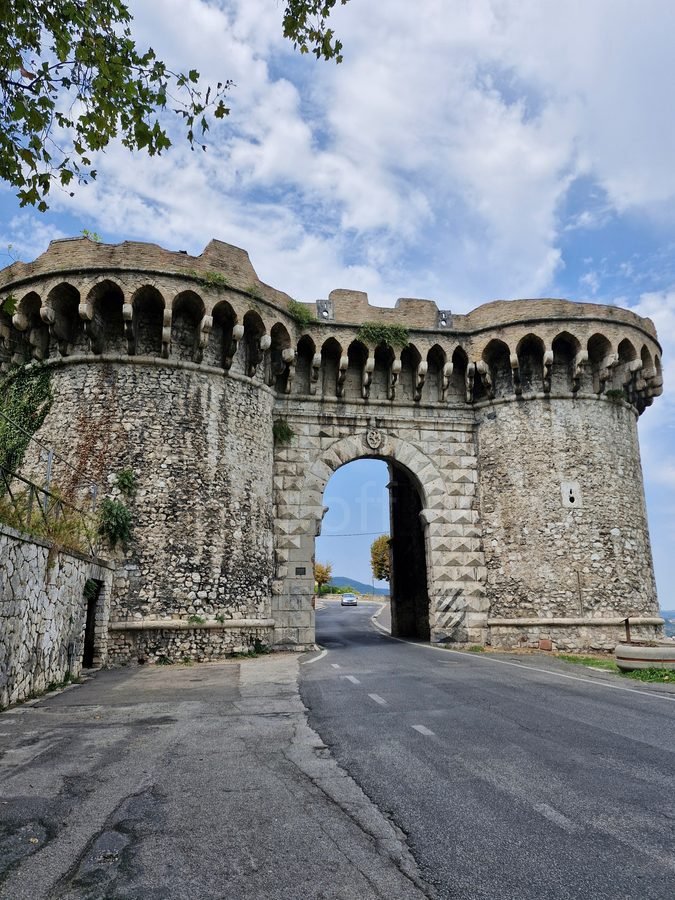
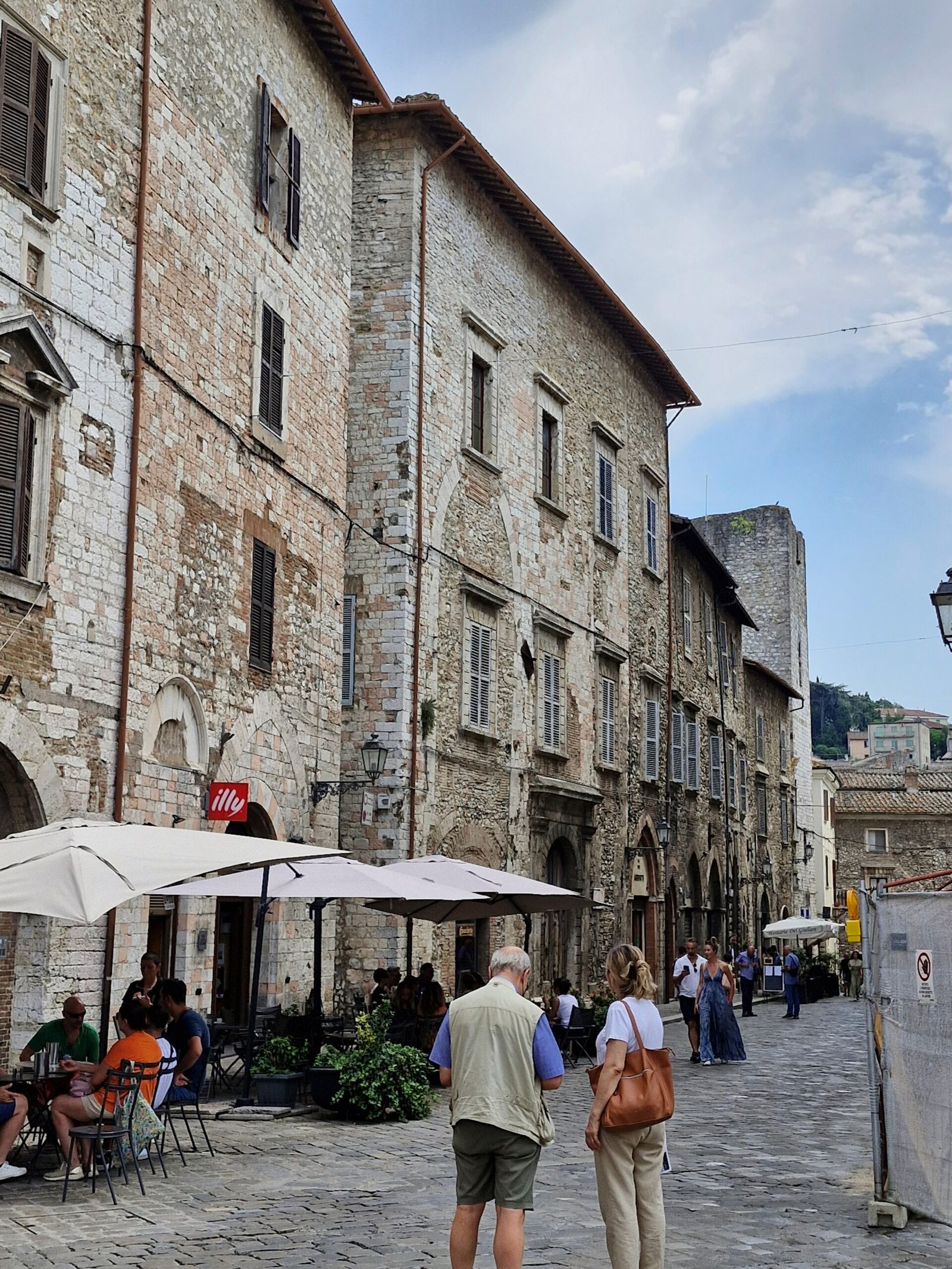
The town is actually quite rich in medieval monuments, including the Cathedral of San Giovenale, the Church of San Domenico, and the Romanesque Church of Santa Maria Impensole.
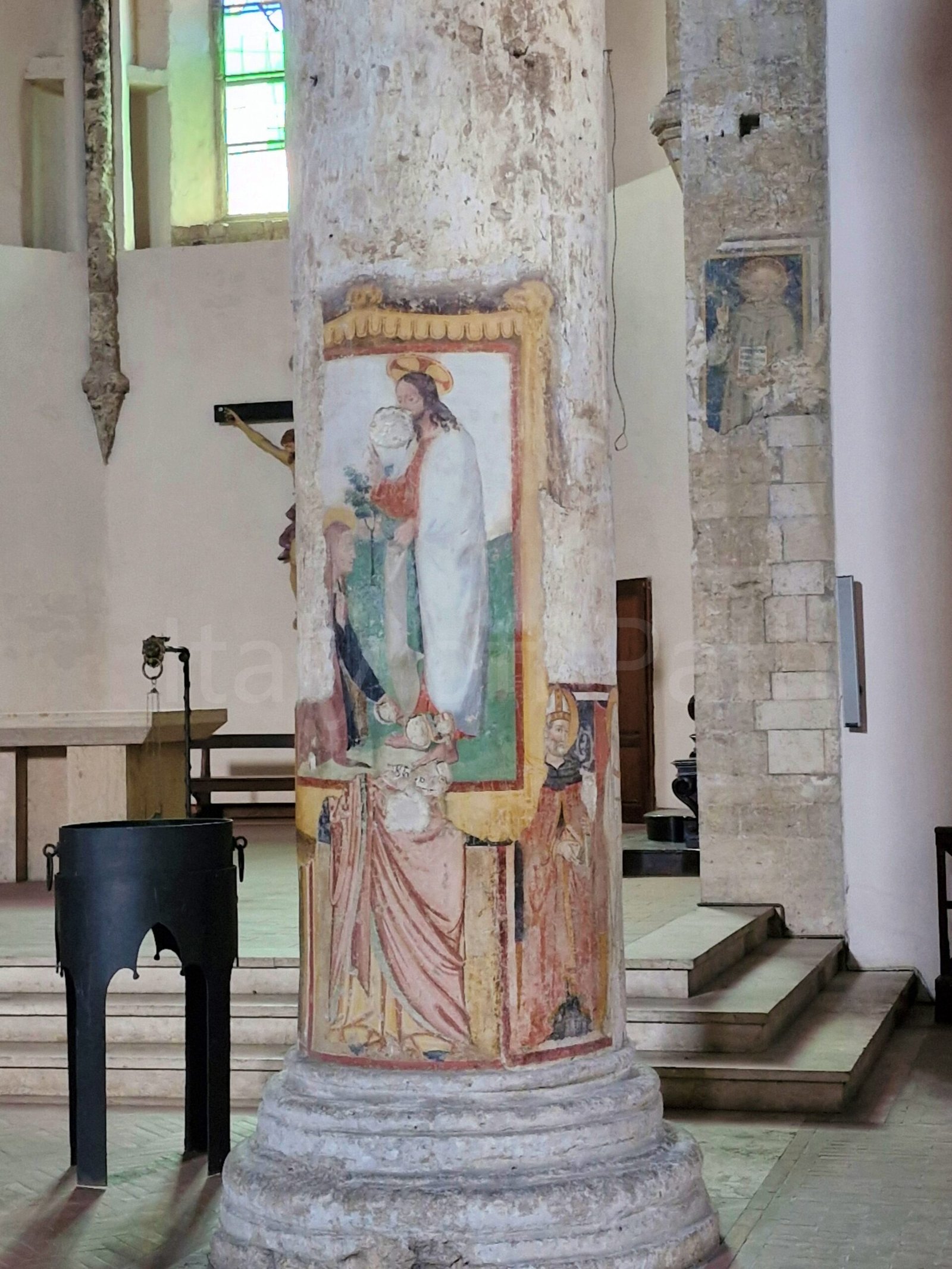
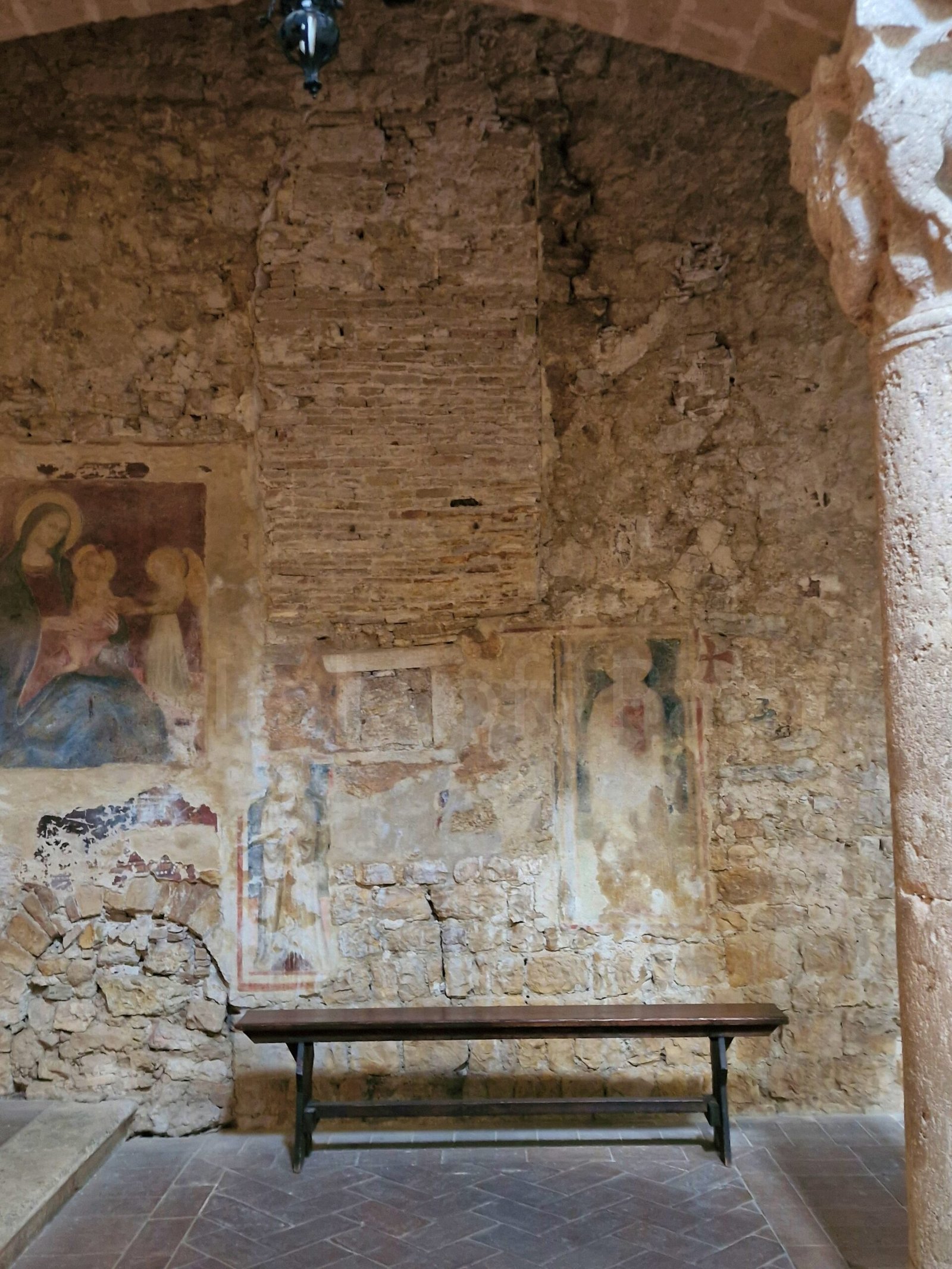
On Piazza dei Priori, considered one of the most beautiful squares in Umbria, stands the Palazzo del Podestà, which has been converted into the town hall. It’s a very pretty building decorated with marble.
The Medieval Town and Narni Underground
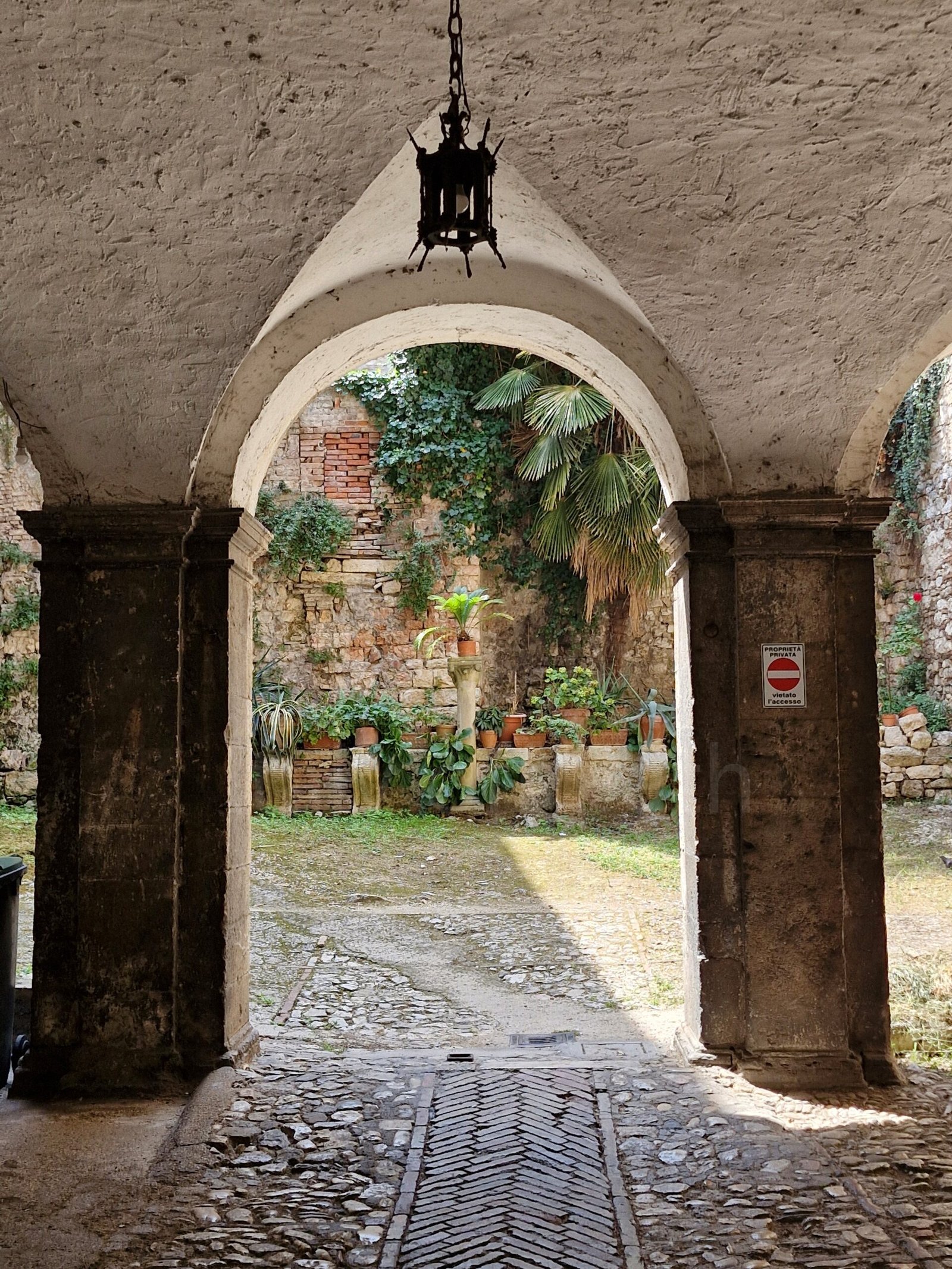
From the main street, you can reach a viewpoint by following the signs. On the way, you’ll pass the former San Domenico monastery complex and its church, both part of the Narni Underground Experience.
Unfortunately, it was Ferragosto, and the Italians visiting Narni had snapped up all the tickets, so we didn’t get to explore the underground part of the town. A lesson for next time: if you know there might be crowds, book your tickets in advance.
Narni Underground is essentially a visit to the town’s thousand-year-old subterranean world. I think it could be interesting, as below ground you’ll find aqueducts, water cisterns, tunnels and crypts.
And, on the less pleasant side of things, there’s a torture chamber dating back to the Inquisition, complete with a cell covered in graffiti left by prisoners awaiting burning at the stake or some other cheerful outcomes. .
The underground tour will have to wait until next time, because I like Narni and have another visit planned.
Rocca Albornoziana – The Fortress on the Hill
We also skipped the Albornoz Fortress (Rocca Albornoziana), which dominates the town, even though we’d already hauled ourselves up the hill. You can drive there, too, but we opted for the “Oh God, how much further?” version.
The 14th-century fortress has recently been restored, and admission costs €10. Inside the castle, beyond the walls themselves, there’s an exhibition of modern art, so those of us who weren’t interested didn’t bother going in.
And this, in my opinion, is the problem with many Italian castles: you climb all the way up to one, only to find bare walls with no interesting exhibition whatsoever, or… contemporary art.
The Geographical Center of Italy (Ponte Cardona)
Slightly disappointed, we decided to visit the geographical centre of Italy near Ponte Cardona. And, while we were at it, the bridge itself.
If you’re driving there, pay attention to the road signs and follow them. Don’t rely on your GPS, because ours sent us on a roundabout route. We drove a fair distance before turning back and deciding to trust the signs instead.
You can also walk to the centre of Italy. The Sentiero della Formina trail, approximately 3 km long, starts just outside Narni’s town walls.
A Walk to the Centre of the Apennine Peninsula
We parked the car by the entrance to a forest trail — flat and very easy.
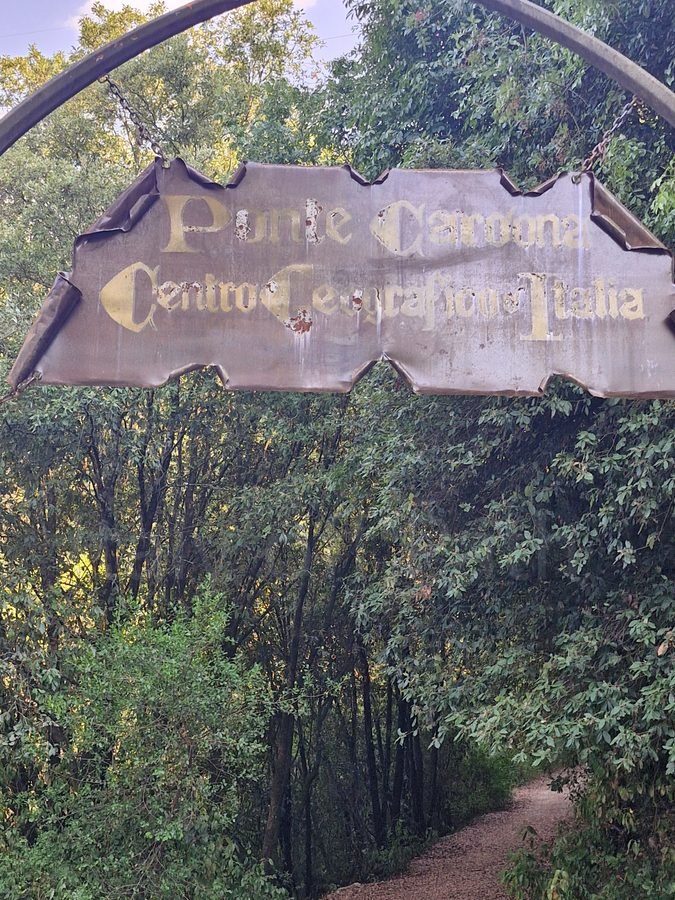
It’s simply a walk through the woods along a comfortable, compacted path leading to something resembling… a pagan shrine, or perhaps a Tibetan altar? That’s what it reminded me of.
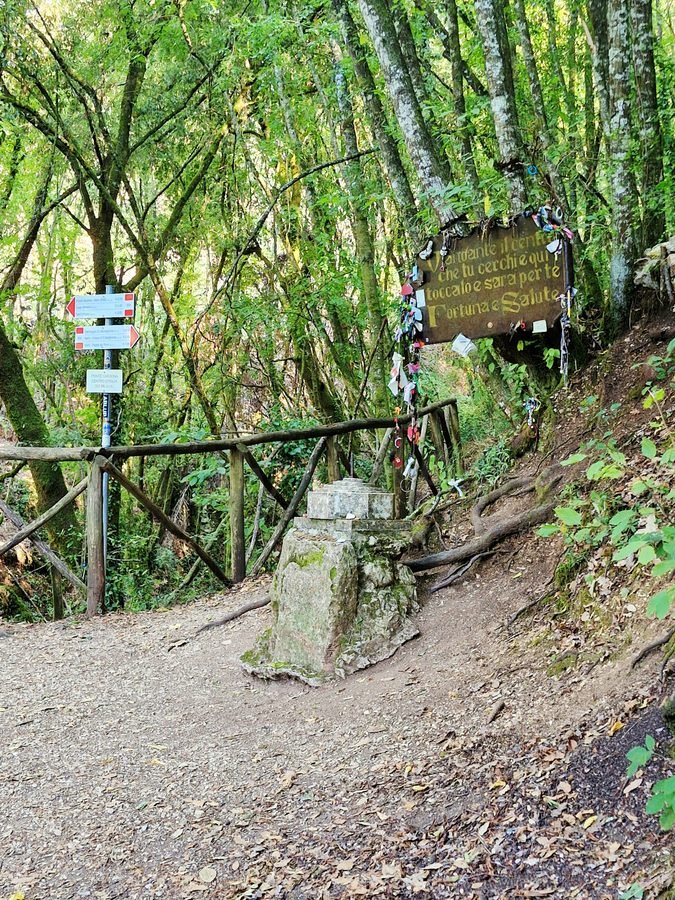
The geographical centre of Italy is hard to miss, as there’s a bridge and a small concrete pillar covered in little coins. On top of the “stump” is a small post marking the centre. The tree growing above it is decorated with a large sign explaining that if you touch a little metal rod, good luck and good health will come your way.
The sign is covered in notes with wishes written on them, little hearts, beads and so on. It really does look a bit like a place of worship or prayer.
I didn’t check whether fondling the centre of Italy actually works, but the couple who arrived after us spent a good few minutes firmly attached to the metal rod. Maybe they were unhappy, and, when you think about it, it’s certainly a cheaper option than seeing a therapist.
To the left, on another tree, there’s a sign announcing that you’re standing right in the centre of the Apennine Peninsula. And right next to it lies the ancient and rather picturesque Ponte Cardona.
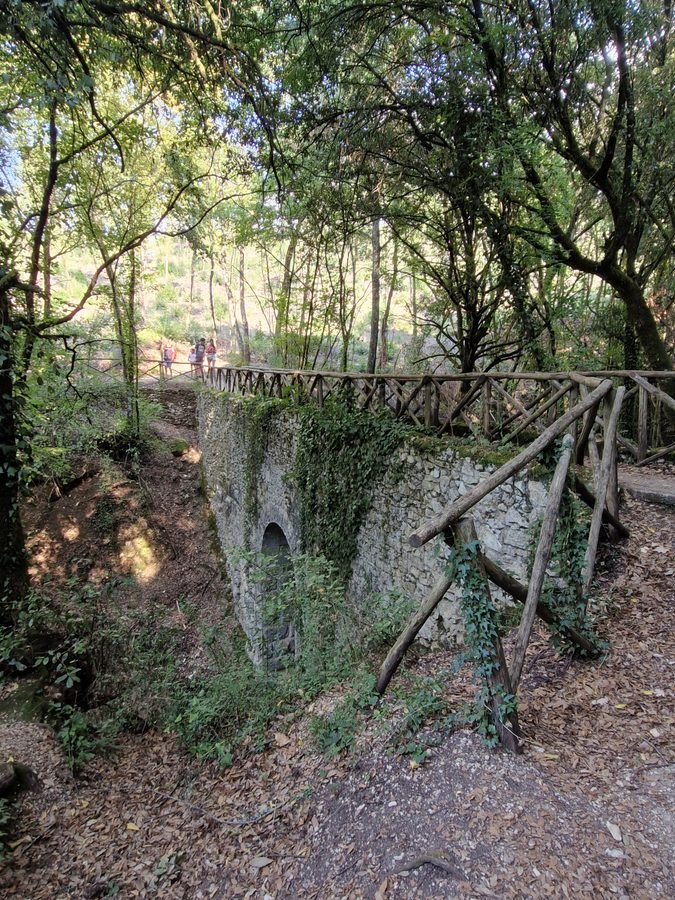
Is it worth going there? It depends. If you’re expecting some extraordinary view, you won’t find one. Without the little shrine, it would simply be another place.
Maybe you’ll feel something special — great, because you’re standing in the middle of the country, and perhaps you believe in the therapeutic powers of places like this. But generally speaking, it looks like thousands of other places: just trees and an old bridge.
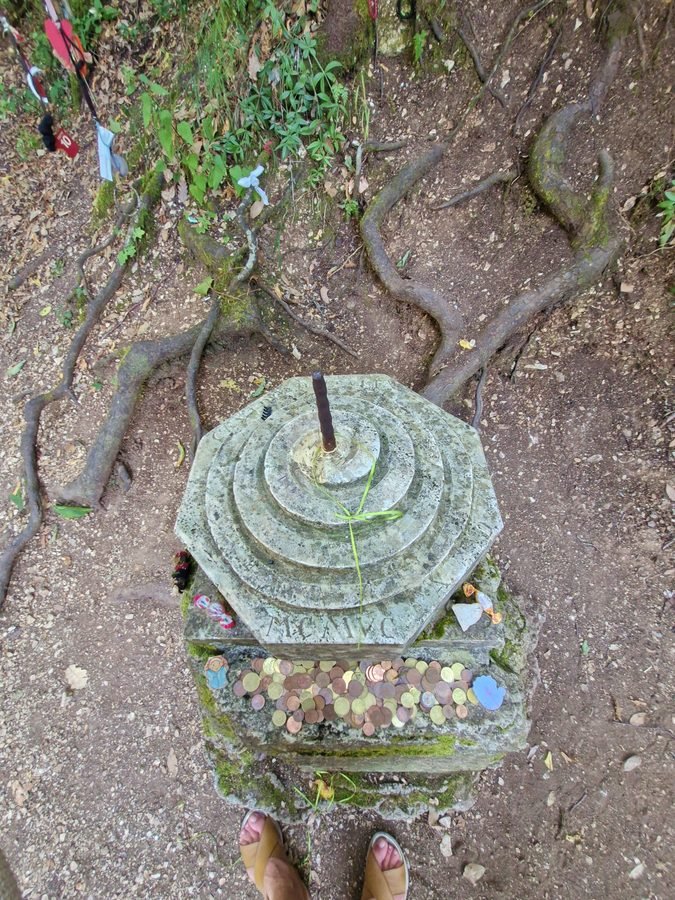
On the other hand, if you want to impress your friends, then absolutely go for it. While they’re swapping stories about Rome or Florence, you can nonchalantly ask: “But have you ever touched the actual centre of Italy?”
Papigno: An Untouristed Base in Umbria
In the late afternoon, we returned to Papigno and decided to have a look around; sometimes we spend the night somewhere without ever exploring the place we’re staying in. This time was different.
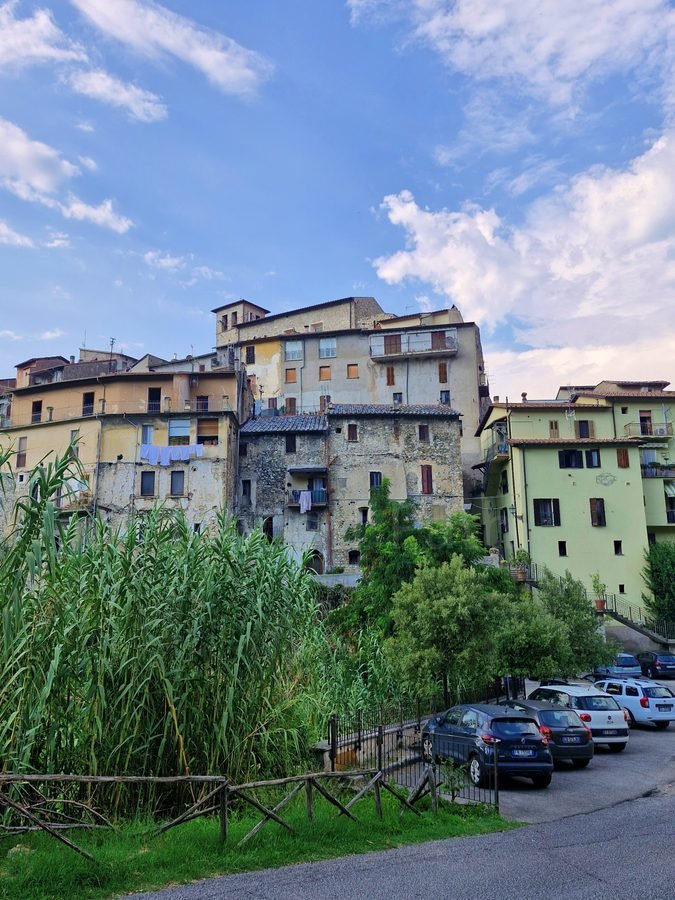
Historically, Papigno played an important role because its strategic location gave it control over two major routes in the road network.
I wanted to use that very impressive sentence to emphasise that, nowadays, Papigno makes an excellent base for exploring the surrounding towns — everything is close by.
And here’s another lovely sentence: Papigno was purchased by the municipality of Terni from the Arroni family in the 13th century. The borgo owes its present appearance mainly to 19th-century buildings, some of which belonged to wealthy families.
That’s the facts. Now it’s time for my impressions. Papigno is tiny. There’s one bar (at least, that’s the only one we saw), where social life goes on from morning until evening.
The second meeting spot is by the gate at the entrance to the borgo. This one is occupied by a club of very elderly gentlemen who ignore the stone benches provided and bring their own chairs instead.
They settle themselves comfortably and spend the next few hours (with a lunch break), basking in the sun, gossiping and debating, while keeping an eye on the few pedestrians and the occasional passing car.
It was getting dark, but the borgo was still lovely — narrow streets, old houses and cosy little corners are exactly the kind of thing I like.
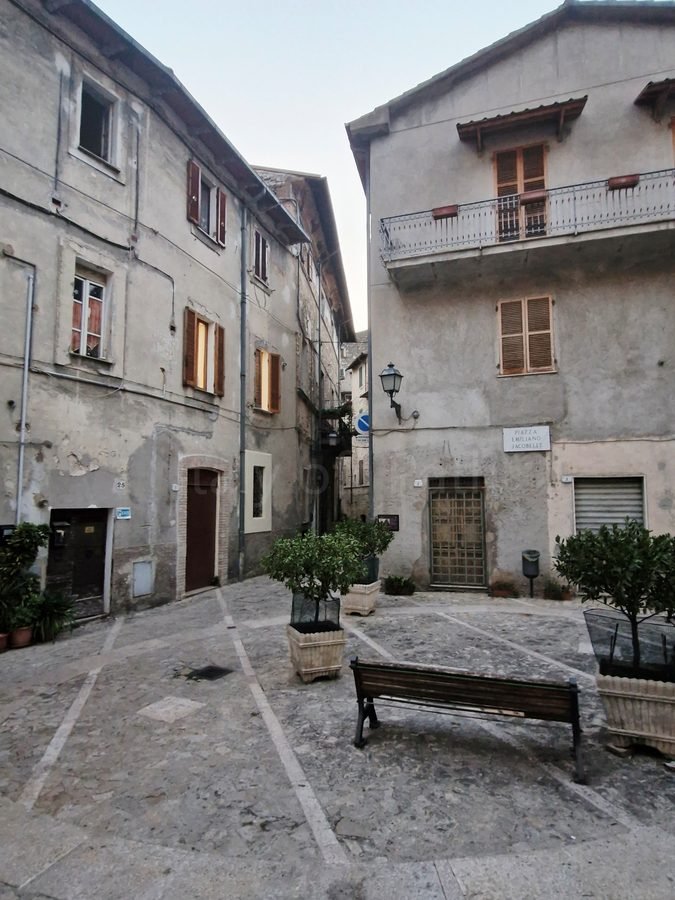
And because Papigno isn’t touristy, we were something of a sensation. The locals looked at us with undisguised curiosity. Strangers don’t usually wander into the borgo, so some house doors were wide open, with dogs milling about outside.
Some of the dogs barked at us, and their owners came running out to see what was going on, apologising and explaining (while looking only at me) that hardly anyone ever walks through there, so their dogs had decided to bark just in case.
Are Narni and Papigno Worth Visiting?
I’m usually annoyed when Italians stare at me (and they do it so insistently that sometimes I feel like asking, “What ? Any problem?”). On the other hand, if you really want to see the authentic Italy, you should visit places where tourists — especially foreign ones — are still considered an attraction in their own right.
So if you ask me about off the beaten path Umbria, I’d say places like Papigno and Narni are genuinely worth a visit.
The next day, we decided to spend some time by the water. It was the waterfall day.
If this post made you laugh, annoyed you, or just reminded you of your own trip, tell me in the comments or drop me an email. I actually want to hear about your experiences—the good and the frustrating.
Sign up for the newsletter for one post a week (usually Wednesdays at 6:00 PM). No spam, no “magical Italy” fluff. Just honest stories and places off the beaten track. I’ll see you there!