
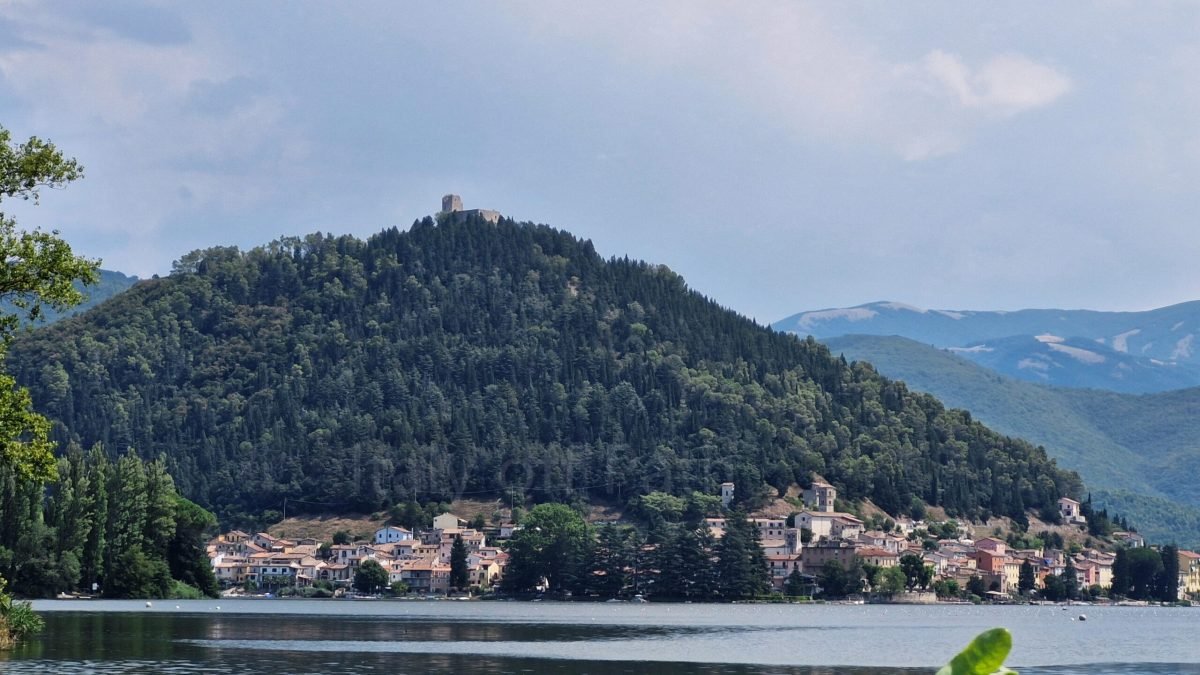
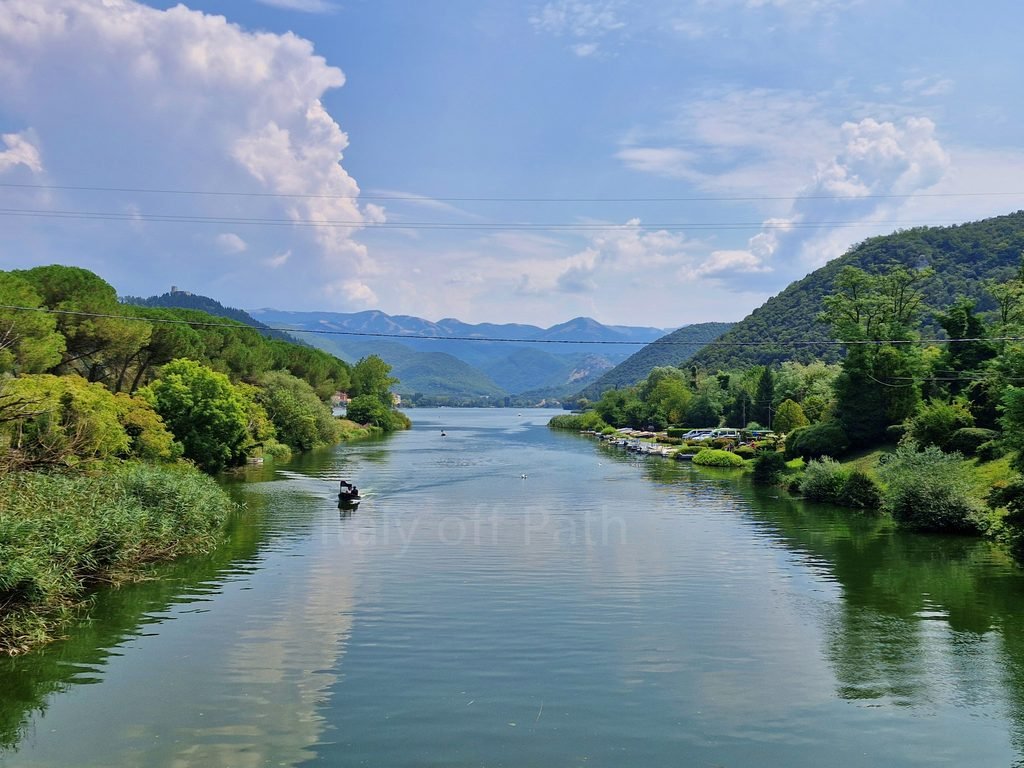
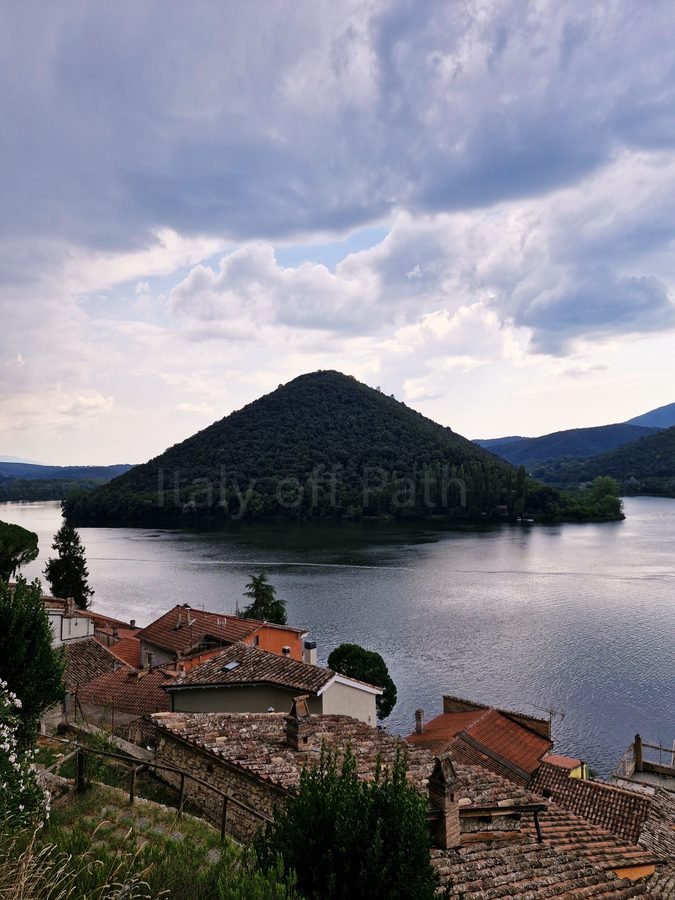
After a not-very-interesting Terni, the next day we decided to see something nice. We started with the ancient fishing village of Piediluco. The village looks cool from a distance: small, whitish, and colourful houses with reddish roofs standing under a hill covered with woods, situated on a lake.
And on the top of the hill, there’s a castle. Fortunately (this is not always granted), Piediluco is also nice up close.
Go to:
Hiking to Rocca Albornoz: Trail and Lake Piediluco Views
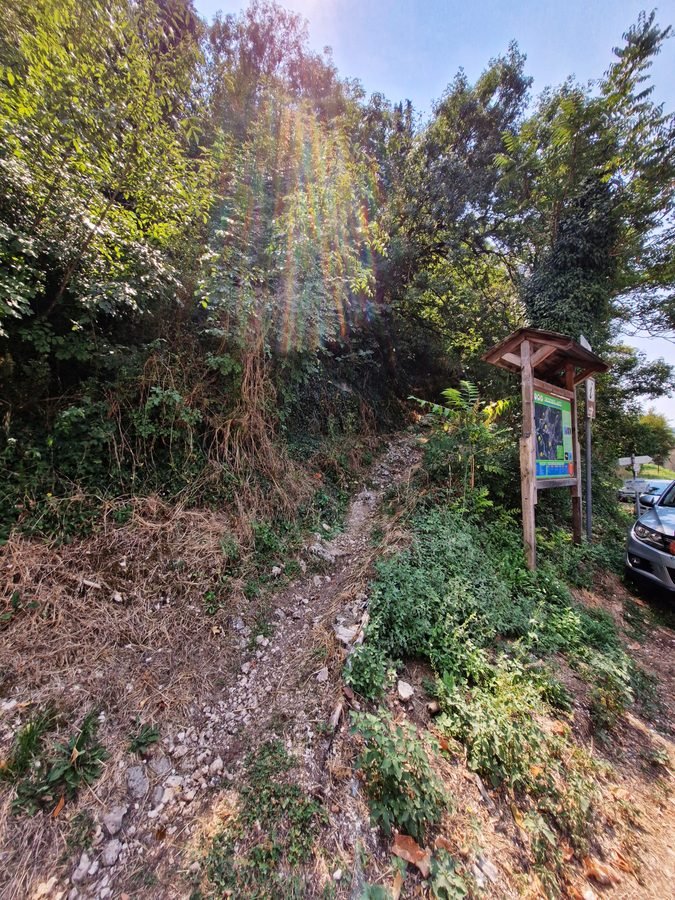
We parked in a large parking lot by the lake just before the town. From there starts the trail to the fortress, which we decided to see first. We took the main, flat road (it leads to the centre of Piediluco); on the left, I saw a small sign on the mountainside indicating the trailhead.
It was not easy to spot because of the greenery; maybe now it’s better.
The castle, or to be more specific its ruins- Rocca Albornoz, can be reached only on foot. It took us about 45 minutes to get to it, but we were stopping, taking pictures, walking slowly, and talking—we weren’t in a hurry. But if you are, the path can be done in 20–30 minutes.
The trail is uphill, of course, but it’s easy, with no difficult sections. Still, I wouldn’t go there in flip-flops or sandals; I had hiking boots, but any comfy shoes will do. The entire trail runs through the forest, so you’re walking in the shade, which, in my opinion, is always a plus.
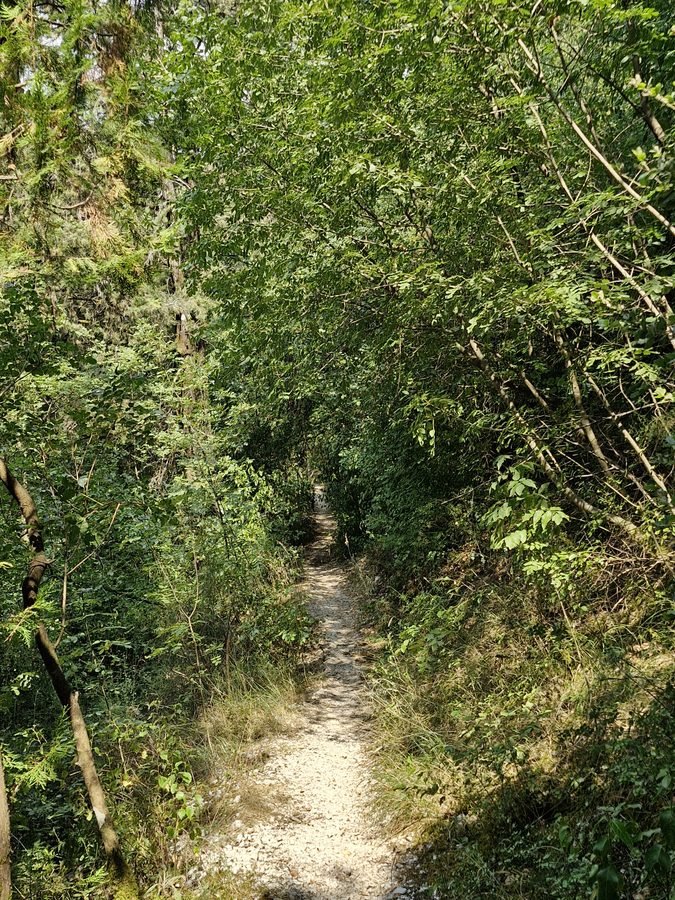
We were the only people on the path; I don’t know if it’s always like that, or if we were just lucky enjoying the silence and the singing birds that actually sounded as if they were arguing. And maybe they were doing so.
The Rocca di Piediluco (Fortress of Piediluco), or rather what is left of it (quite a lot), was built partly in the 13th and 14th centuries.
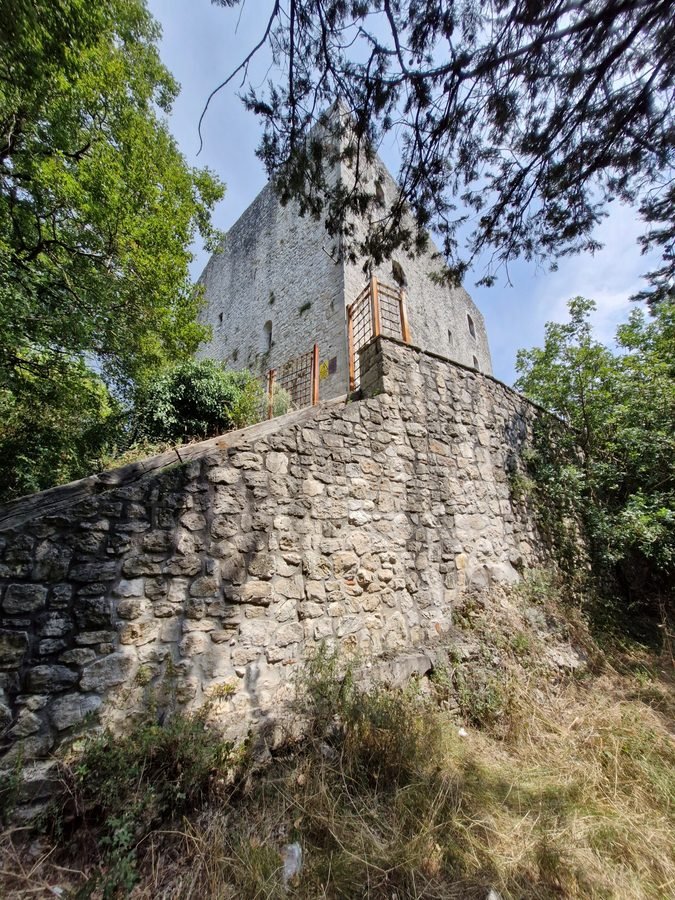
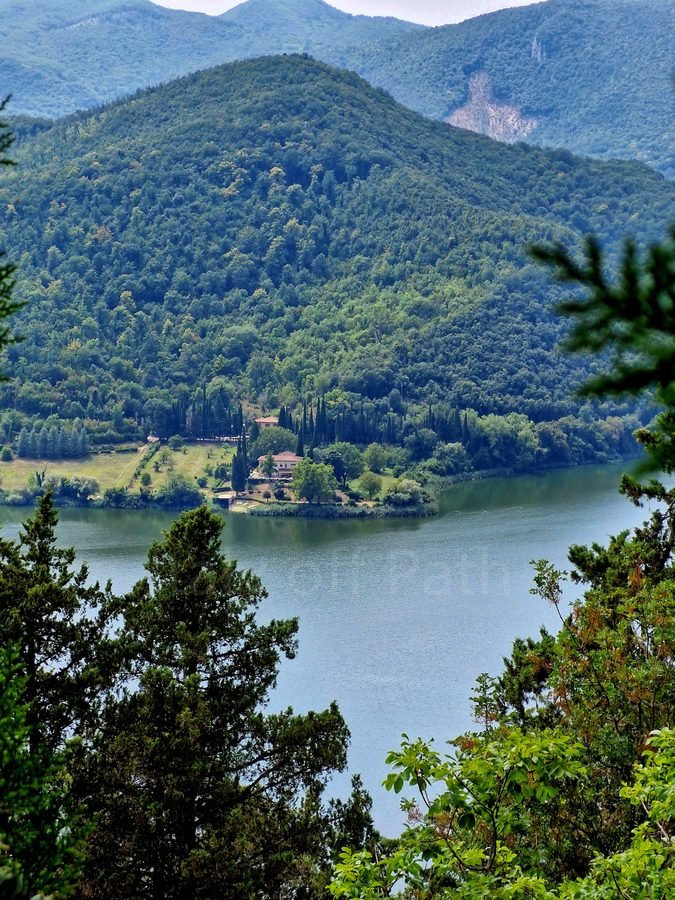
The construction served a military and defensive function. The ruins are impressive, overgrown with vegetation, and the view from them is very pleasing to the eye: you see the peculiar-shaped Lake Piediluco nestled among green hills and valleys. Beautiful. Mount Caperno, called by the locals ‘Echo Mountain’, rises on the opposite side.
Walking around the ruins, I took a ton of pictures, but many of them captured tiny plants growing out of the smallest holes between the bricks in the old walls. I like them very much. Wee and fragile greenery found a place to live, and it always looks as though baby-plants are fighting with an old fortress (in this case) over who will take over the territory.
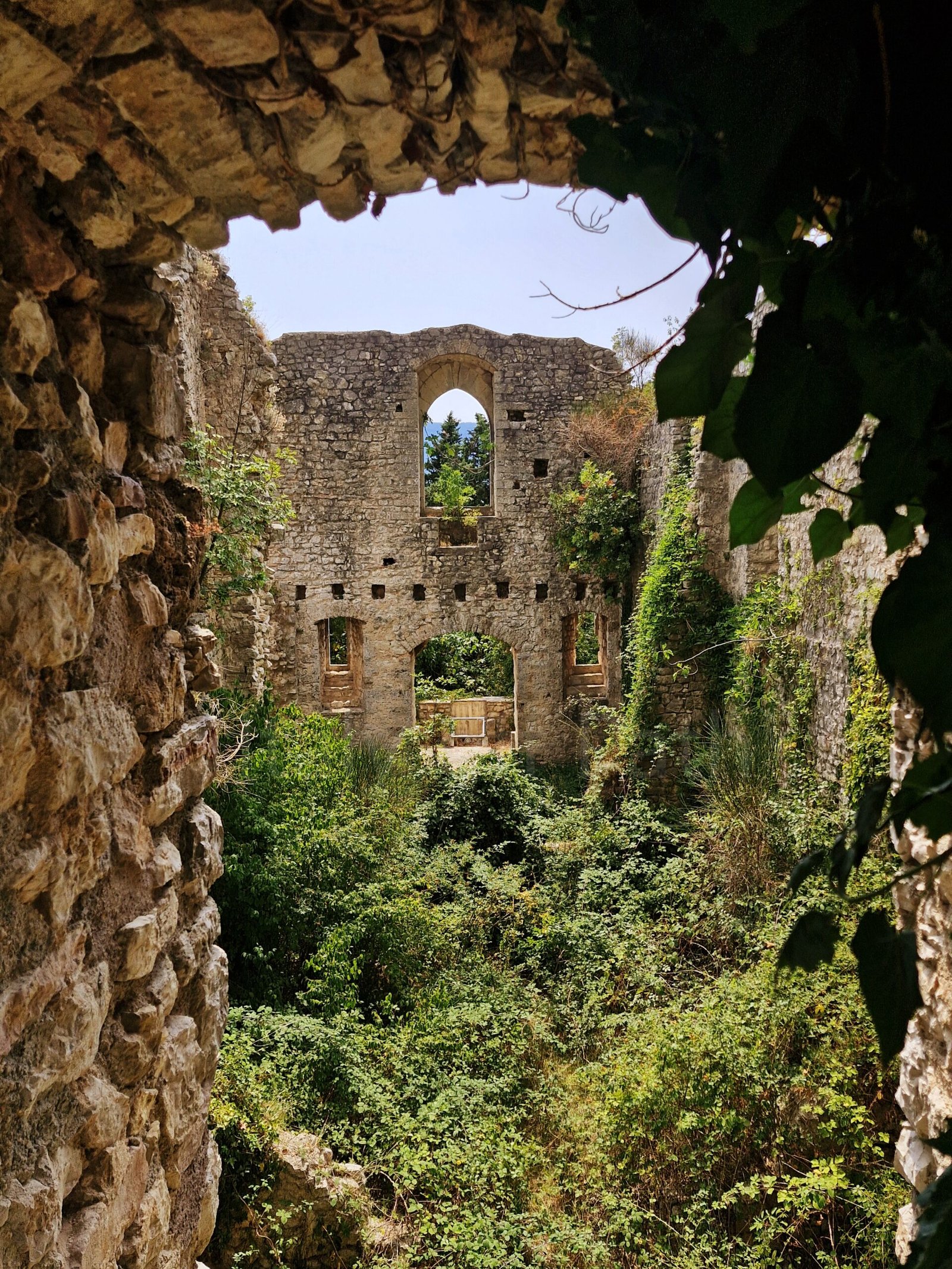
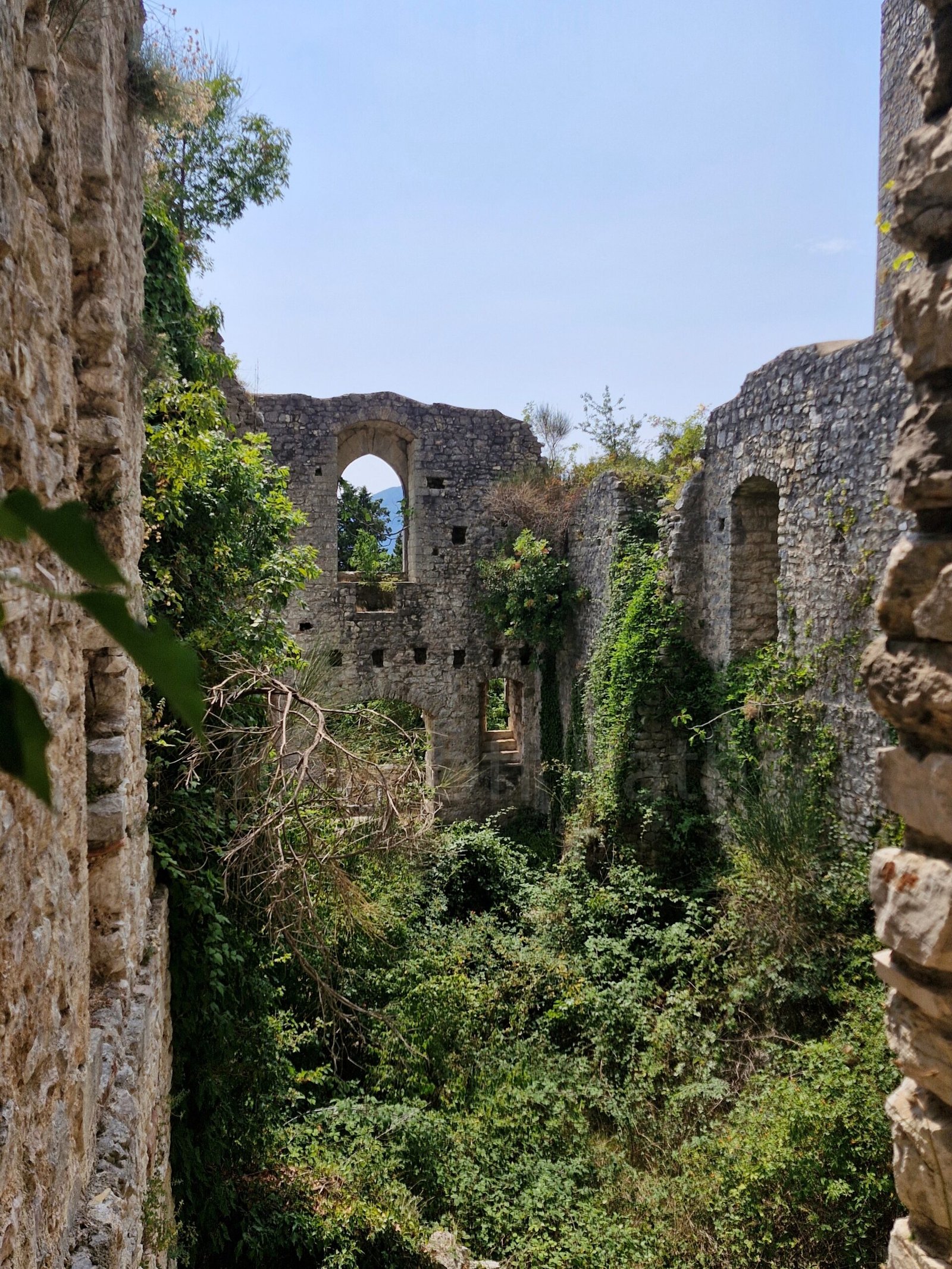
Sometimes I feel a bit sad that such impressive ruins are left to themselves, or rather to nature. On the other hand, rebuilding them is not the best idea. And who knows, to make brand-new non-ruins more attractive, some crazy architects or investors might even paint it in vivid colours.
A pink or turquoise fortress standing on the hill would undoubtedly be eye-catching, just something like a vintage Disneyland. That’s why probably the best option is just to allow them to face their fate.
Walking Piediluco Town and the Lake Shore
Going back, at some point the path forks at a crossroads, and another path leads into town; we took it, and it led us to the lake shore. To get to the centre, we enjoyed (not really) descending numerous steps that wind between narrow streets and pretty houses.
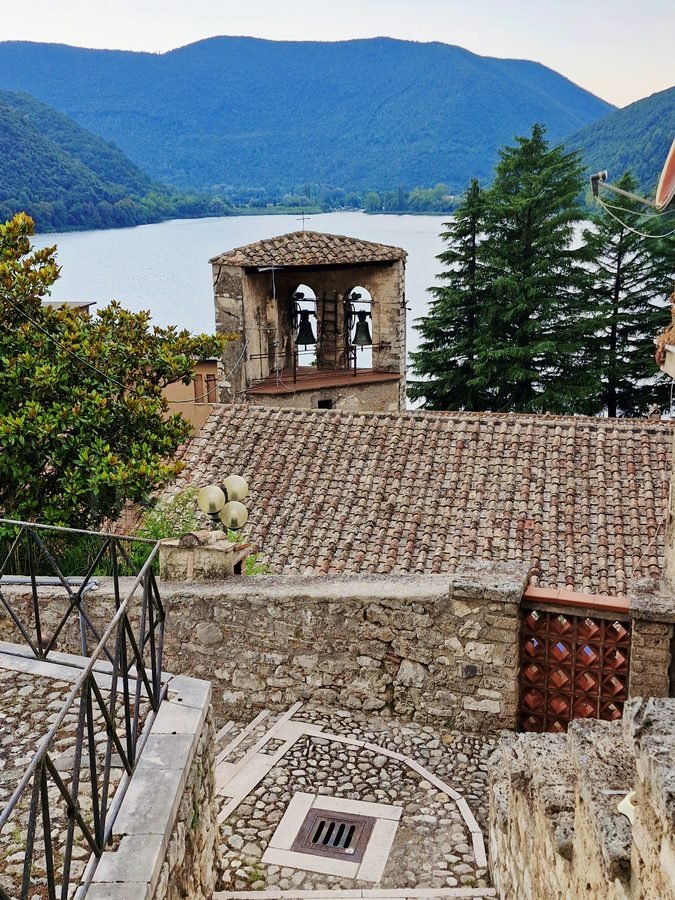
We visited the medieval Church of San Francesco, which is the town’s most important building, and we mooched around the charming alleys, enjoying a peaceful atmosphere.
We had a pleasant walk along the lake, and for the first time in my life, I witnessed a firefighting plane drawing water from the lake. Somewhere nearby there was a fire.
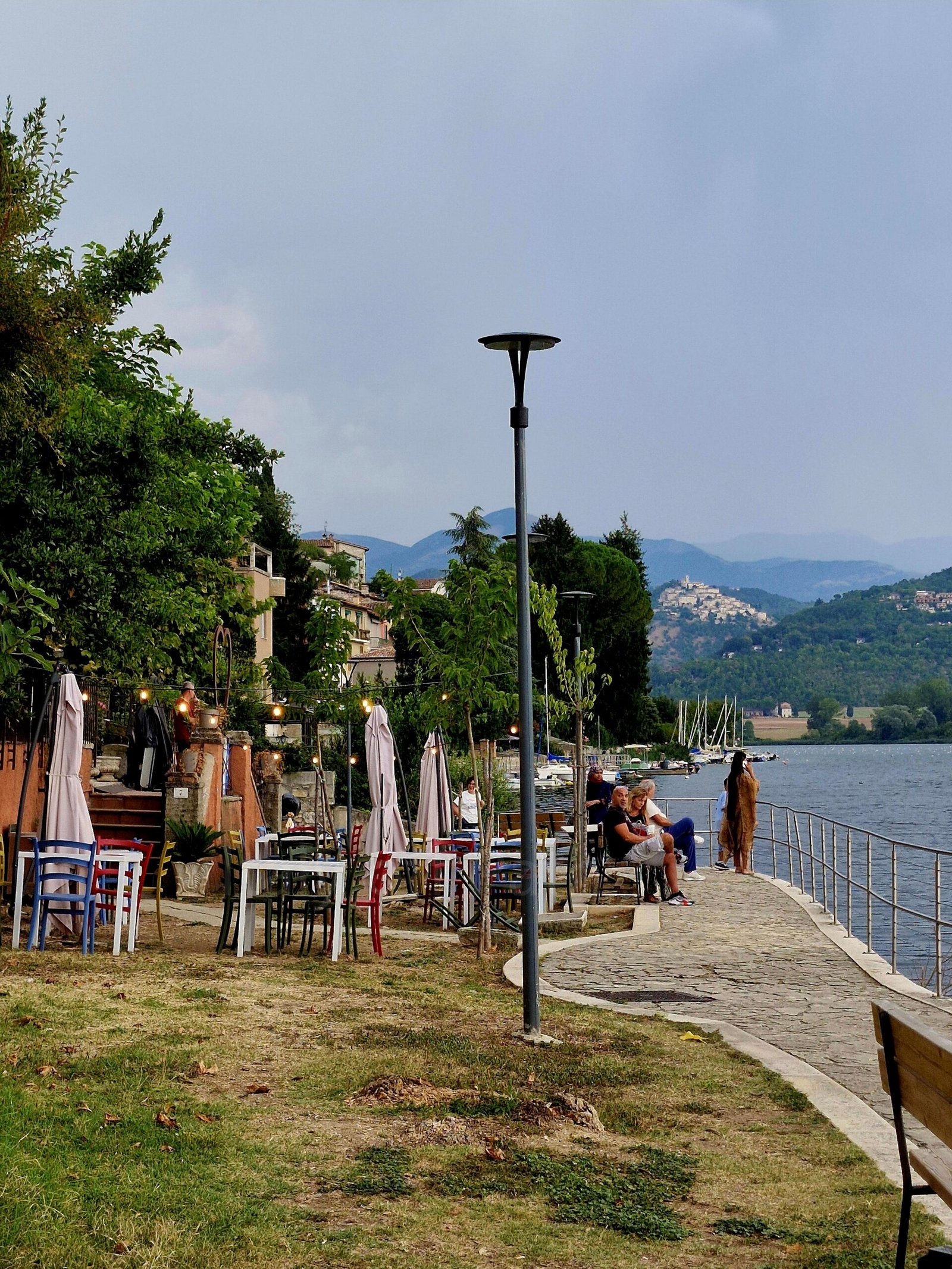
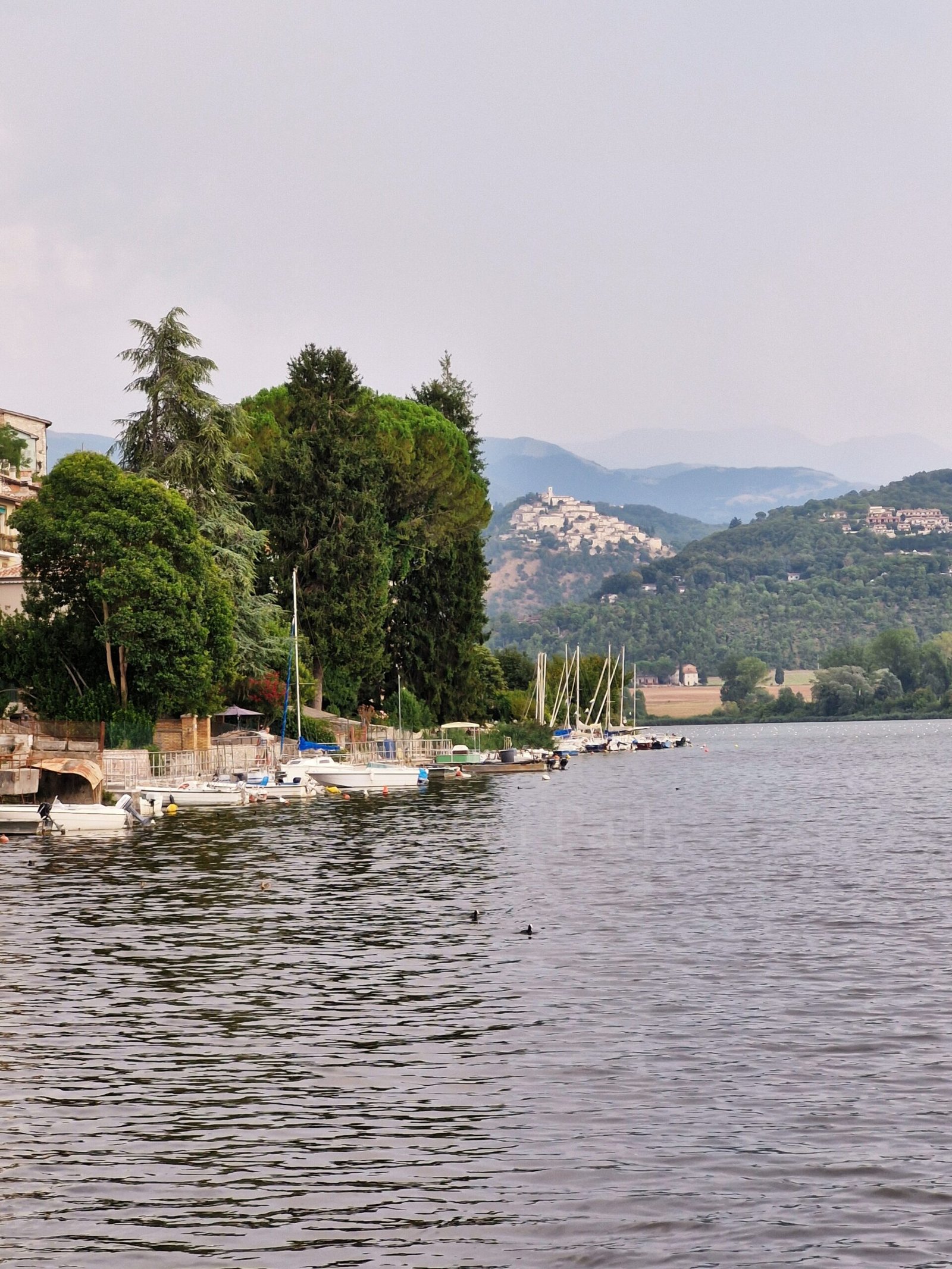
We spent 4 or 5 hours in Piediluco. I like this place, so if you’re into such towns and you’re in the area, be sure to visit.
Visiting Arrone: One of Umbria’s Quietest Borghi
Have I already mentioned that the weather deteriorated every afternoon during our 4-day stay in Umbria? It was still warm though, so we decided to check out Arrone. After driving more or less 20 minutes, we got to the town.
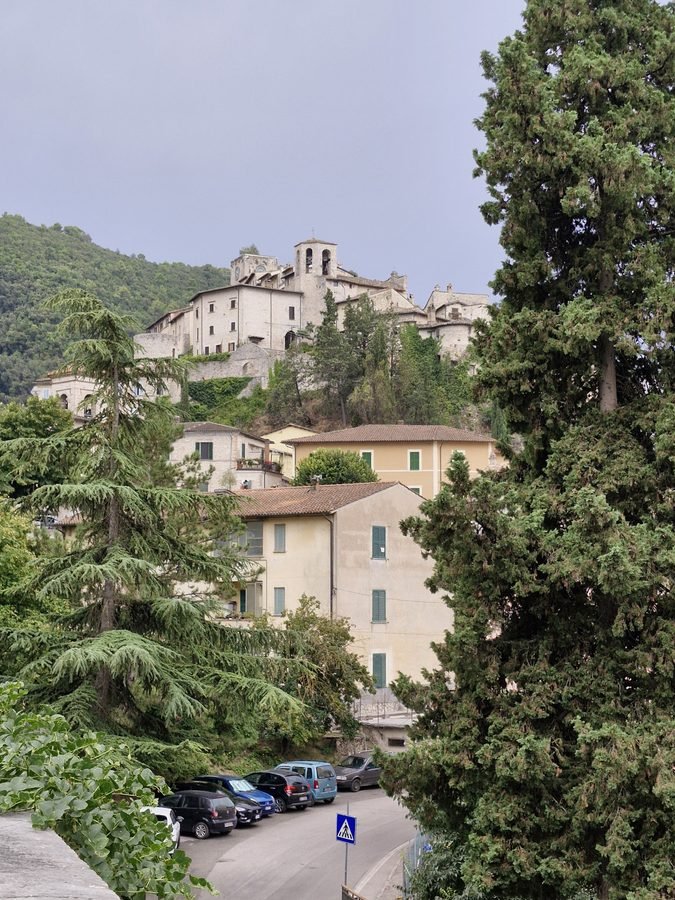
Arrone is old—its origins date back to the 2nd century BC. Like all places in Italy, it was also under the rule of magnates, princes, kings, and others of that sort.
Apparently, the inhabitants weren’t the happiest under these rulers and abandoned the village. I don’t really know if it was actually for this reason, but rebellious villagers fleeing from the magnates who exploited them sounds quite romantic, so let’s say it was for this.
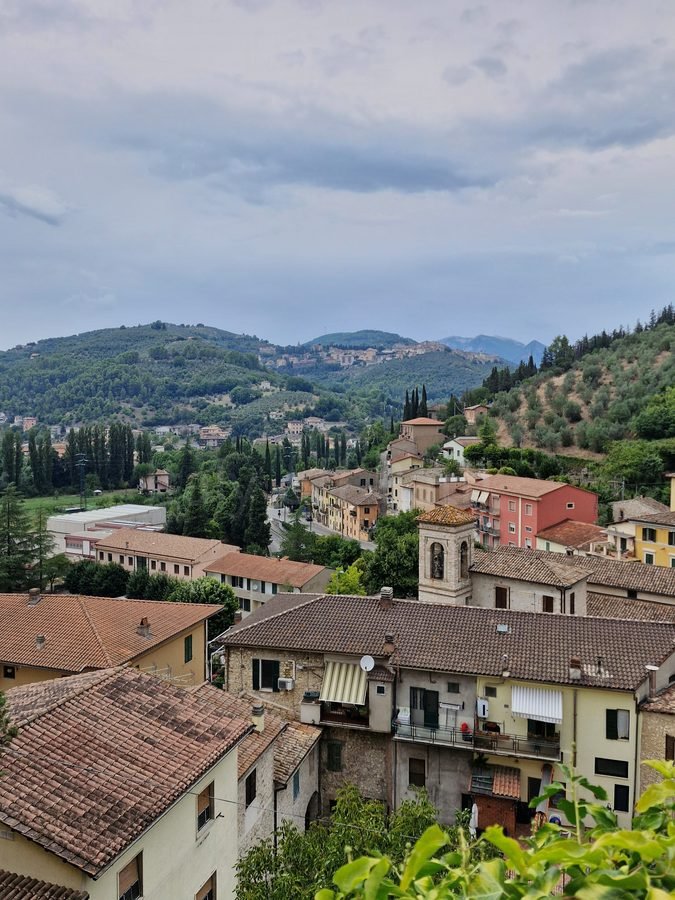
At the end of the 10th century, the noble Arroni family settled here, building a castle, forming the nucleus of the town, and giving it their name. Over the centuries, the village, like everything in the pre-Italy era, was invaded by all possible neighbours over and over again, until finally, in 1860, it became part of the Kingdom of Italy.
We parked along the street and went to see the borgo, which stands on a rocky cliff. Being on the list I Borghi più belli d’Italia, Arrone is considered one of the most beautiful medieval villages in Italy.
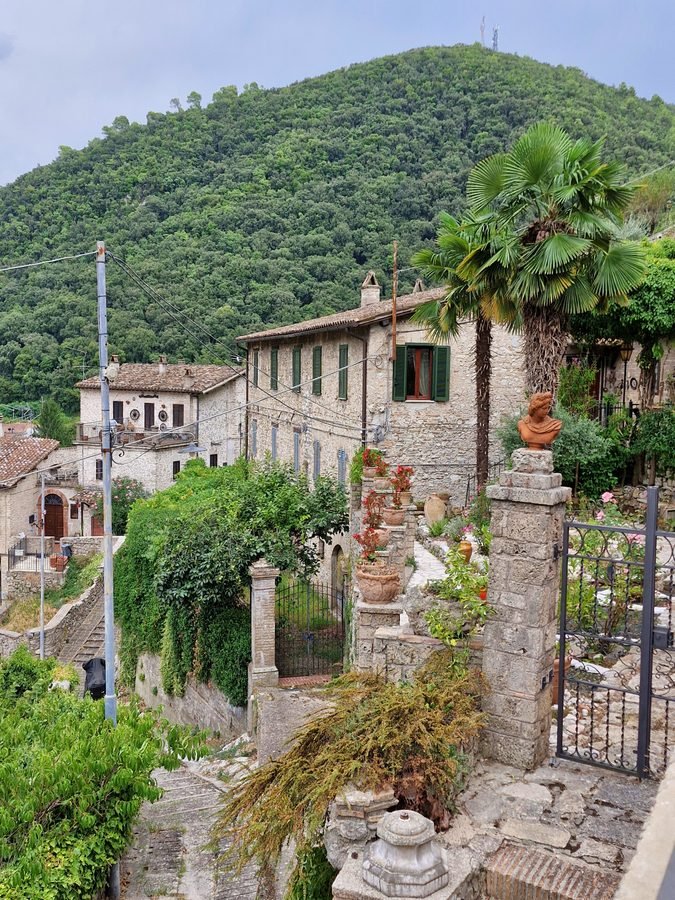
I’m not sure if it’s true; very often they look almost the same, and I have a déjà vu feeling visiting them. Actually, I suspect that the list includes all possible borgi. They’re in Italy, so of course all of them are the most beautiful in the world.
Additionally, Arrone was recognized as one of the “Flowering Cities,” because the Arronians decorate their balconies, windows, and alleys with flowers and plants.
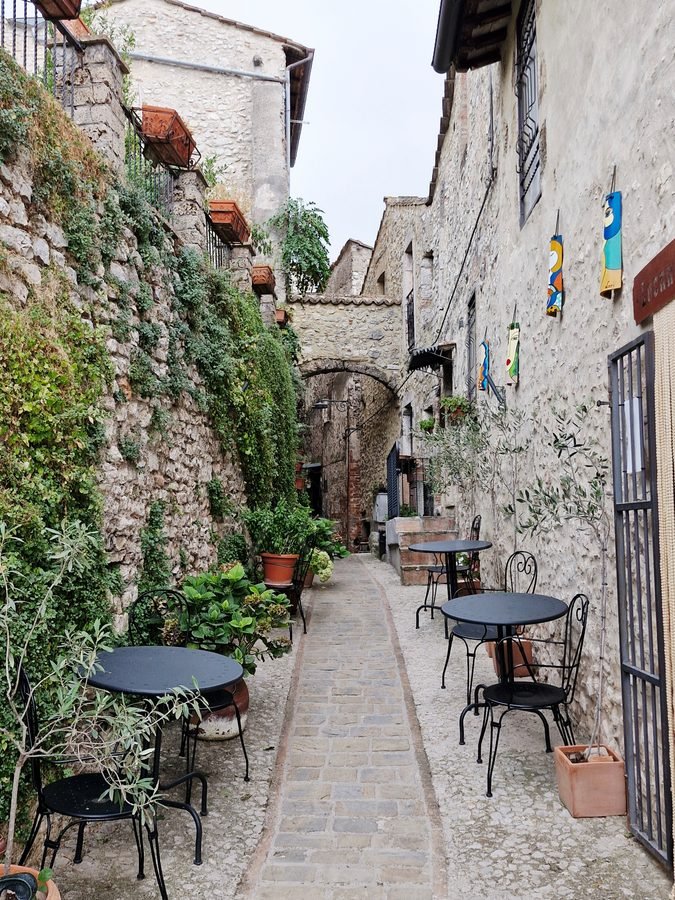
Indeed, some places were blooming with colourful flowers, and it was probably the most flower-filled place we saw this time in Umbria
In the borgo, we saw the remains of Arroni Castle, the Municipal Tower (also called the Tower of the Olive Tree)—which is the symbol of the village—the town bell tower, and the small and beautiful church of San Giovanni Battista with frescoes. Nearby is the medieval San Giovanni Gate.
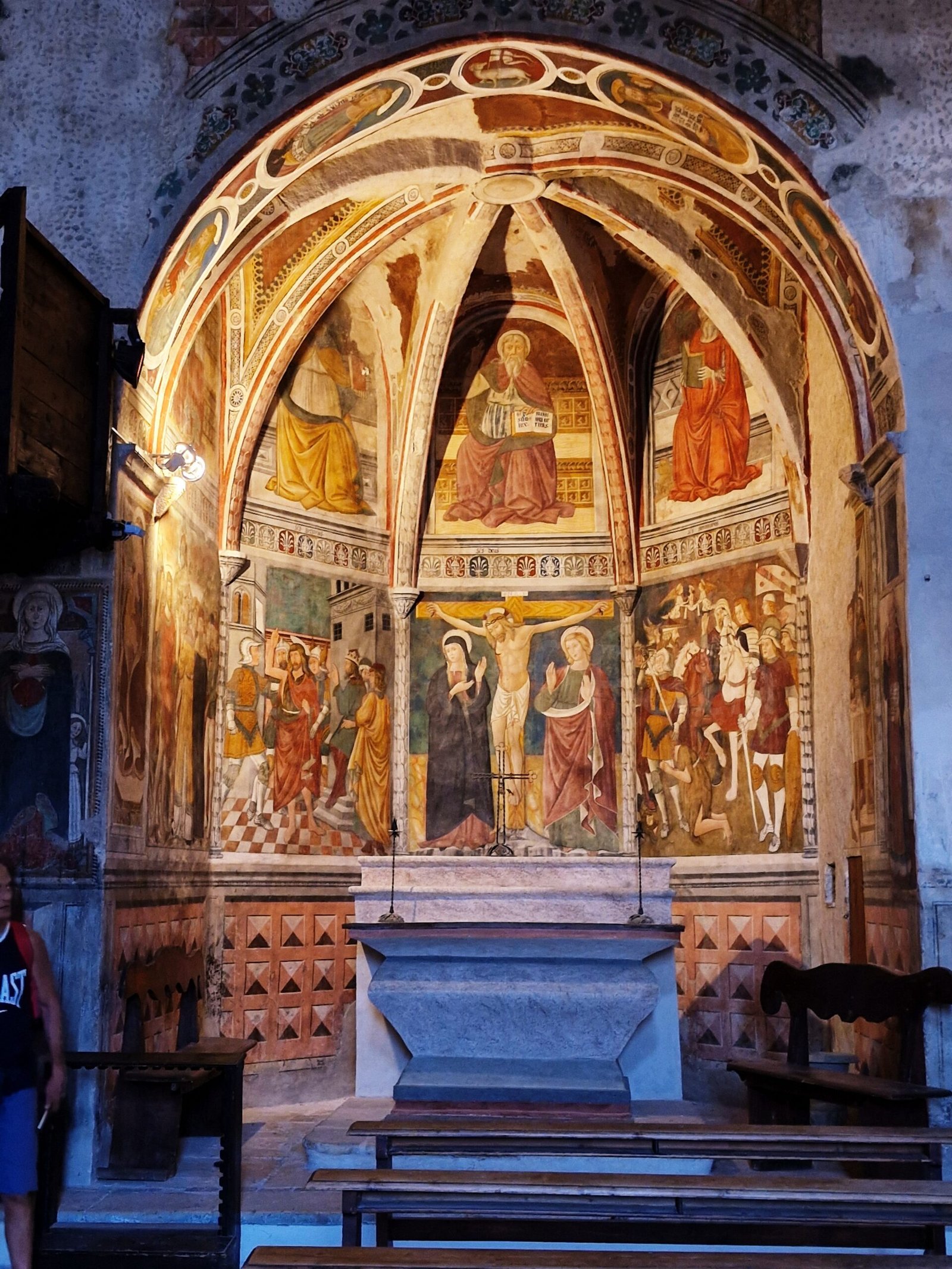
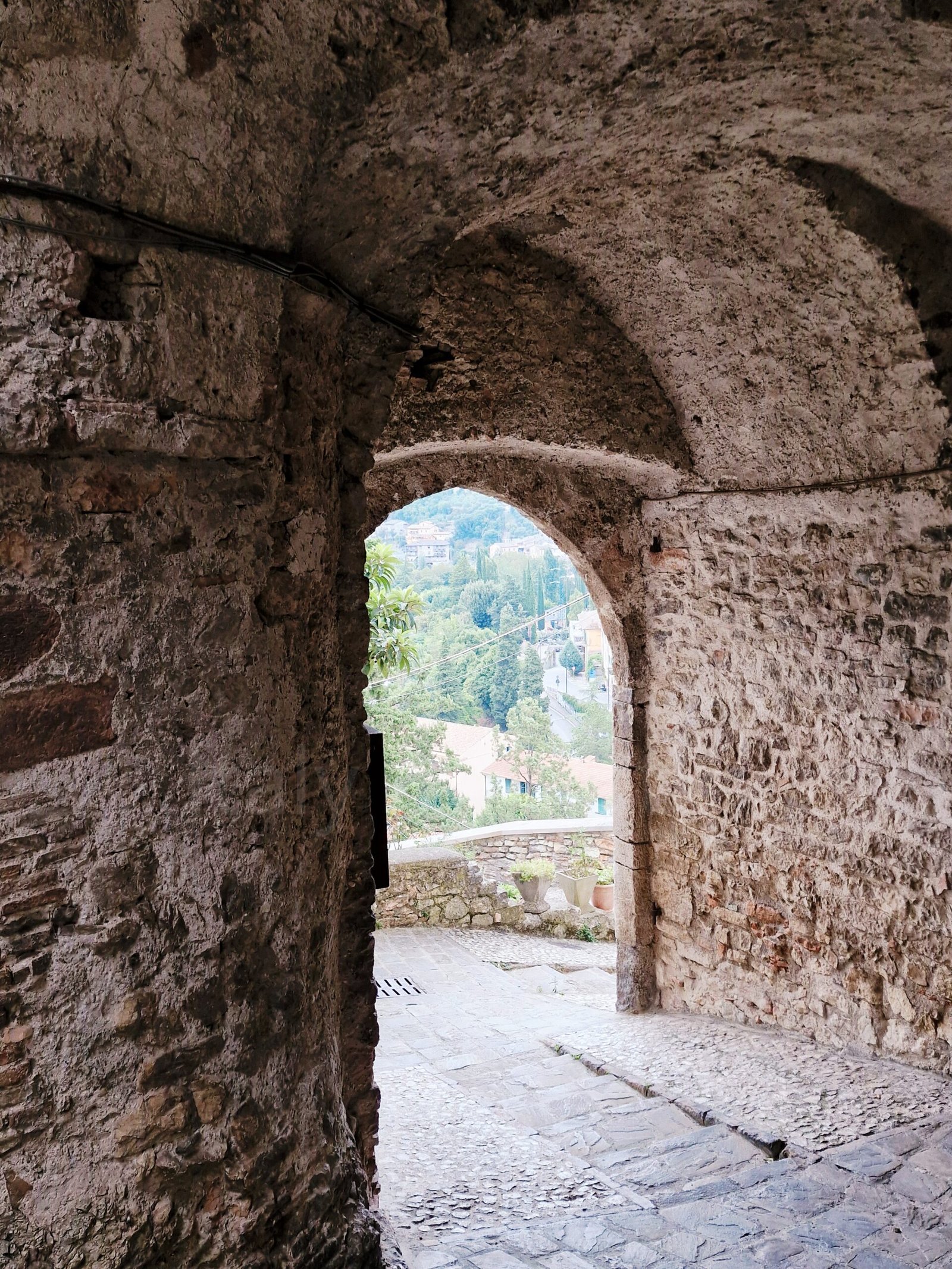
The place is small, charming, and rather sleepy. I always feel that if towns like Arrone were in Tuscany, they would be full of foreign tourists. Umbria is touristy, but there is still a lot of space for people to enjoy this beautiful region. On the other hand, as Mauro says, Tuscan towns offer everything Umbria has to offer, and probably even more. Perhaps he’s right, but I like Arrone.
Detour to Ponte del Toro: The Roman Bridge Near Marmore
On the way back to Piediluco, we saw a waterfall from the road.
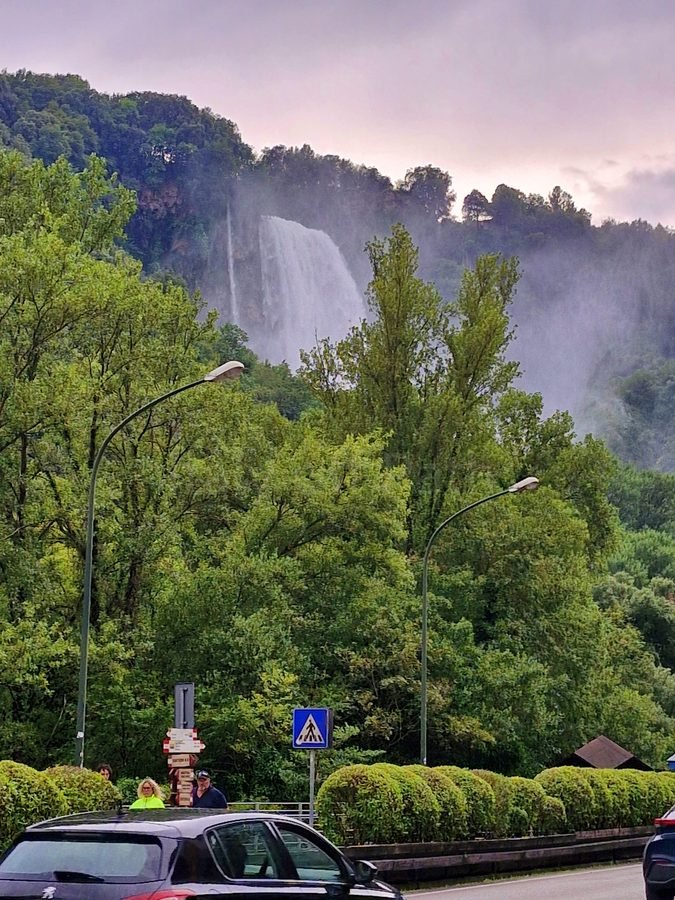
Truly amazed, we stopped behind the tunnel—there’s a kind of parking area—just to see how to visit the waterfall on Sunday, as we planned to see it that day. By chance, walking around where we stopped near Cascata delle Marmore, we saw a small board showing a path, so of course, we checked it out.
It led us to an old bridge—Ponte del Toro—and a green river.
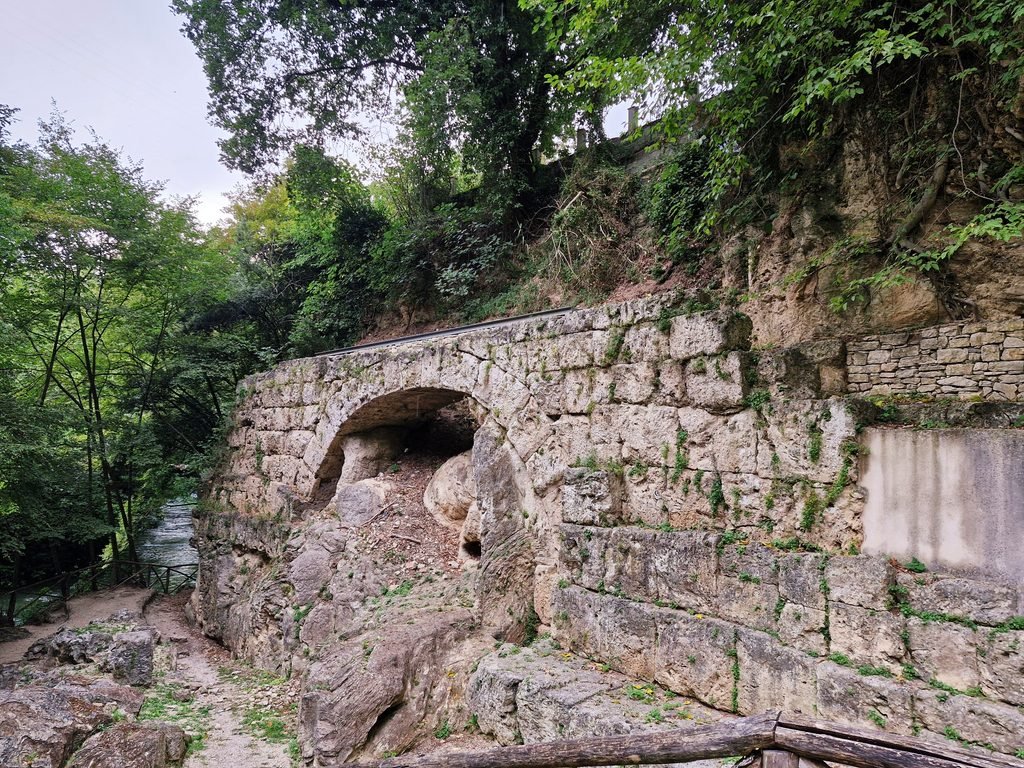
Presumably it once spanned the river or a channel—after all, what else would a bridge be for? The channel or river—whether on its own or with human intervention—has changed, or perhaps shrunk, and the bridge now looks as if it were embedded into the hillside. The bridge ended up like ancient Rome—it failed to keep pace with change.
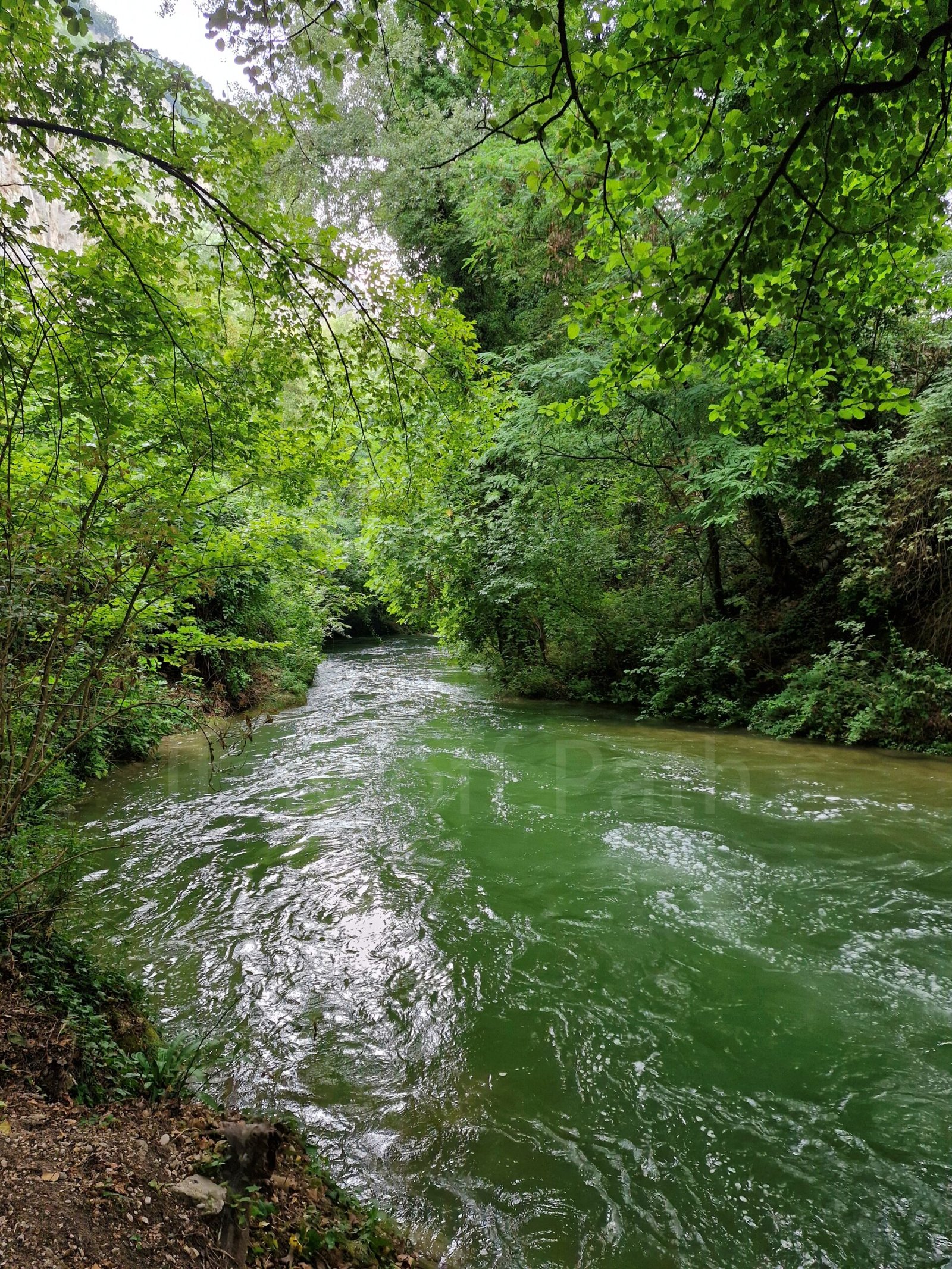
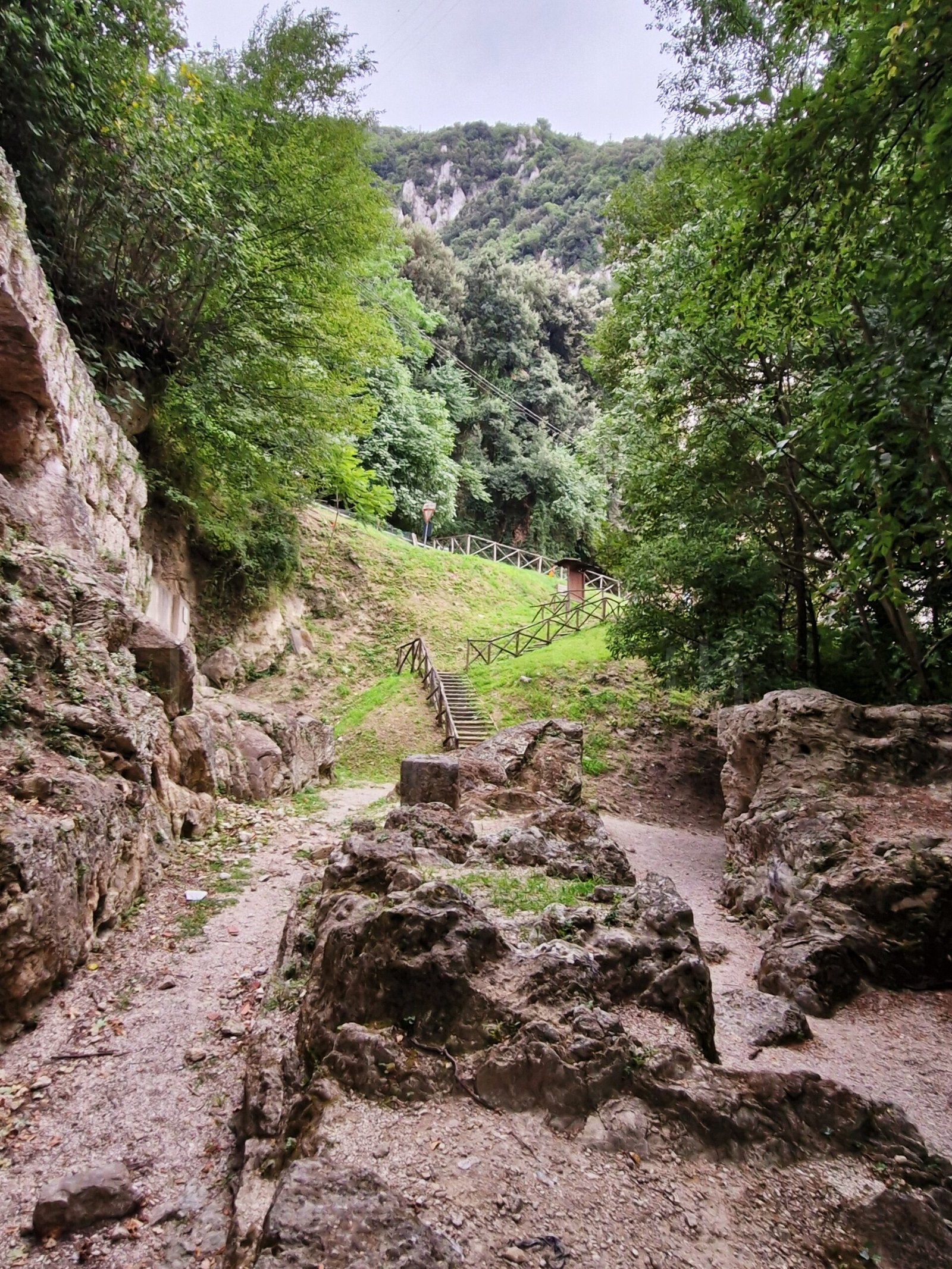
We were alone there. The bridge was built by the Romans, like many, many things in the territory of modern Italy. But because the waterfall is the main attraction there, I’m sure many people have no idea that this place exists.
Then we drove to Piediluco and ended the second day of our short holiday in Umbria.