
Spending four days in Umbria, we, as always, focused on Italy off the beaten path, visiting places tourists usually skip. To be fair, many people don’t even know this region is more than Assisi, Orvieto, and the Marmore waterfalls.
Umbria is green, has beautiful nature, and cute small towns and villages. And it also has a town called Terni.
Go to:
Where we stayed in Umbria.
This time, we stayed in Papigno, a small village near Terni, Umbria. We arrived there late in the afternoon, and the first thing we did was grocery shopping. The next day was Ferragosto; shops were closed, and we didn’t want to starve for four days. Probably, in general, nobody wants.
Then, after driving around 20 min, we got to Terni. Parking a car in many towns in Italy might be challenging – and Terni was no exception. We left the car in one of the side streets in the residential area, maybe 10 min walk from the old town.
First Impressions: When Italian Architecture Goes Wrong
My first impression of Terni, Umbria wasn’t very positive; it’s a town with many rather ugly buildings that look like they were designed by not-very-sober architects. The design is one thing, but who issued construction permits for these lovely structures, only the locals know.
This amazes me: almost always, old towns in Italian cities, even if often very similar, are at least attractive, if not beautiful. The newer parts of cities are often full of architecture that makes my eyes bleed.
Italians pride themselves on their design skills (actually on everything what’s Italian), but it seems that many of the architects had focused (still do, though) on other skills.
Fortunately, we didn’t plan to spend our weekend-break in Terni, so it didn’t bother me so much, and actually my second impression improved somewhat when we reached the old town.
The Industrial History of Terni, Umbria: Steel Mills and World War II Bombs
Terni has a long (founded in the 7th century BC), and rich industrial history and several buildings remind us that since the 19th century, Terni has been Italy’s industrial center. Or rather, it used to be, as its peak years are behind it.
Terni is located in a very watery zone of Italy, and this was a main reason why, during the Industrial Revolution, people with money invested there in various factories. Steel mills, foundries, and factories producing weapons, jute, and wool for years provided the locals with employment.
But the booming economy was also its curse—these important industries made the city a favourite bombing target during World War II. Many factories have already been closed, and I think this is clearly visible in Terni, which looks a bit run down, so probably that’s why I felt a sense of sadness there.
Of course, industrial architecture was supposed to be functional and not attractive, but many cities with this buildings style are interesting to visit. Terni is not.
What to See in Terni (When Almost Everything Is Closed)
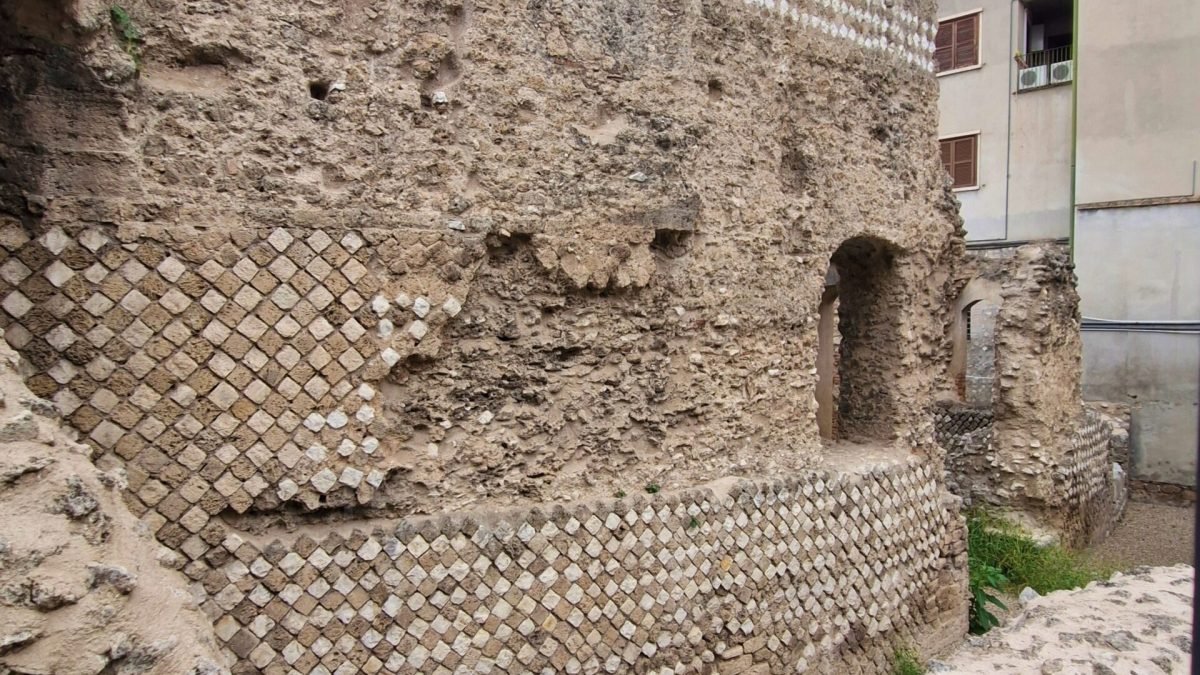
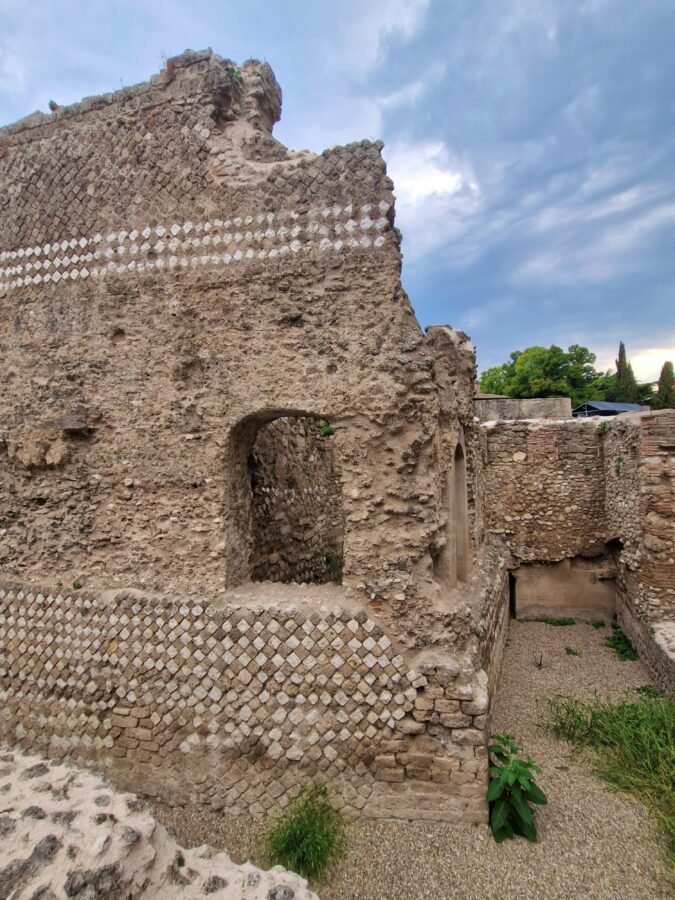
Fortunately for Terni’s inhabitants and potential visitors, the town has some nice buildings and historical monuments. Made of local limestone and stone sponges grey-whitish Roman amphitheatre was closed. Judging by the chairs and tables standing around it behind the fence, the amphitheatre is used for concerts and cultural gatherings.
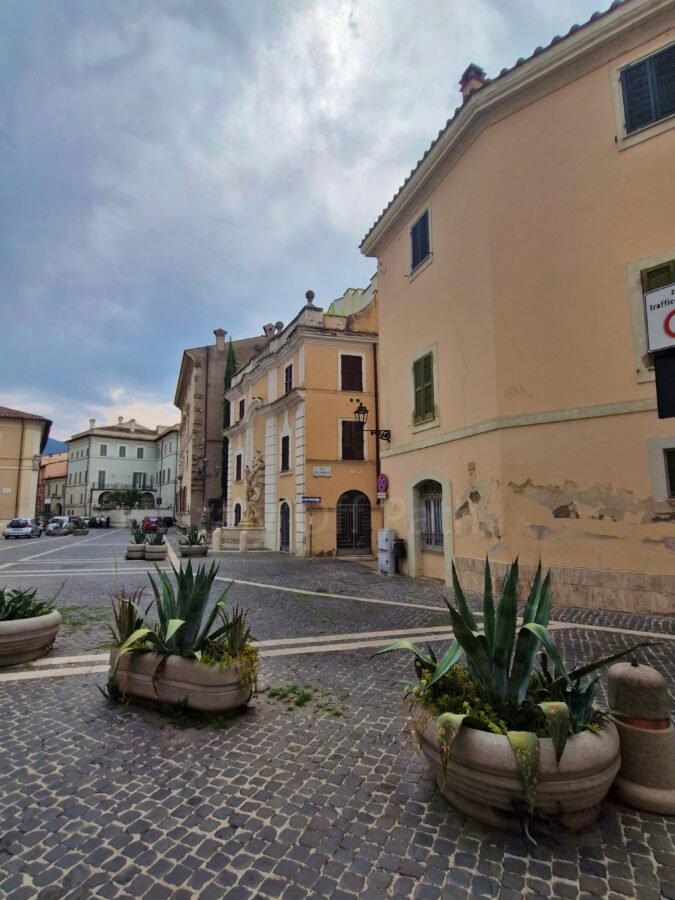
Terni Old Town has a number of monuments, such as The Cathedral of Santa Maria Assunta and the Basilica of St. Valentine – they were closed by the way. The Romanesque tower of the Barbarasa family is a private estate, so it can be seen only from outside. I had a weird feeling as the whole town was shut down, and not only its factories.
Luckily, the main door of the town hall (Palazzo Spada) was open, so we wandered into the courtyard. The building was made in the shape of a cube; above our heads we had an open square ‘window’ with a still blue sky. Nice.
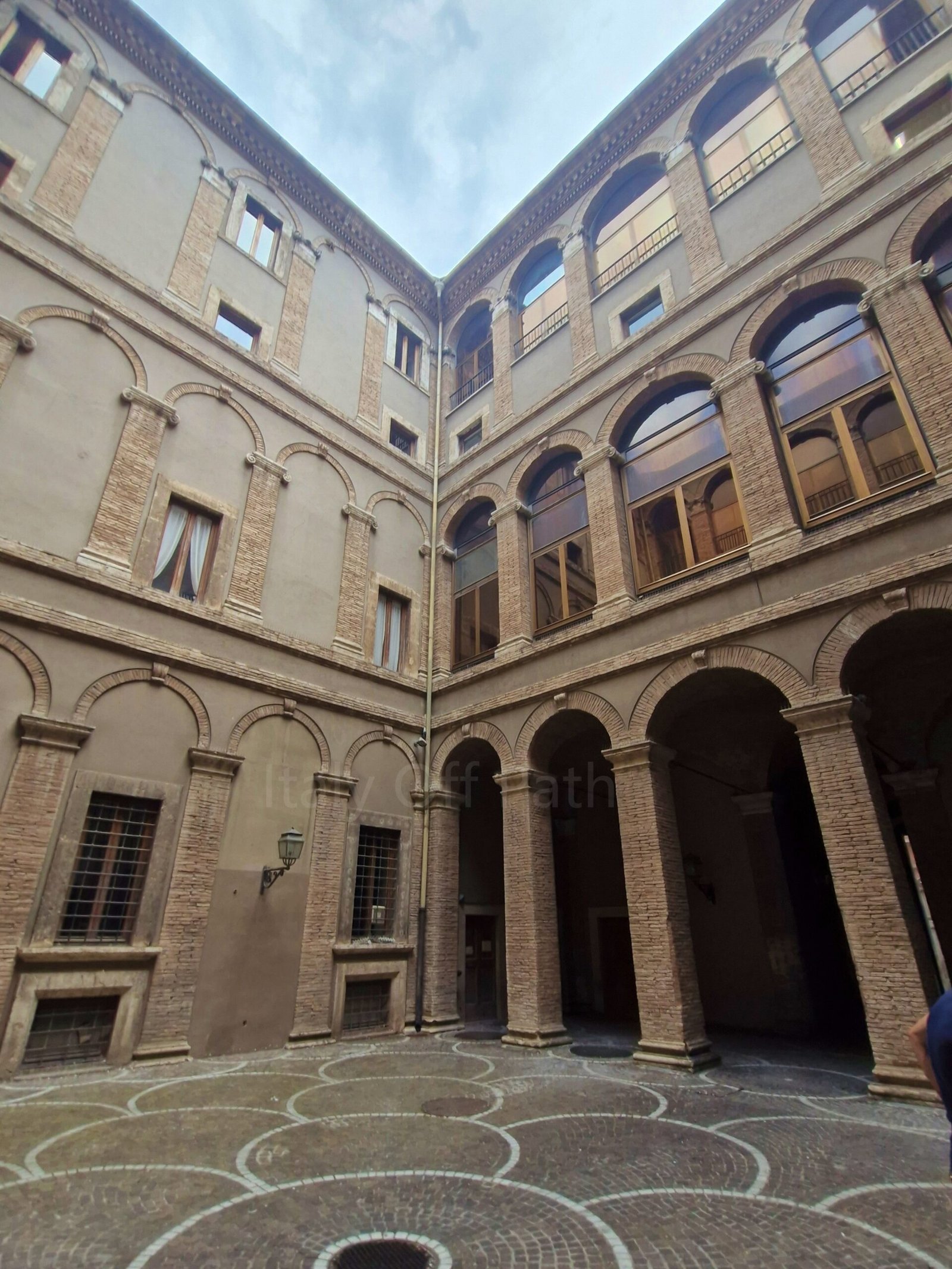
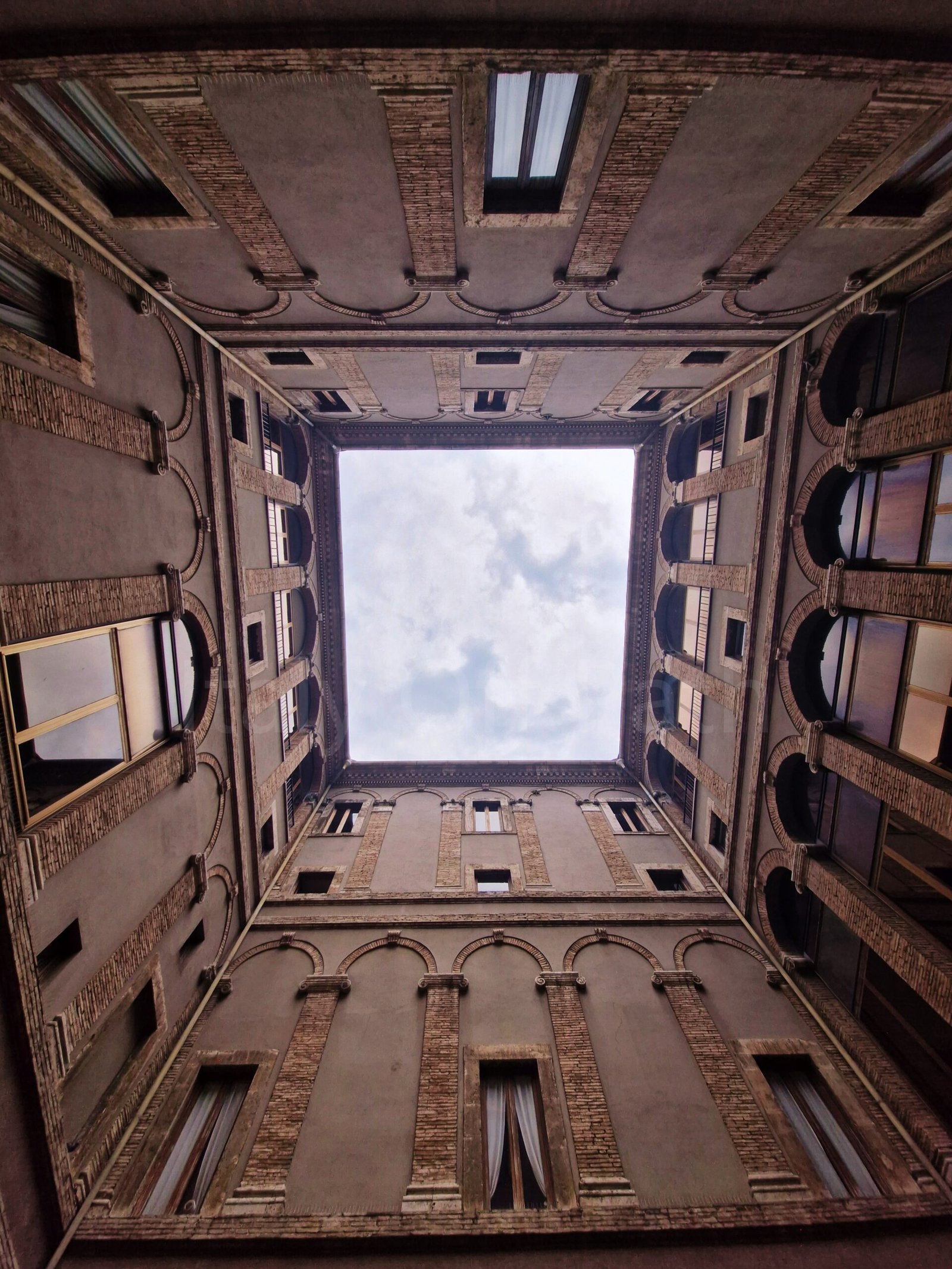
The Palazzo was built in the 16 century; it’s a beautiful and bare building. I think the mayor of Terni could order to add a bit of dressing, i.e some greenery to it.
The Lance of Light: Terni’s Modern Obelisk
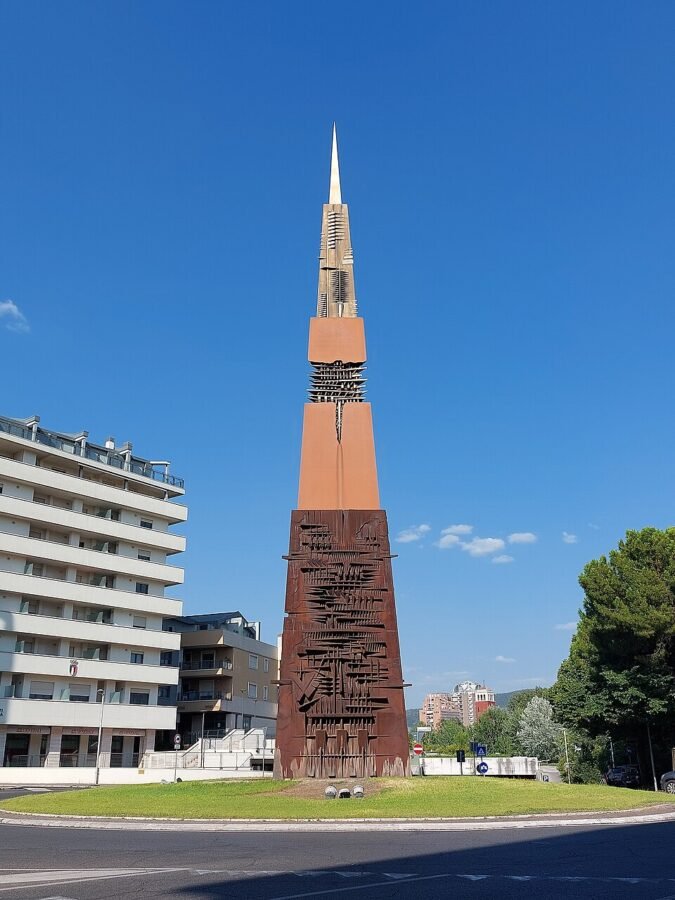
A modern symbol of the city, the “Lance of Light,” better known as the Obelisk of Arnaldo Pomodoro, is considered a must-see in Terni. It looks lie a syringe with needle in my opinion, but still Ok comparing to another construction called (if I’m not wrong) – the Power Hammer. It stands next to the train station.
Umbria has very changeable weather, and it started raining. I like rain, so I was OK with it, especially as the heavy clouds hanging over an unattractive city strengthened its post-industrial atmosphere.
Mauro doesn’t like rain, so we got back to Papigno, where we double-checked our list of things to do in Umbria.
Is Terni Worth Visiting?
No, not really. But my personal opinion is not something everyone has to share, so places I find unattractive you might like. And that’s how it should be. If you are into industrial archaeology or modern Italian history, stopping there for two hours on the way to Cascata delle Marmore is a good idea. If you want a picturesque medieval village, just head up to Arrone or Piediluco.
If this post made you laugh, annoyed you, or just reminded you of your own trip, tell me in the comments or drop me an email. I actually want to hear about your experiences—the good and the frustrating.
Sign up for the newsletter for one post a week (usually Wednesdays at 6:00 PM). No spam, no “magical Italy” fluff. Just honest stories and places off the beaten track. I’ll see you there!