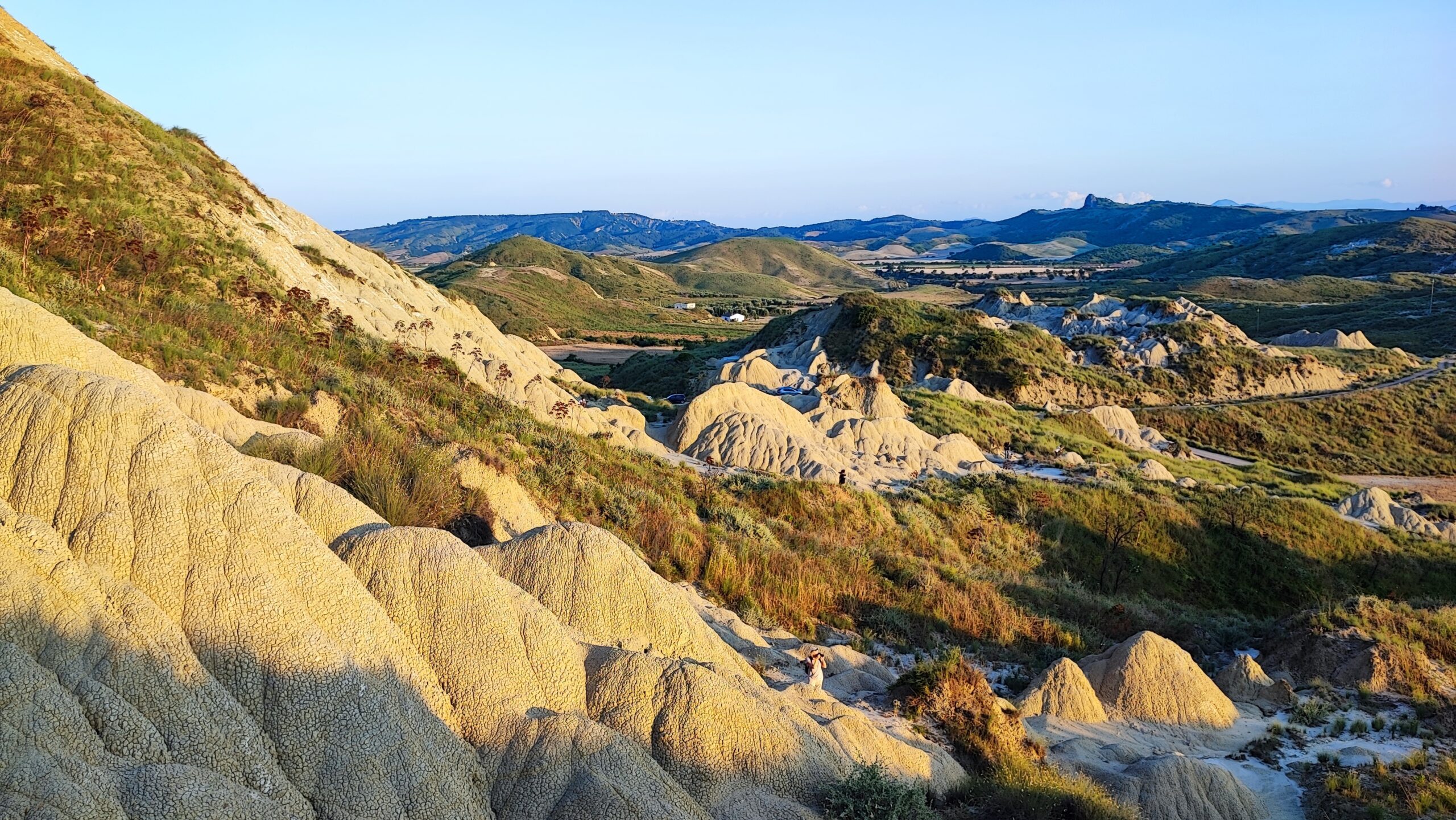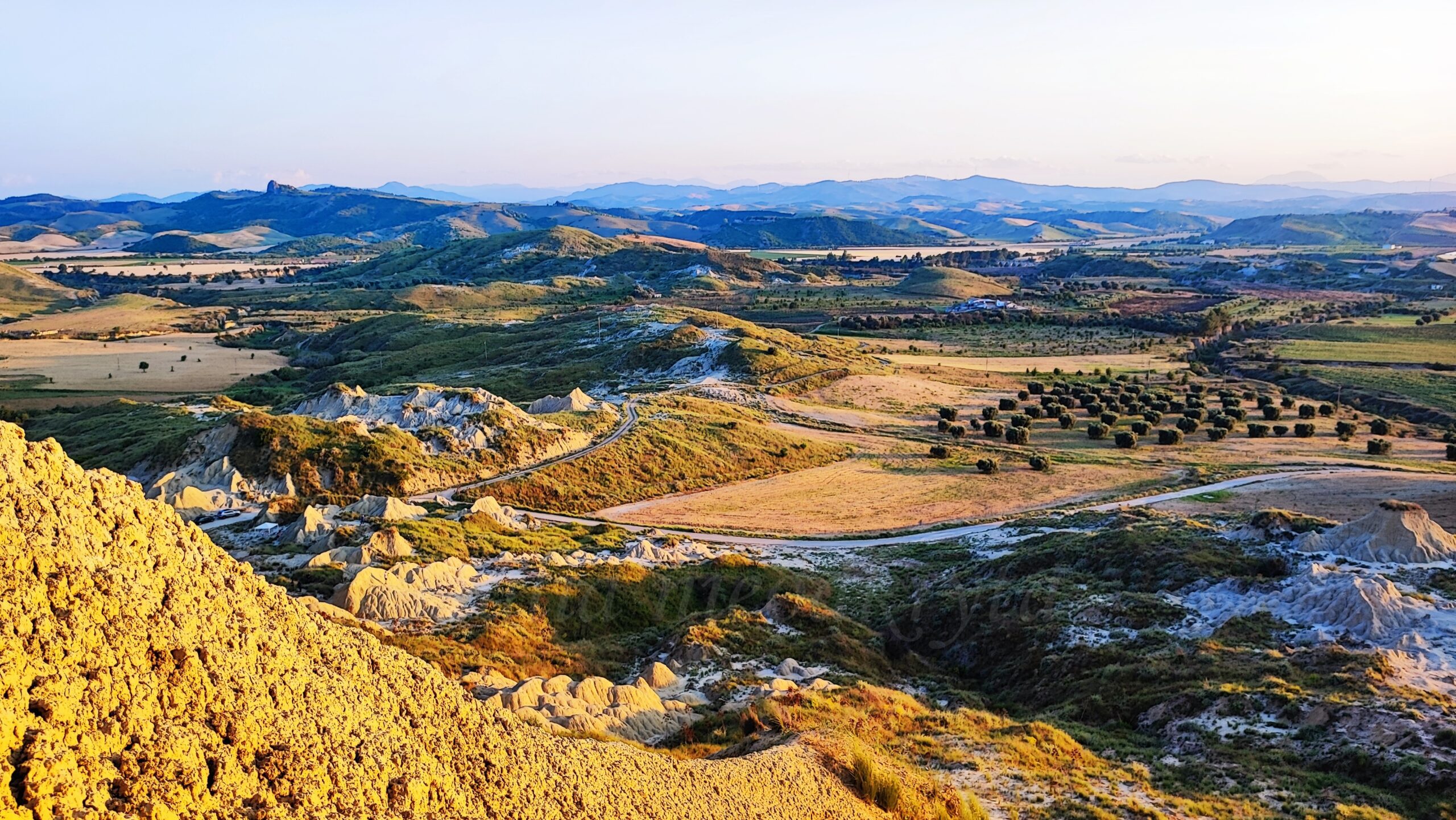
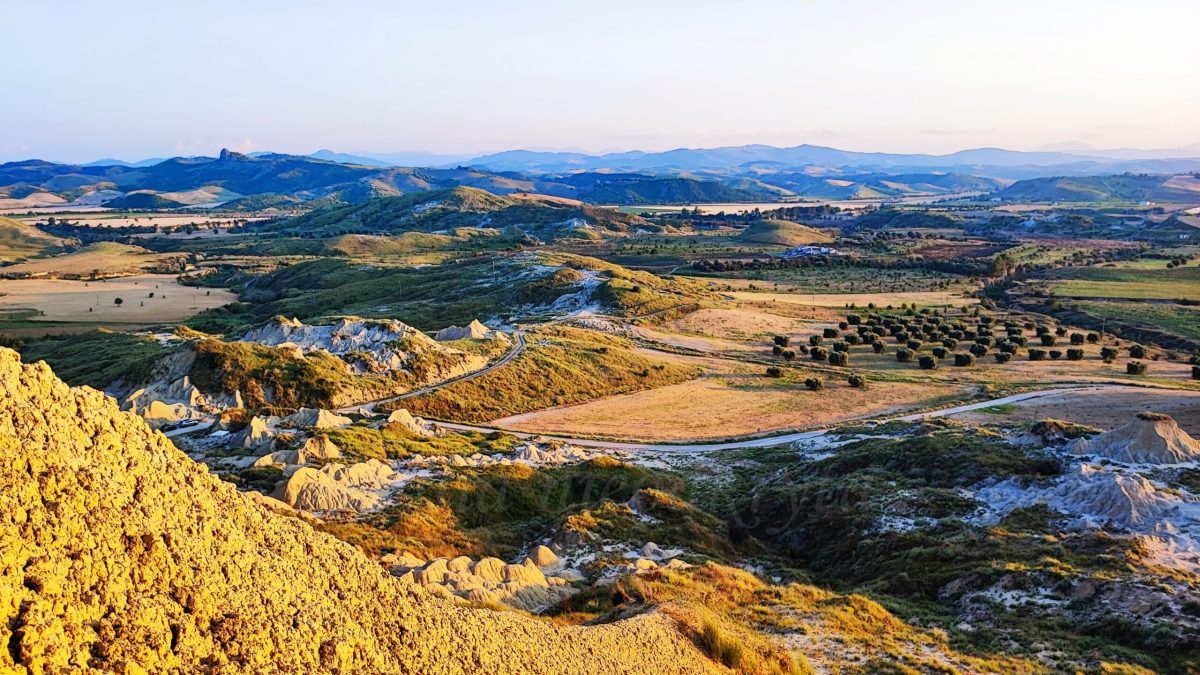

Calanchi di Pisticci, a bit quirky, and not very touristy place, is located in the Province of Matera in Basilicata. And it’s only about 20 minutes by car from Craco.
Navigating the Dirt Roads: Finding the Calanchi di Pisticci
While driving in Italy, it’s generally best to use a GPS, especially when you’re in the Italian badlands.
And don’t worry if it leads you, as it often does, to the middle of nowhere — in that case, it will likely point you in the right direction.
Getting to the calanchi requires driving through dirt roads, that’s why it’s best to go there on a sunny/dry day. After rain, you might get stuck in the mud.
Clay Giants and Lame Hairdressers: What are the Pisticci Calanchi?
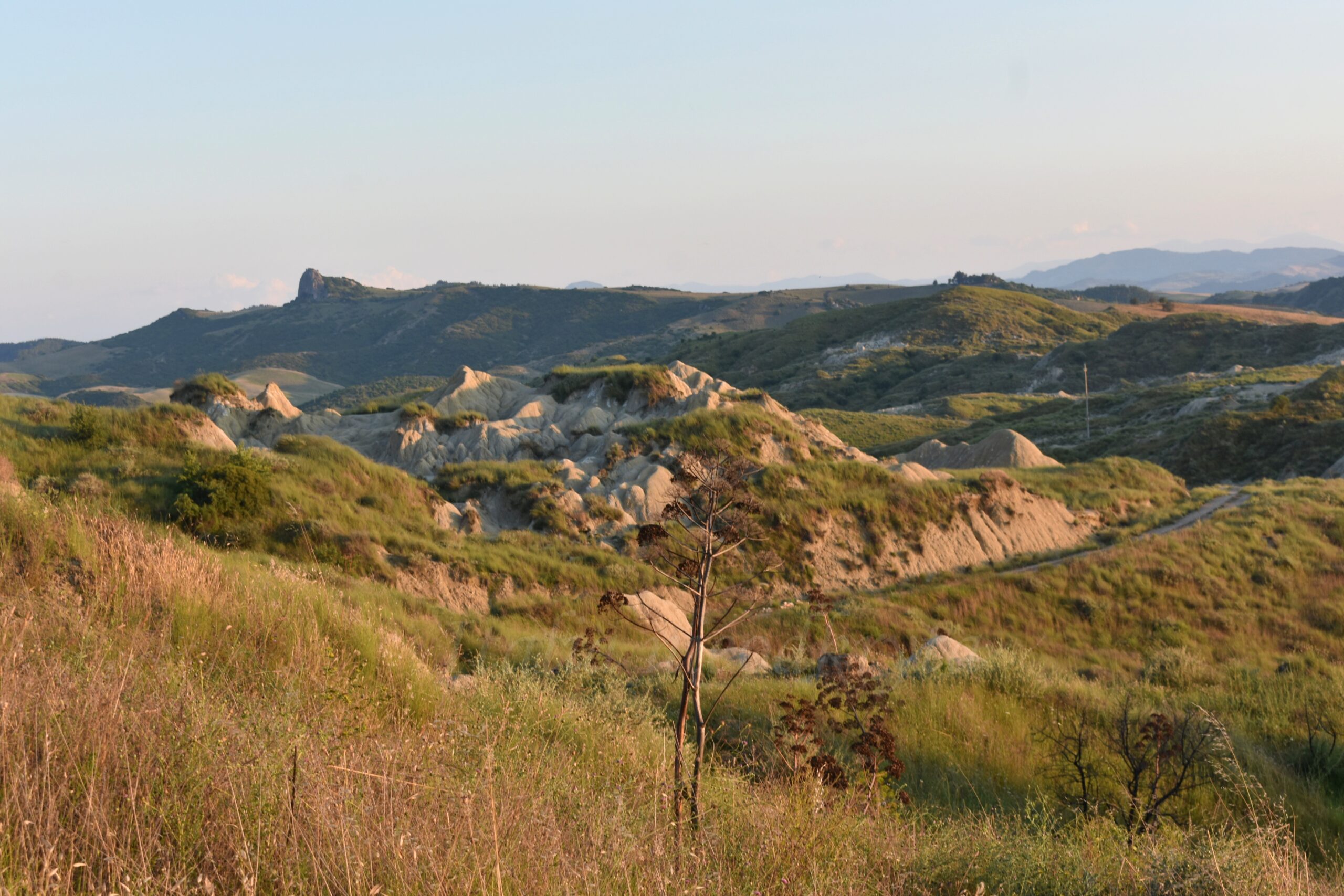
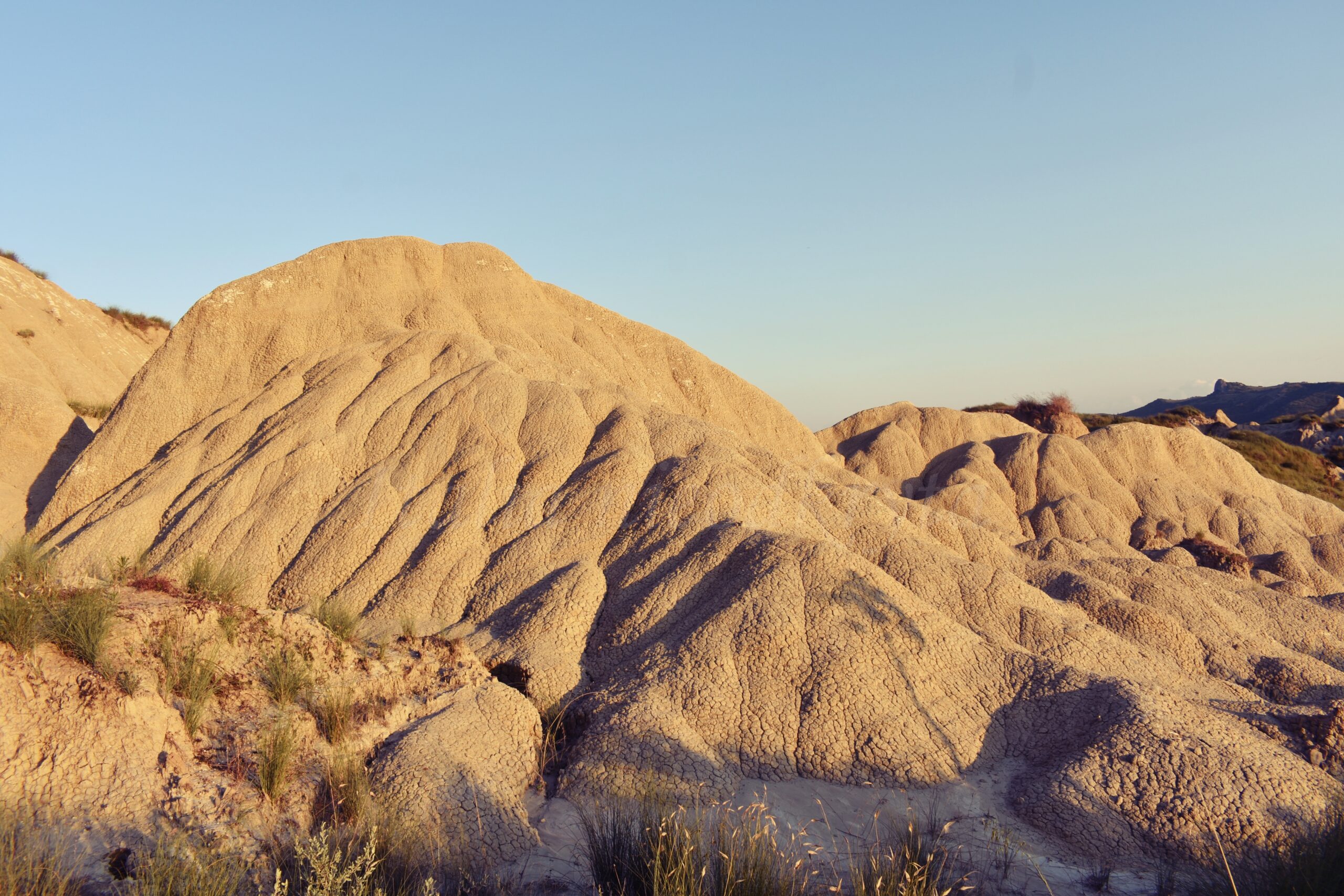
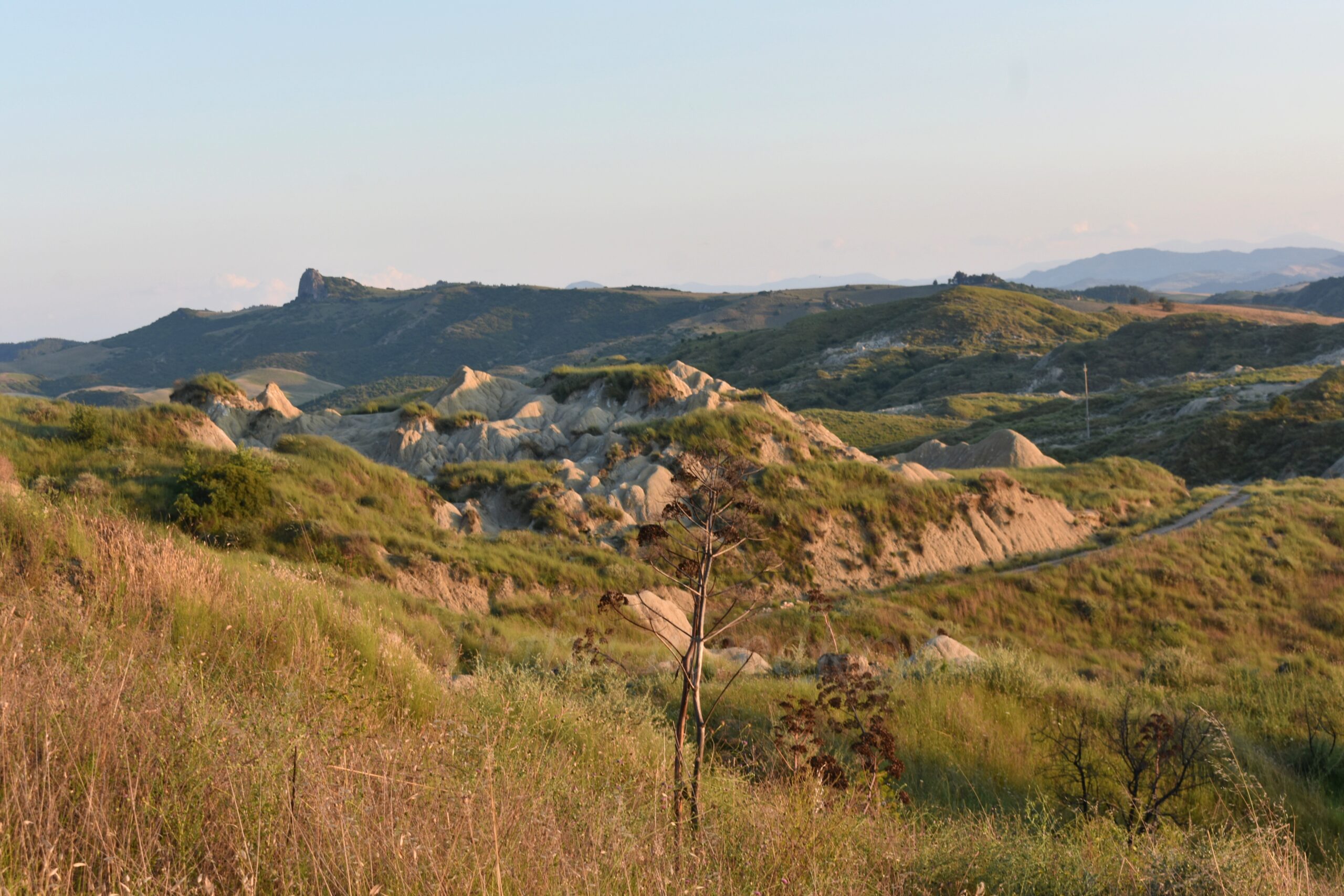
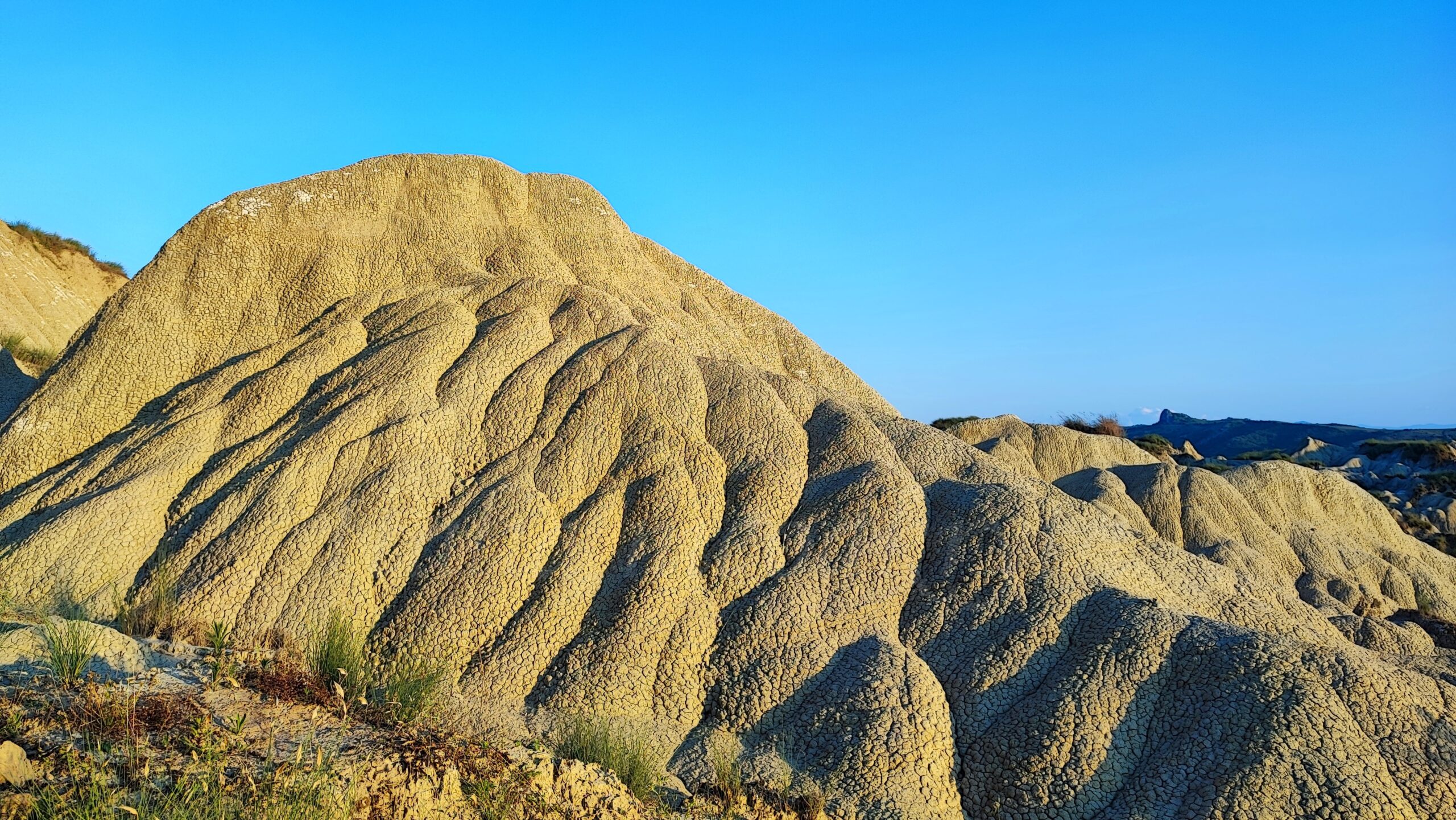
Pisticci is a town, and calanchi are bald hills of clay soil, a dozen or so meters high. Bald — because they are rarely covered with anything. There are some plants growing, but only in the lower parts of the hills. Here and there, they stick out of holes. The whole clay formation is a bit funny, as it changes more or less after each heavy rain or wind.
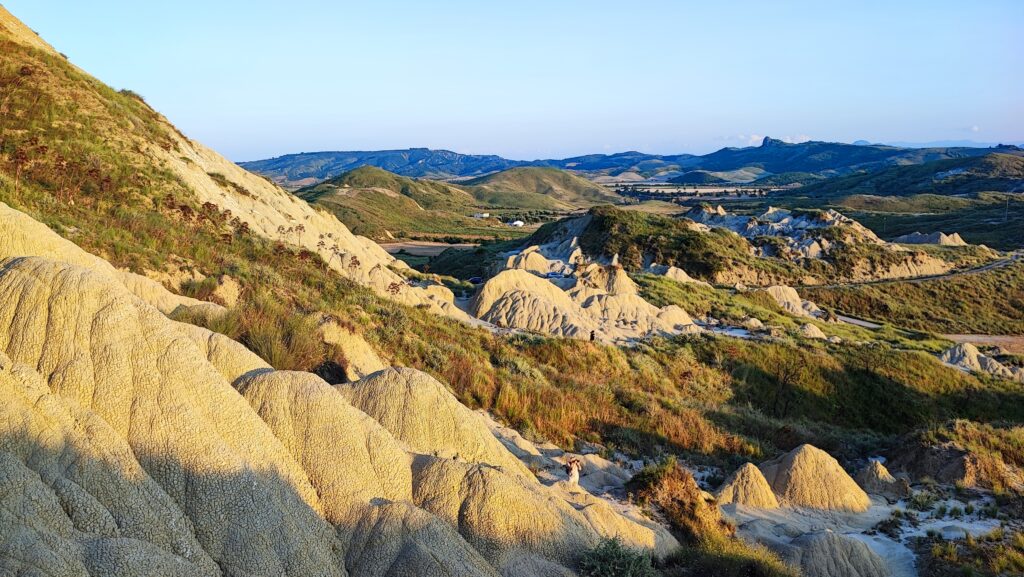
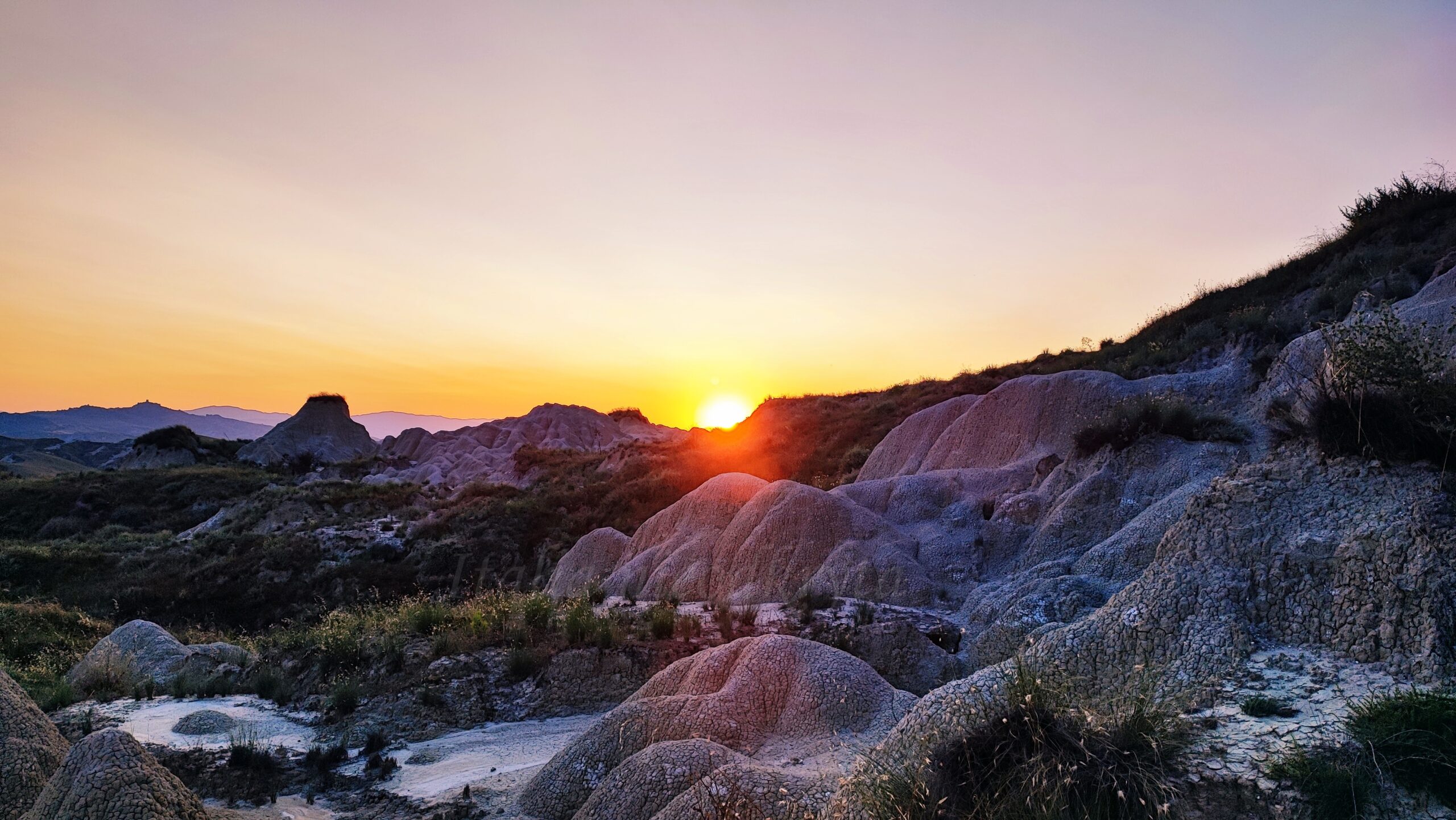
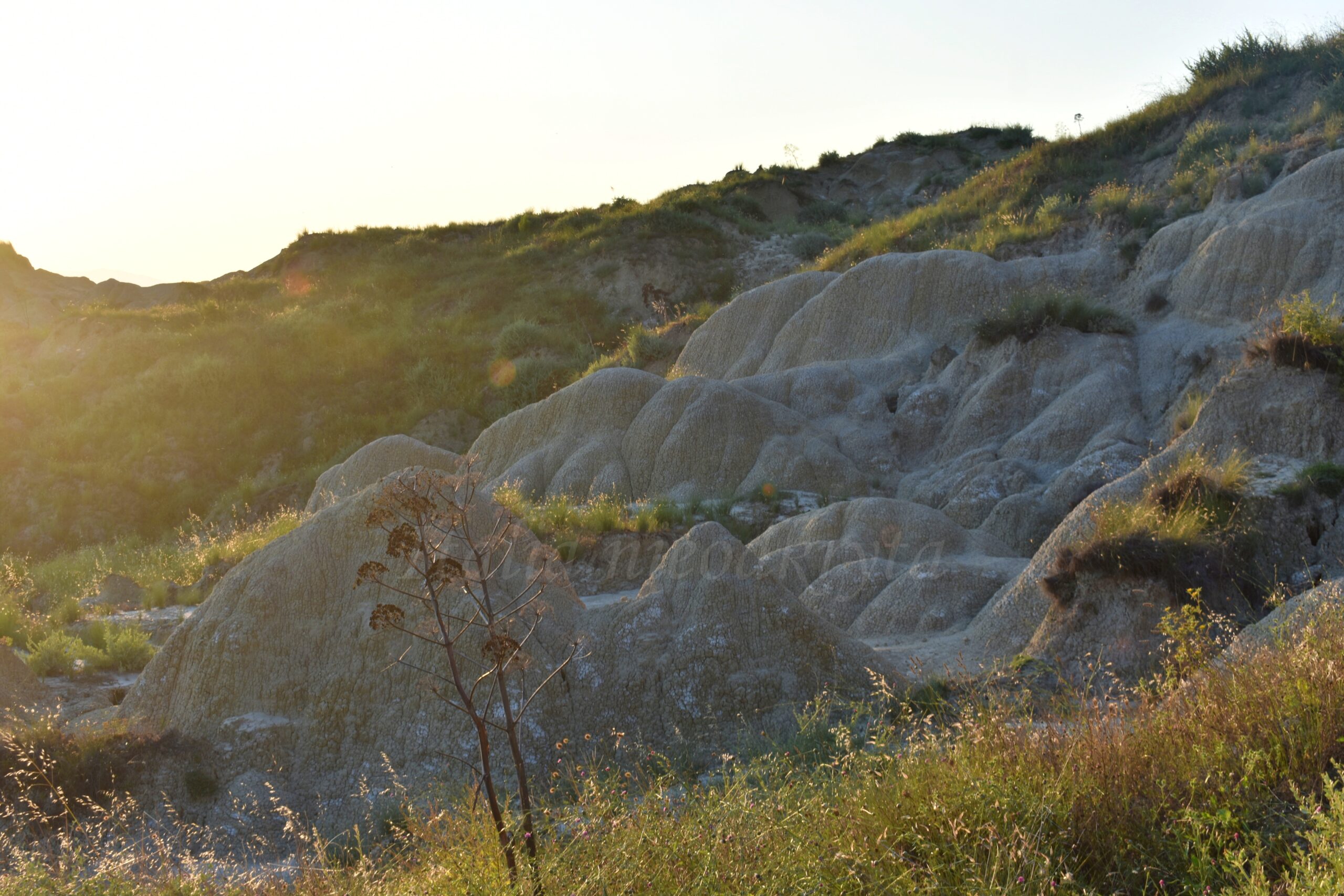
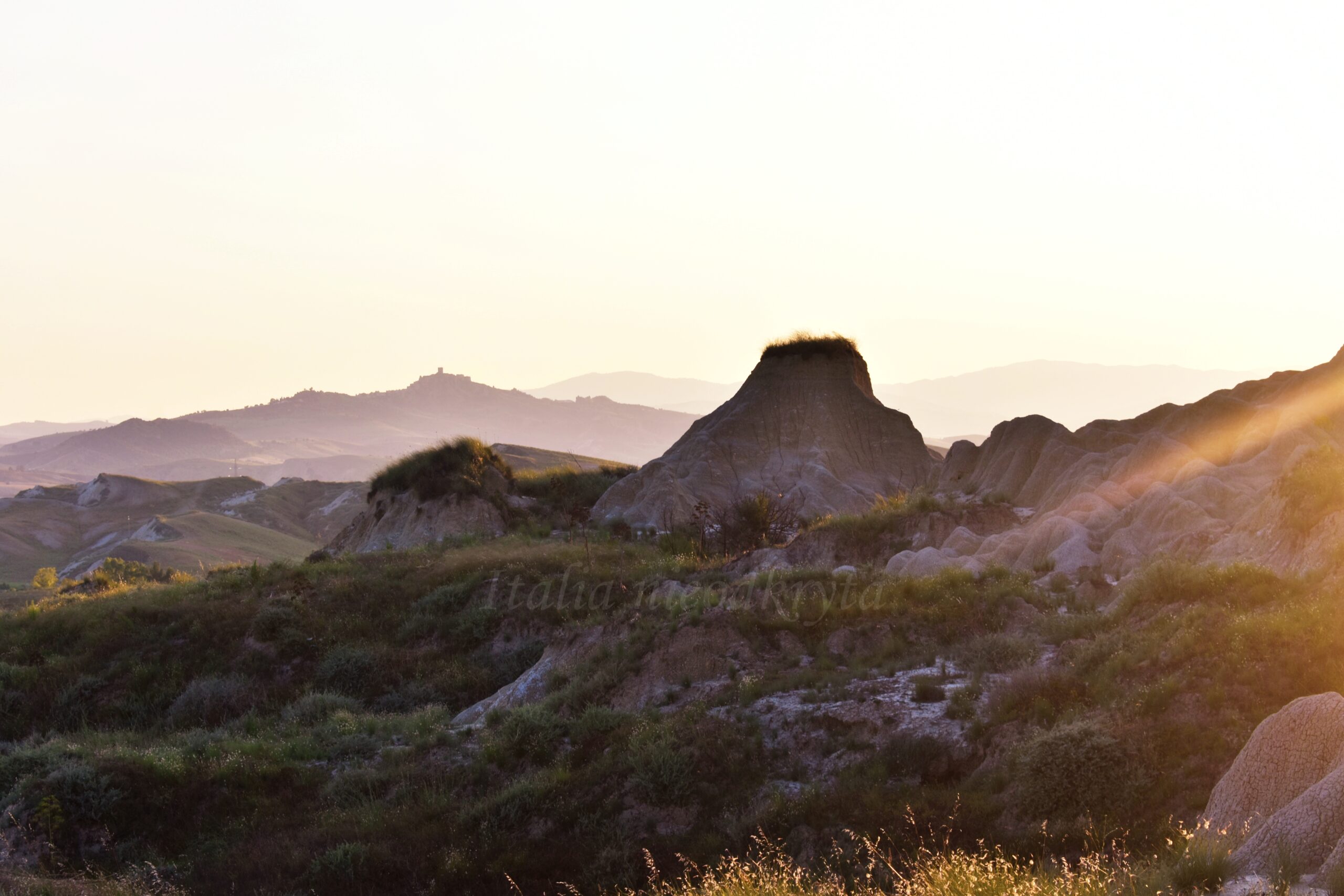
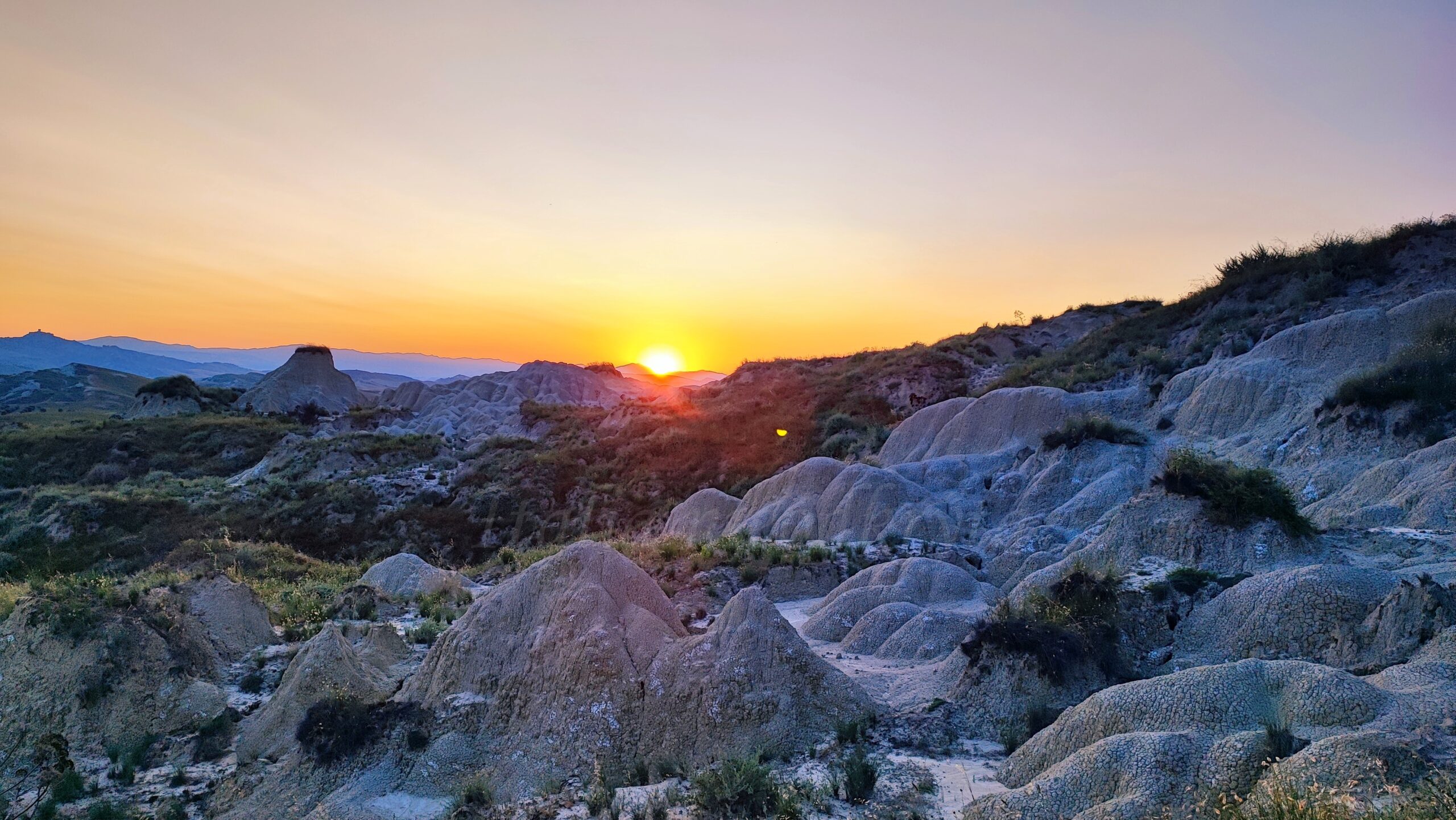
The hills are yellowish, dry, and cracked; each has a specific shape, which depends on the state of the clay erosion. Some, the more crumbly ones, have grass fringes on their tops, and in the rays of the setting sun, they look like giants waiting to wake up after a visit to a lame hairdresser. I felt like a Lilliputian there, who had accidentally wandered into a lunar landscape of Italy.
Hollow Hills and Hidden Holes: Is it Safe to Hike the Calanchi di Pisticci?
There are not necessarily very visible paths there, but it’s still worth walking on this rugged terrain of Pisticci and enjoying the views.
You can also climb to the top of the formation, but in this case, it’s better to be careful.
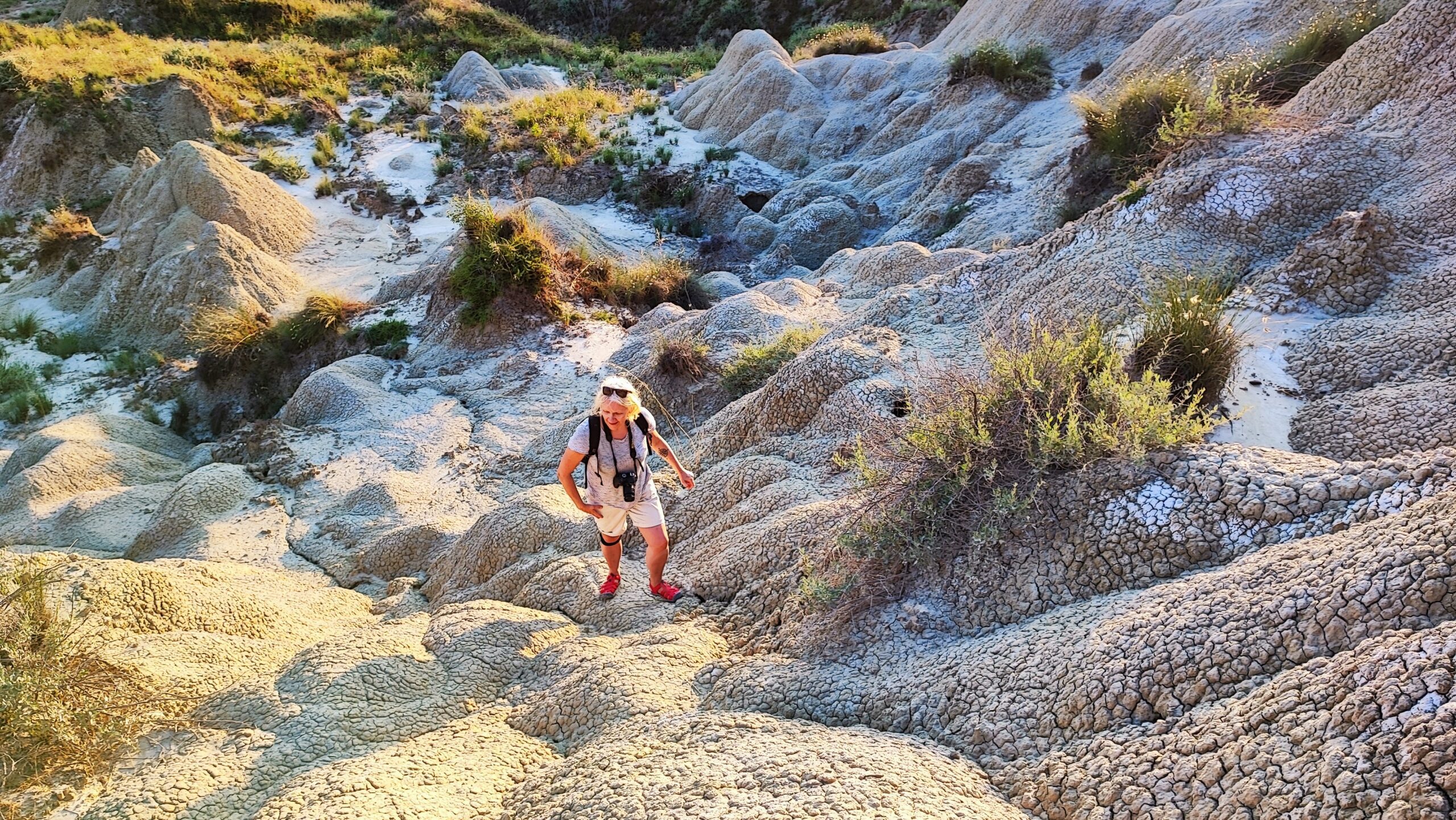
All the clay mountains are bald, so there is nothing to grab onto when going up or down. Some of the hills are very steep, so I had to slide down on my bottom. And the most important thing — the clay crumbles and sinks, and holes form in the hills. The ones at the bottom are not deep, but I’m guessing it’s not so nice to fall into them. And since the hills are hollow inside, the higher you go, the deeper the holes are. Besides, it’s hard to say where the clay layer is solid and you can safely put your feet down, and where it is thin and might collapse under your weight.
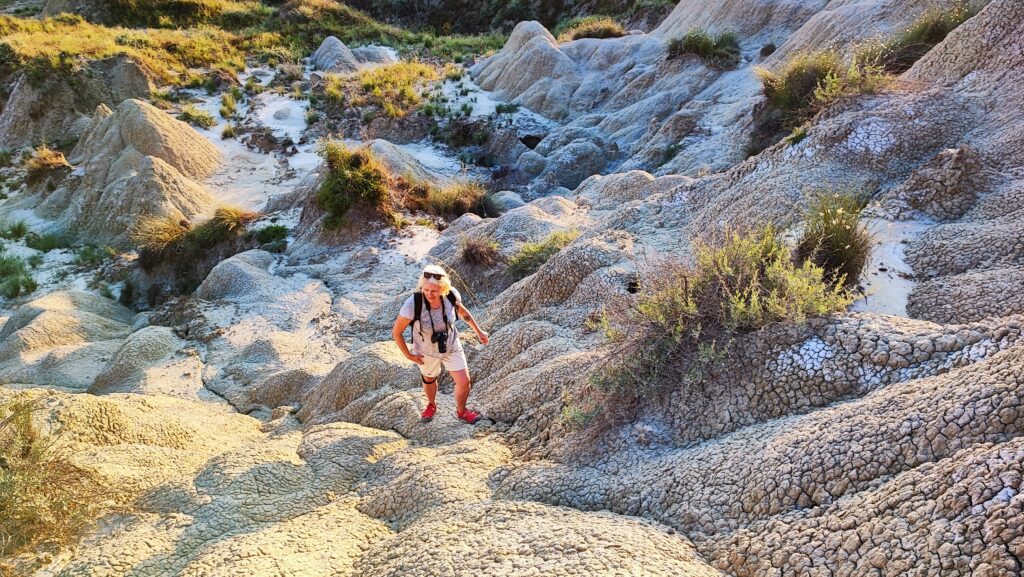
So, if you want to climb the clay mountains, do it wisely. You can also stop at the foot of the hills and admire the beautiful panoramic view. When I was there, this part of the calanchi was occupied by a group of photographers. It seems that the place is one of those unique photography spots in southern Italy.
I went further and much higher, where there was not a single person — but there were a lot of holes.
Beyond the Sassi: Why the Calanchi is the Ultimate Day Trip from Matera
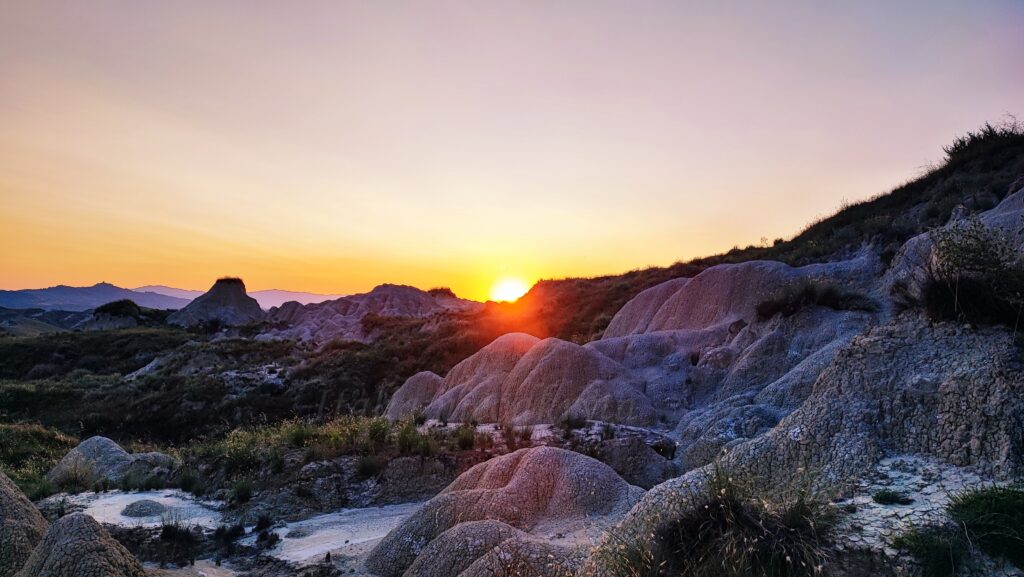
This authentic Basilicata landscape is raw and weird – that’s why I liked it. I went quite high up the hills, but the large number of holes discouraged me from climbing further. So I gracefully slid down on my butt to a lower level, sat on one of the hills, admiring the panorama and the sunset, and waiting for the clay giants to come to life.
Festivals and Photography: Things to Do Near Pisticci and Craco
Pisticci Calanchi attracts all sorts of artists who perform, sing, dance, paint, and more 24/7 during the four days of the La Luna e i Calanchi festival. It’s probably a pretty cool event. Besides, during the festival, you can hike the hills with a guide, so you don’t have to worry about any holes.
Pisticci Calanchi is also a good option for a day trip from Matera, especially when you get bored visiting Sassi. Although calanchi are similar in color to the Sassi, at least the clay mountains can give you a bit of adrenaline, especially if you decide to climb them.
If you don’t enjoy festivals, the area is also good for motocross, horseback riding, or mountain biking.
Quick Tips for Visiting Pisticci di Calanchi:
-
Visit on a dry day — the clay becomes slippery and dangerous after rain
-
Wear proper shoes — the terrain is uneven and crumbly
-
Be careful when climbing — the hills are hollow and can collapse
-
Don’t rely on marked paths — there are no clear trails in the area
-
Bring water — there is no shade or facilities nearby
-
Use GPS to get there — roads can be confusing in this area
-
Avoid going too high — some parts of the hills are unstable
-
Great spot for photography — especially at sunset
If this post made you laugh, made you angry, or simply reminded you of your own trip, let me know in the comments or by email. I love reading about your experiences in similar places. And sign up for the newsletter – a new post once a week (usually Wednesdays at 6:00 PM).
No spam, no “most beautiful Italy ever.” Only authentic events, and off-the-beaten-path places. I’m waiting for you!