
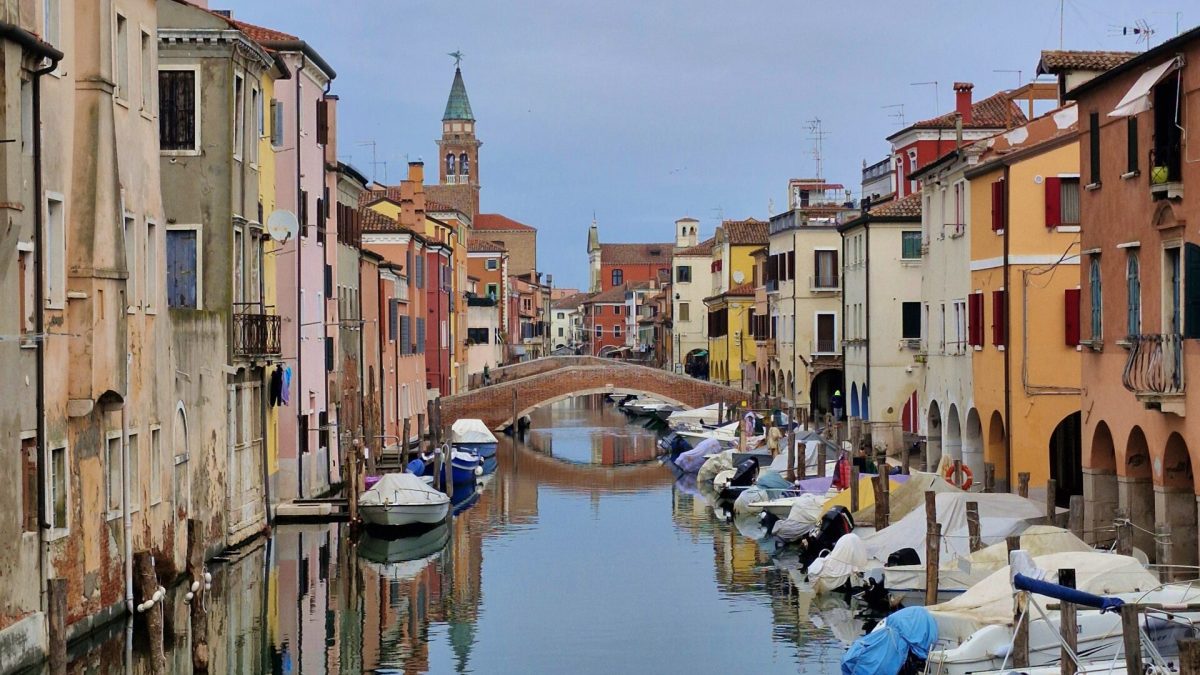
I really don’t like comparing lesser-known places to well-known ones and giving them the “little brother/sister” label. To me, it suggests that the latter is simply a poorer/worse version of the famous one.
Chioggia, located just 40 km from Italy’s most popular city, has earned the nickname Little Venice (by the way, there are plenty of so-called Little Venices around the world). Well, both places have things in common, but after visiting Chioggia I can tall you – it isn’t Little Venice; it’s a separate entity.
Venice in December: Crowds, Chaos and Disneyland Vibes
I remember visiting the neighbouring region Friuli Venezia Giulia and Venice just before Christmas a few years ago, naively believing it wouldn’t be crowded in winter. And I felt like I was in Disneyland – people everywhere, stalls selling ‘authentic’ Venetian souvenirs made in China, some crazy tourists climbing into someone’s house through the low windows to take a selfie. And coffee/cappuccino at absurd prices.
Visiting Chioggia, more or less at the same time, in December on my way to Slovenia, we saw it almost empty. No overtourism there, hallelujah, at least not that day.
What Chioggia Really Looks Like – Beyond the Venice Comparison
Chioggia, built on a group of small islands, is a part of the Venetian lagoon.
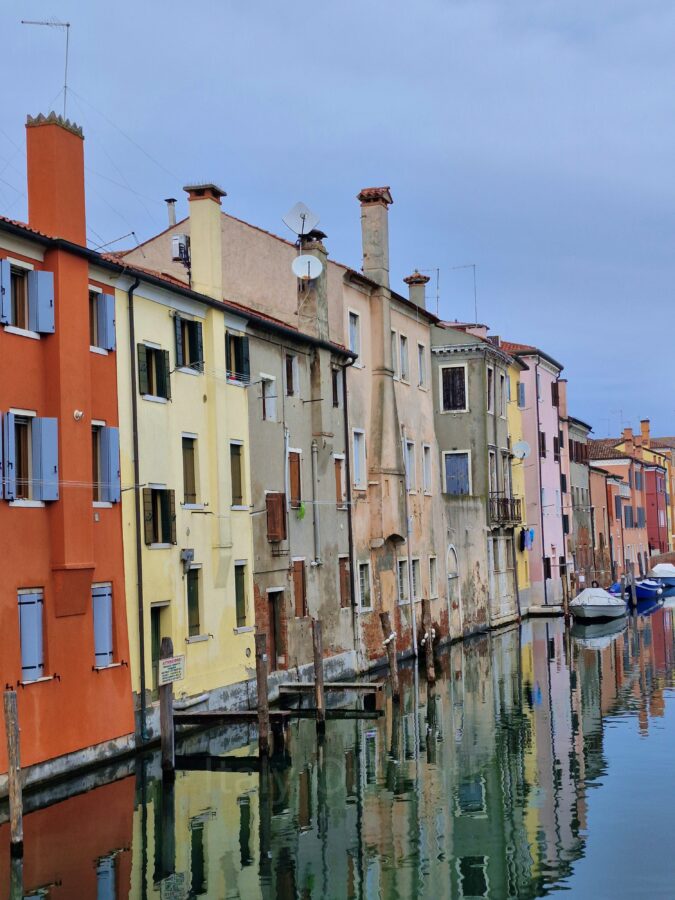
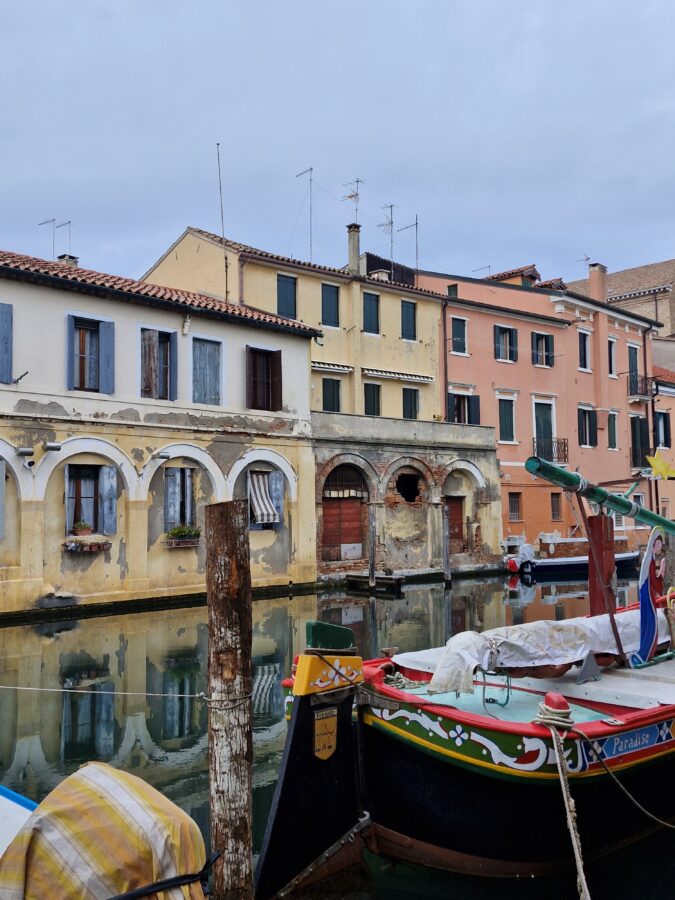
The town has a wide entrance to the sea, three canals with colourful boats, beautiful pastel-painted houses, small bridges, its own cathedral, a towering campanile, a copy of the Rialto Bridge, and its own lion – Marcian – much smaller than the Venetian one, called caressingly “the cat of Chioggia”. The town is lovely.
Surprising Details: Fewer Palladian Windows Than You’d Expect
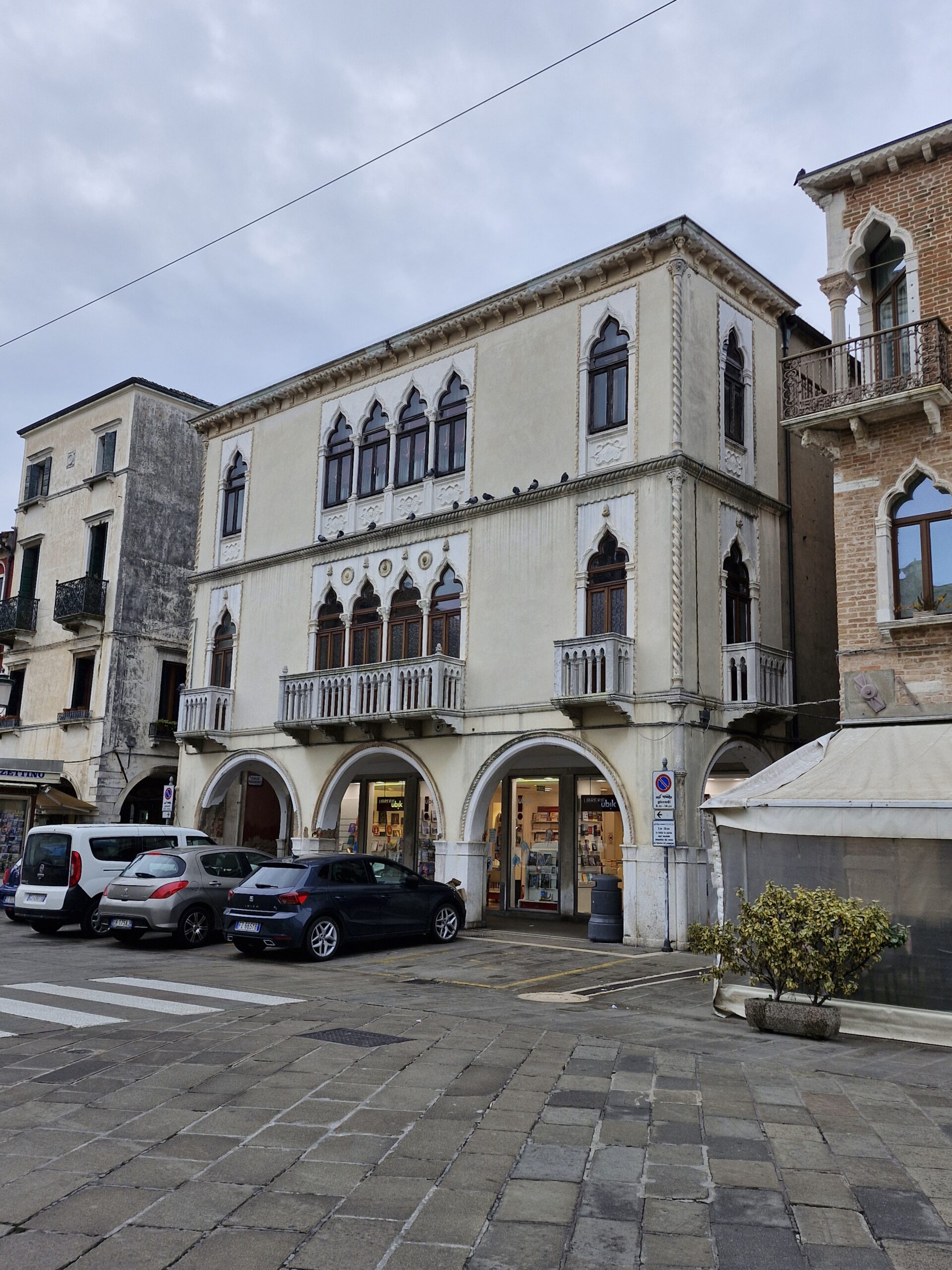
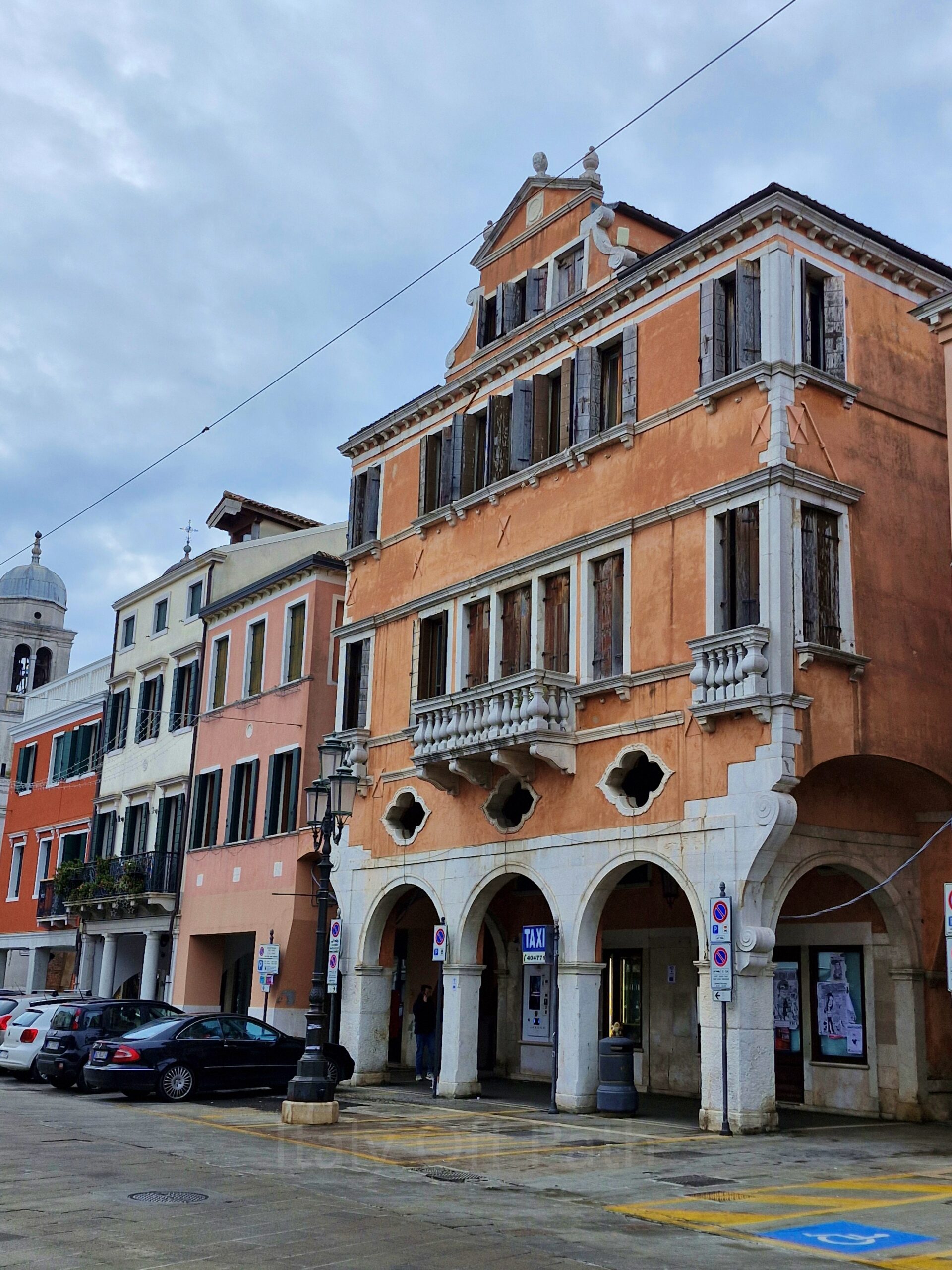
And surprisingly, even if the buildings are Venetian-like, there are no Palladian windows – i.e. there are, but not so many. I was walking around trying to find them, and I saw just a few houses with them in the strict centre. Maybe more Venetian windows are hiding somewhere in the side streets.
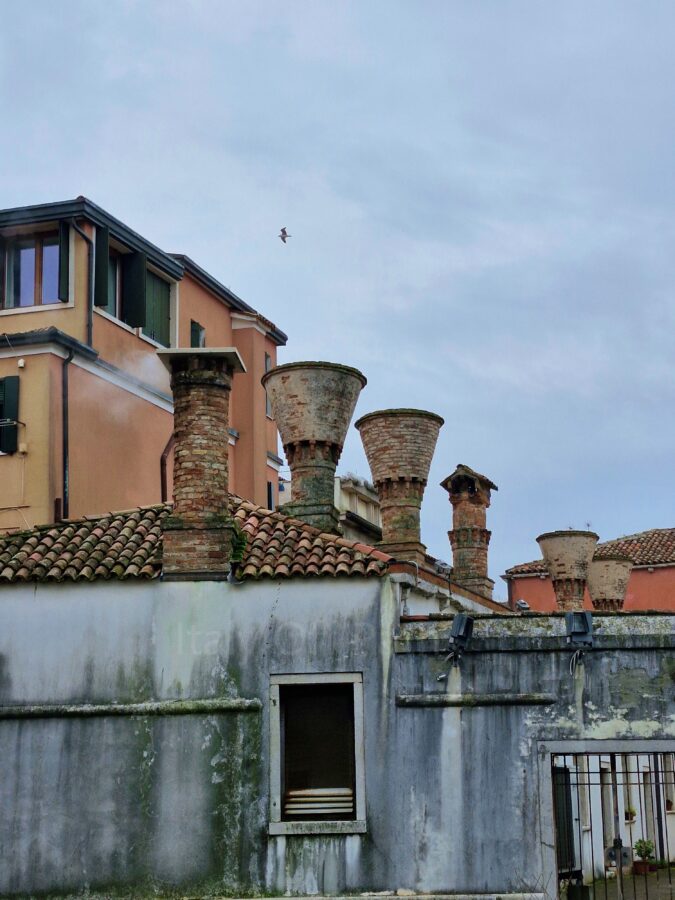
However, looking for the windows, just by chance I noticed that some old houses have really cool/interesting old chimneys.
Visiting Chioggia Fish Market – One of Italy’s Most Important Ports
There is also a fish market – it was still open, so we took a look at it. No wonder Chioggia is one of the most important fishing ports in Italy – with such a variety of fish and all kinds of frutti di mare, it’s hard not to be one.
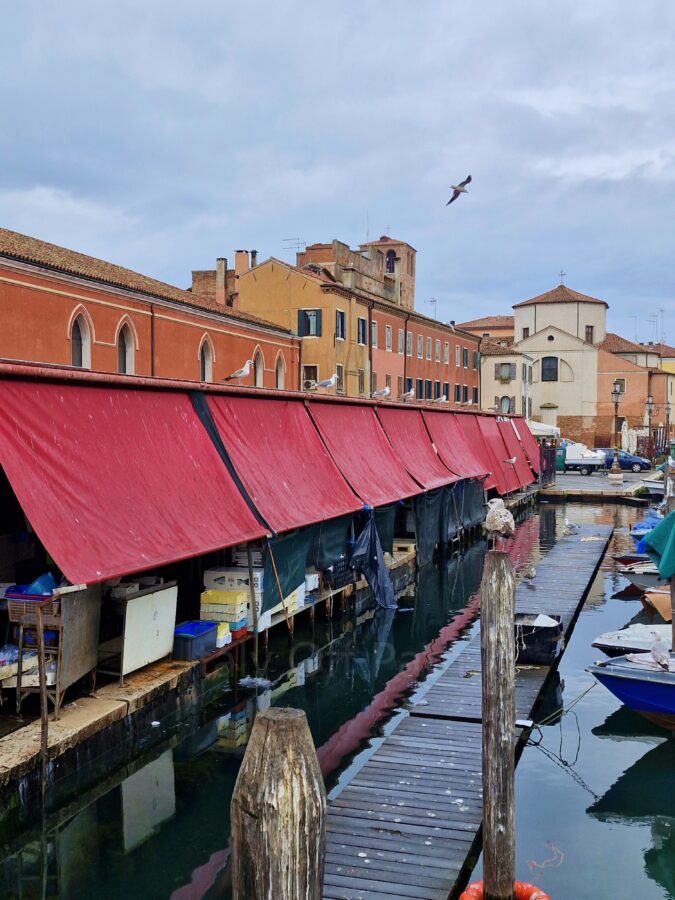
And judging by the size of the seagulls perched on wooden stilts in the canal, waiting for leftovers from the market, it’s not just the Italian economy that’s growing thanks to the port of Chioggia.
Besides that, Chioggia has plenty of fancy and normal shops, restaurants with seafood, cafés, and bars where fishermen enjoy beer after a hard-working day.
The Haunted House of the Witches – I’d Buy It Anyway
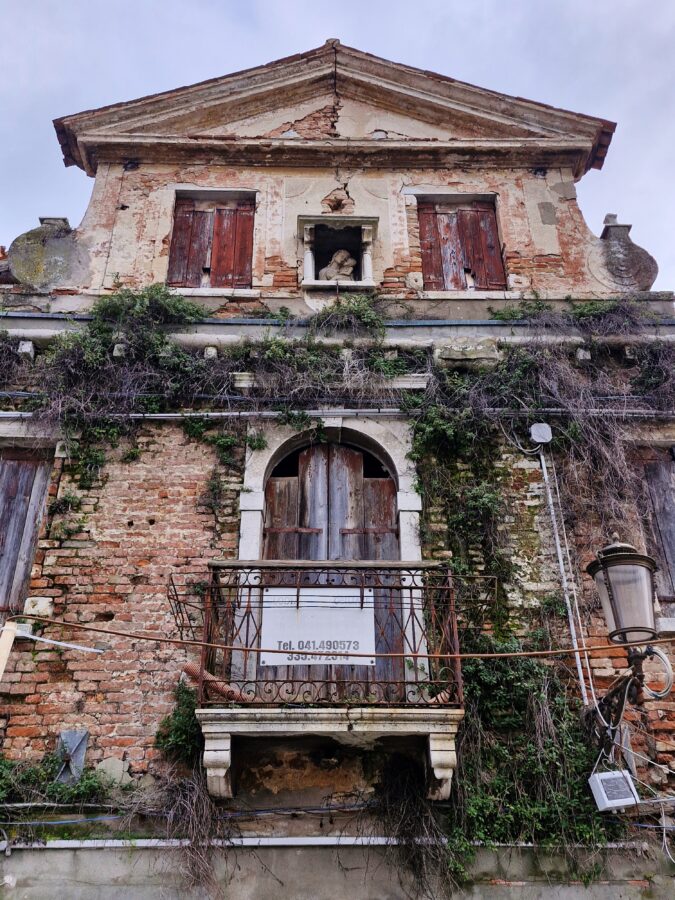
Walking around canals and crossing adorable bridges, we saw a beautiful old building: the plaster was falling off it, showing red bricks, here and there covered with plants, with old wooden shutters, a balcony, and a sculpture of a Madonna in an opening under the roof.
And it was for sale. I groaned… I love such houses, so if I were a millionaire, I would buy it without hesitation, even if, according to the local legend, it’s a haunted house – to be more precise, the house of the witches.
Well, husbands might be troublemakers, and their wives might pay for it. In Chioggia, years ago, fishermen after work would drink a lot and, on the way home, would fall into the canal; their bodies, swept out into the lagoon, were never found.
So poor wives not only became widows, but they were also branded witches and sent to this house/prison, where they spent the rest of their lives. A sad story; however, haunted or not, if I could afford it, the house would be mine even with the witches.
Visiting Chioggia and Chatting with Locals
We were told the legend while having coffee and chatting with some locals. We were enjoying the conversation, and the fishermen enjoyed looking at me – actually at my face with wide eyes; from time to time they switched to their dialect, which made me delighted and wide-eyed. I didn’t get even one word, so I just stared at them, making wise faces.
Summer Events in Chioggia: Fish Festival and War Reenactment
We also learnt that there are nice events organised in the town. In the summer, they have a historical reconstruction of the War of Chioggia, and in July, the fish festival. I’m guessing Chioggia might be touristy then, even if the locals said, “eeeee, compared to Venice, we are empty”.
As we were walking, the buzzing streets were getting emptier and emptier – it was lunchtime. We didn’t have time for a restaurant, so we decided to get something on the way to Slovenia.
Chioggia Is Not Venice – And That’s Exactly Why I Loved It
Chioggia is not Venice, and for me, it was a plus. Not to say don’t visit Venice – do it, it’s a beautiful city – but if you also decide to see Chioggia, don’t expect Venice bis.
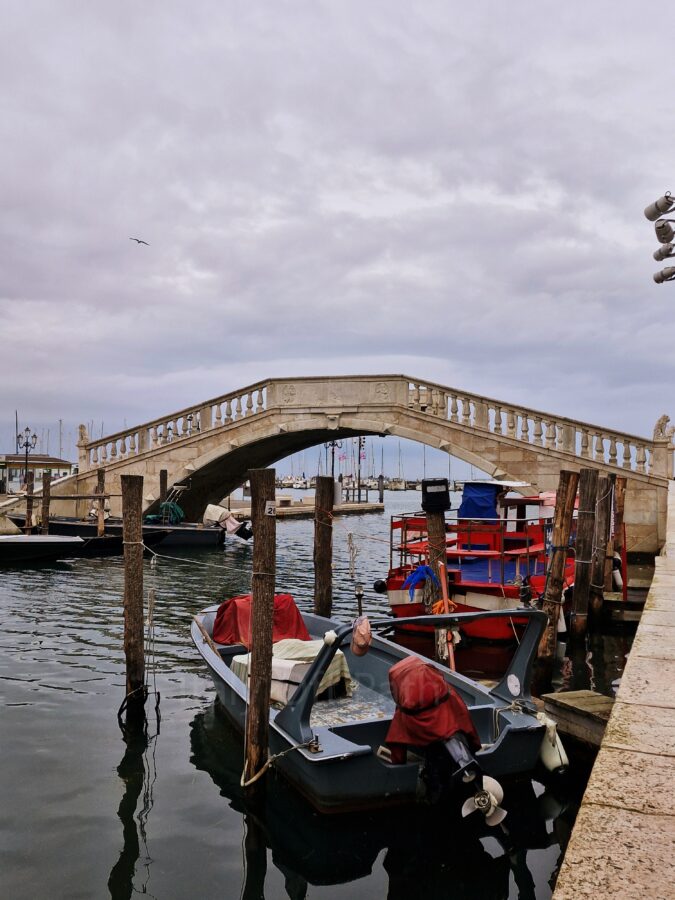
Chioggia has always been considered by its neighbours as poorer and less sophisticated, so maybe that’s why, without trying to become the same as Venetians, the town preserved its authenticity. To me, the town feels real and cool, especially without excited crowds running around with their ‘to see’ lists.
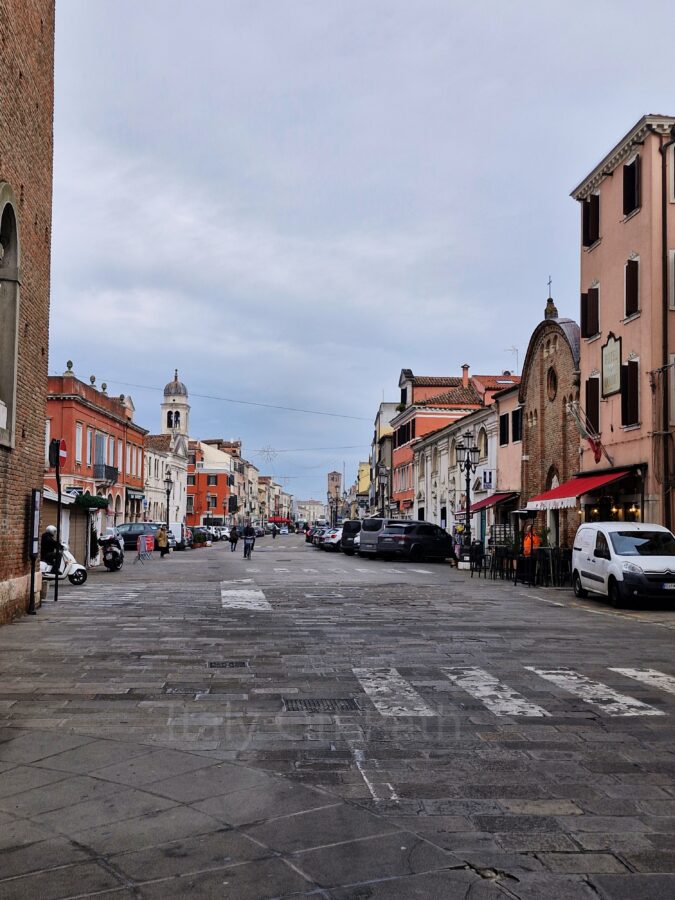
Chioggia has this unique atmosphere of some (not all, though) fishing ports and coastal places: it’s like you feel that the sea is in the hearts and blood of the locals.
There’s strong coffee, buzzing streets, crazy drivers, stylish elderly ladies walking in high heels, and fishermen in wellingtons sitting in bars. You can see the locals there.
Visisting Chioggia and Wandering around, we met a group of them enjoying pre-Christmas aperitivo outside a bar. They were talking loudly and swearing a lot. Absolutely real – the Veneto region is famous for its blunt speech. You won’t see it in the neighbouring city, as there are mainly tourists.
Chioggia, even if it shares common things with Venice, is a unique world which I liked very much.
If this post made you laugh, made you angry, or simply reminded you of your own trip, let me know in the comments or by email. I love reading about your experiences in similar places. And sign up for the newsletter – a new post once a week (usually Wednesdays at 6:00 PM).
No spam, no “most beautiful Italy ever.” Only authentic events, and off-the-beaten-path places. I’m waiting for you!