
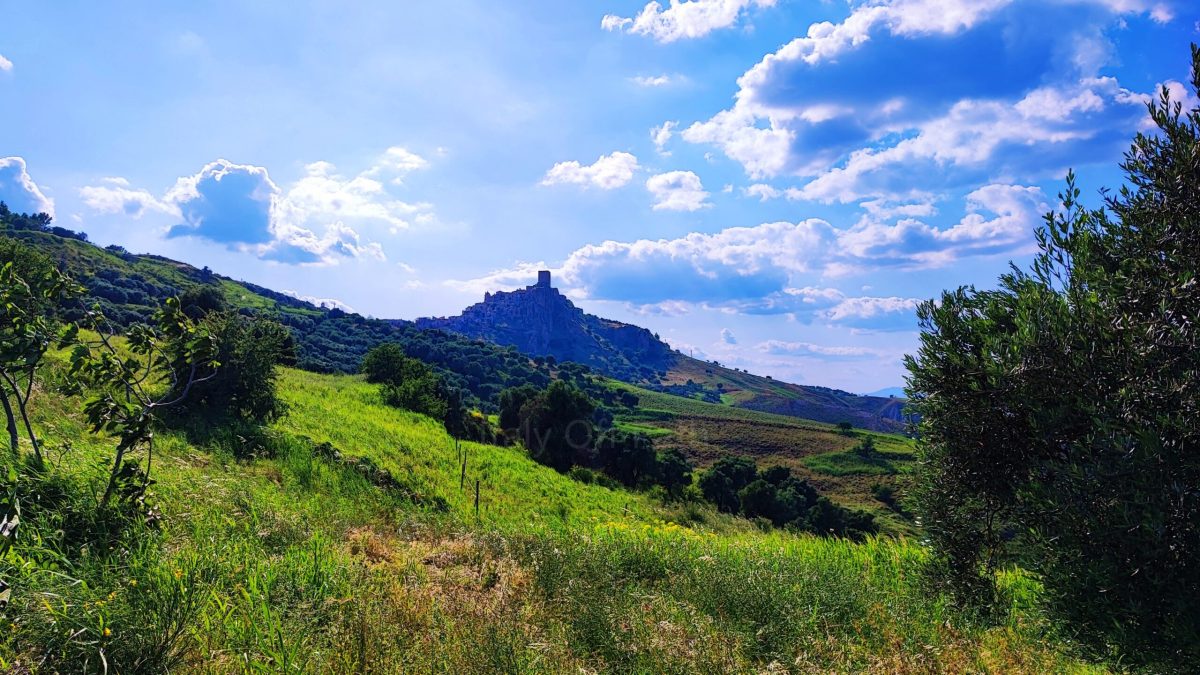
Ghost towns in Italy are nothing unusual – there are nearly six thousand of them; the majority in the South. Young people looking for better opportunities leave underdeveloped areas and rarely go back. Towns and villages with ageing populations are then emptying out.
From time to time, nature also gets angry and causes a place to become depopulated. And sometimes human carelessness can reduce a town to rubble. Craco ghost town in Basilicata has experienced exactly this: nature finished the destruction started by humans.
Go to:
Where Is Craco and How to Get There
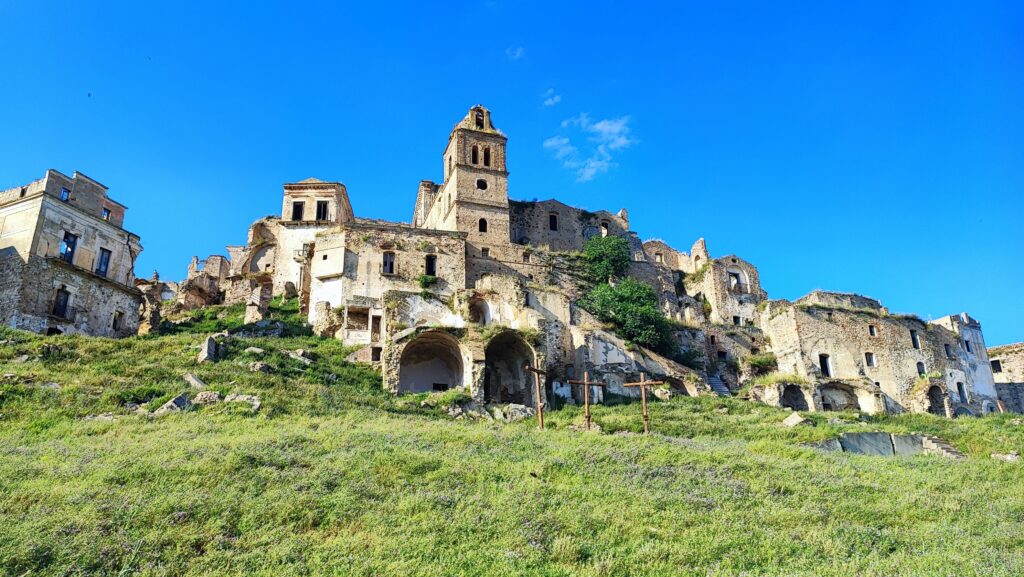
Ruins of Craco in Basilicata stand on top of a whitish rocky hill just 50 km from the famous neighboring Matera. It’s not far, but the drive can take over an hour, as the road is not the best; still short enough to have a day trip from Matera.
Pisticci is closer – just 20 minutes by car, but nobody visits Pisticci—Matera steals all the tourists. You can also risk the journey by bus, but after having some funny experiences with public transport in Italy, I’d hardly ever suggest using it. I travel around Italy by car. The choice, however, is yours.
Driving to Craco in Basilicata: A Warning About GPS in Italy
GPS in Italy, especially in less touristy and developed areas, tends to be annoying or just tries to be incredibly useful — it always suggests shortcuts saving a few minutes or kilometres. And often the road is in such condition that you’d be better off driving a tank. It’s also doable by car, of course, especially if you don’t mind testing your chassis.
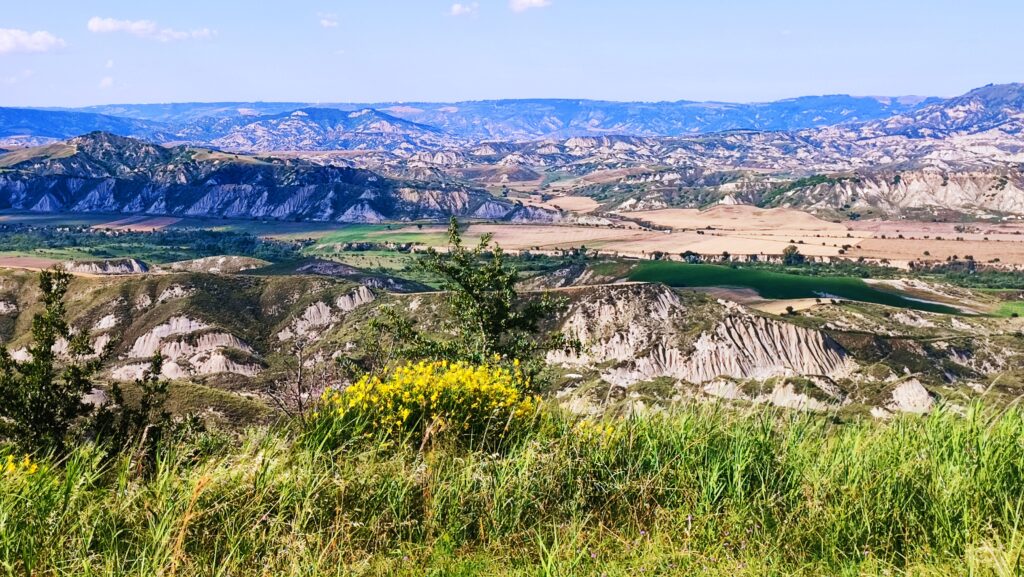
So before listening to the GPS (not only in Basilicata), it’s worth checking the map to see if the suggested shortcut doesn’t lead through pastures or a track that’s barely a meter wide.
Why Was Craco Abandoned? The Human-Made Landslide
Centuries ago famous for its wheat production, medieval Craco, was inhabited mainly by farmers. At its peak, 2,000 people lived there. The name of the town in theory comes from the ravens that nest there.
There’s another version, according to the guide, saying that the name is an Old Germanic word meaning ‘cracking’ – nomen omen – a name that became its destiny.
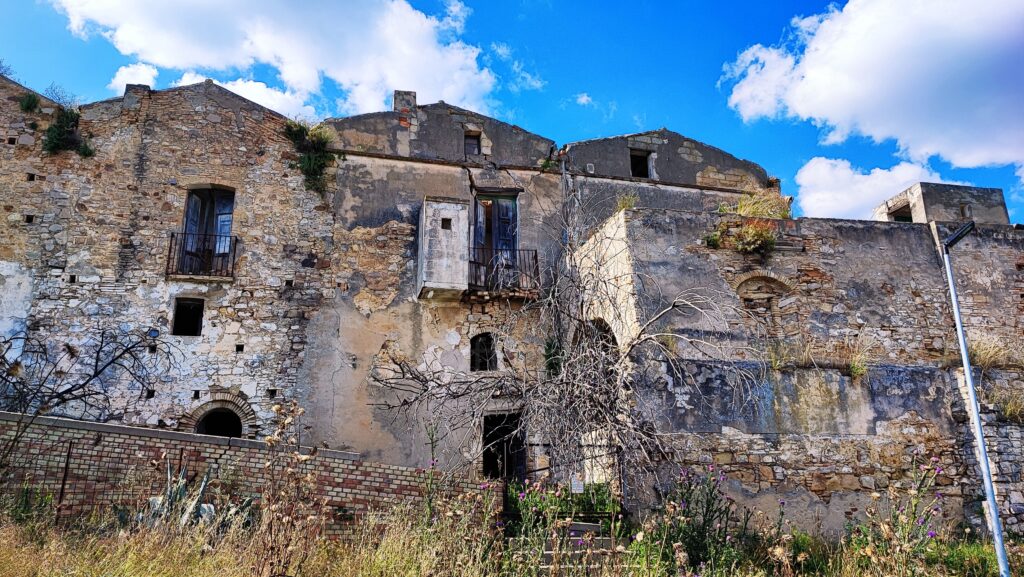
The old part of Craco was built on rock by its first inhabitants, but the newer houses were built on clay hills. Clay is excellent for making pott
ery and other things; to be a solid base for a settlement, it must remain untouched.
You can probably guess what could have happened in the town. Supplying water to it, pouring toilet waste from windows onto the streets, rain and wind… The clay became plastic and was no longer a solid base for Craco — the houses started moving.
The Final Blow: Earthquakes and Emigration
The first documented landslide in the town happened in 1888. Then, after sixty years and a few days of heavy rain, another one occurred, causing the first cracks in the houses. Over time, the situation worsened, so residents began to be evacuated; almost all of them left cracking Craco in the early 1970s.
Almost all, because about 100 inhabitants still lived in the “rocky” part of the town. But the town also got rid of them. After the earthquake in Irpinia in 1980, even the most resilient residents decided to leave.
And so Craco became an abandoned ghost town. Actually not entirely abandoned, as there are sometimes donkeys and sheep living there.
Is Craco – Italy’s most famous ghost town Worth Visiting?
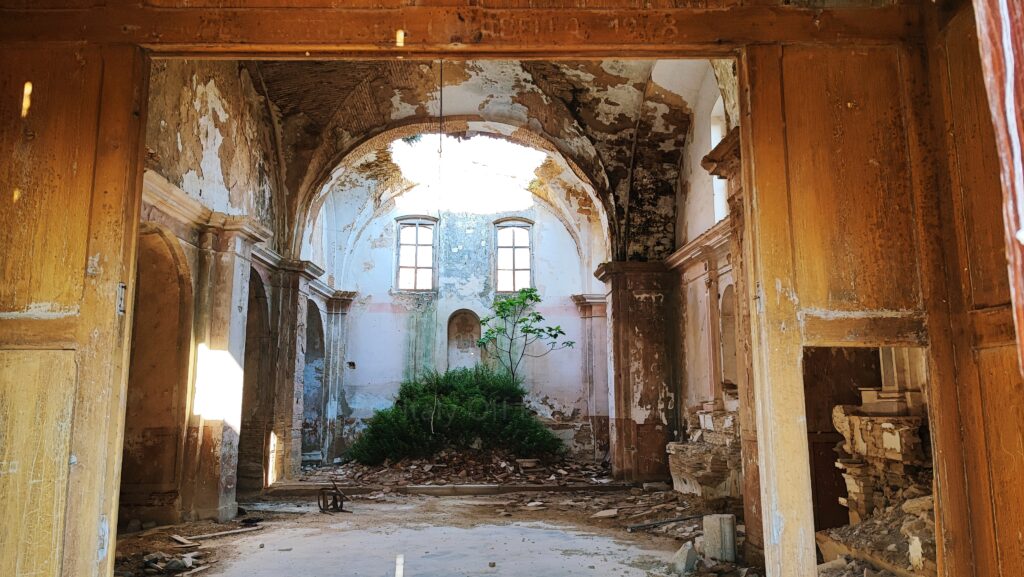
Many people find Craco beautiful and fascinating, but I don’t share that opinion. I expected something very moving (not the clay, though) while exploring the ruins, which witnessed many human tragedies, but I just thought, “OK, a ruined ghost town, there are plenty of them in Italy.” Some of the fallen buildings are quite picturesque, though, and I liked the view from the town.
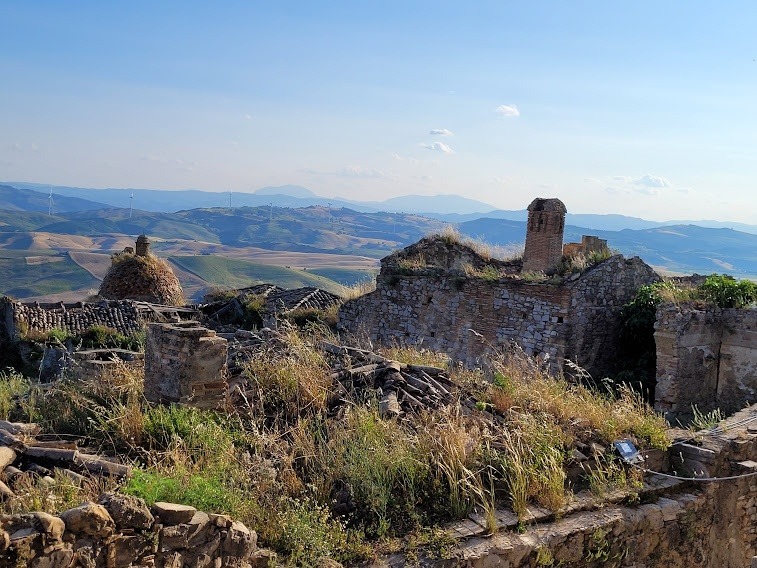
Does that mean that Italy’s most famous ghost town is not worth visiting? Nope, Craco ghost town in Basilicata is worth visiting, especially if you’re into places like that. The town’s history is interesting, and the ruins are compelling enough to have been the backdrop for Mel Gibson’s film “The Passion of the Christ”, but it was simply not my cup of tea.
I wouldn’t say that Craco is one of those must-see places. But that’s me; everyone has (and should have) different tastes.
Practical Information for Visiting Craco Ghost Town in Basilicata:
- Opening hours: The museum park is open daily from 9:00 AM to 8:00 PM.
- Tickets: buy at the office in the former monastery building next to the small parking lot (look for the handwritten “Biglietteria” sign).
- Cost: 11 EUR/person for the ruins. 13 EUR for a combined ticket including the museum.
- The Tour: Guided (only) tours last one hour and depart every hour.
- The entrance to Craco – about a 10-minute walk following the paved road along the ruins.
- Safety: obligatory to wear a helmet given at the entrance.
- Dogs – there might be shepherd dogs on the way – their owners don’t necessarily pay attention to them.
- Shoes – wear comfy shoes (not flip flops), as Craco is full of stairs.
- Water – there’s no water, so take it with you.
If this post made you laugh, annoyed you, or just reminded you of your own trip, tell me in the comments or drop me an email. I actually want to hear about your experiences—the good and the frustrating.
Sign up for the newsletter for one post a week (usually Wednesdays at 6:00 PM). No spam, no “magical Italy” fluff. Just honest stories and places off the beaten track. I’ll see you there!