
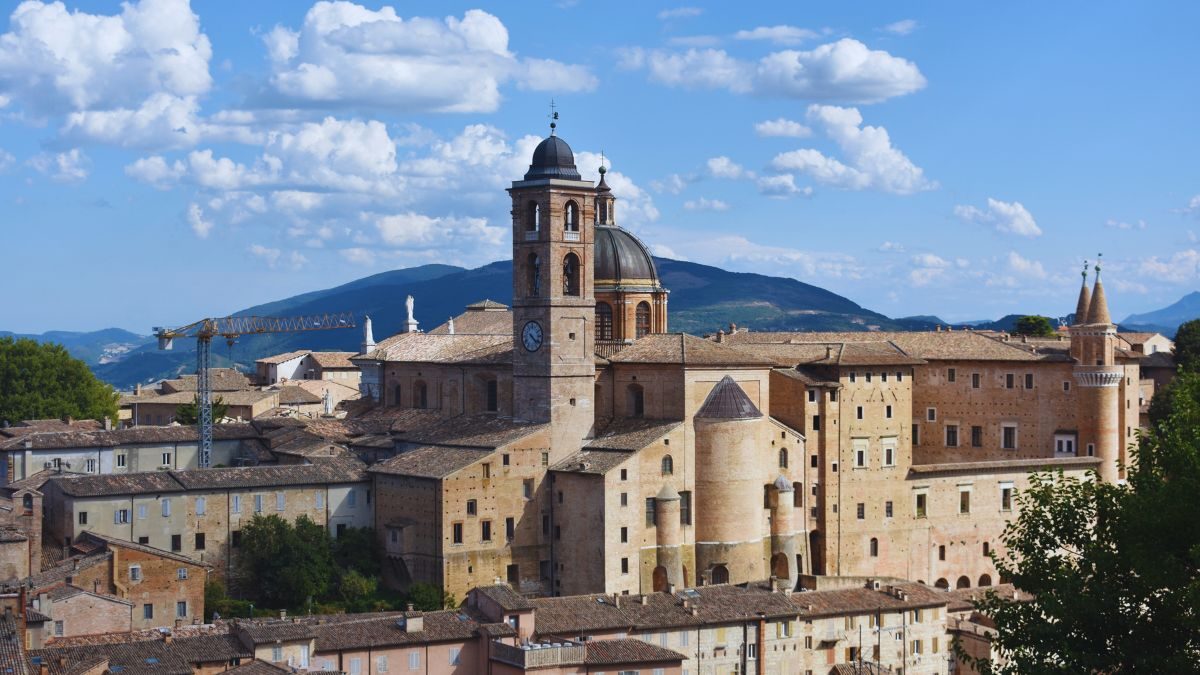
If the Renaissance Urbino were in Tuscany, it would probably be swarming with tourists. But it is in the Marche, on the wrong side of the Apennines. It is also not the most easily accessible place -you can’t get there by train or plane, so it is still relatively free of crowds.
I hope it stays that way, even though it is definitely worth a visit; in just one day in Urbino you’ll see why it may compete with Tuscan towns.
Go to:
How to Get to Urbino (and Where to Park)
The best option is a car and GPS, but remember that you have to park outside the old town. Borgo and several other monuments are located in a restricted traffic zone (ZTL).
Non-motorized travellers should first catch a train from Ancona to Pesaro or Fano, and from there a bus to Urbino.
There is no direct flight to the city – the nearest airports are in Ancona and Rimini. Even if you’re a lucky owner of a private jet – still the above airports. It seems that Urbino treats everyone equally.
Urbino: A Bit of History
The Romans founded the city and named it Urbinum Mataurense. In ancient times, the town experienced ups and downs, as all places do; Urbino’s golden age fell during the Renaissance. That’s why the town is considered its cradle.
The Montefeltro family’s rule contributed to the city’s development; especially under Duke Federico II da Montefeltro, the place flourished, hosting intellectuals and artists from all over the country. And in their wake followed pilgrimages of artists from Europe, drawn by wealthy patronage.
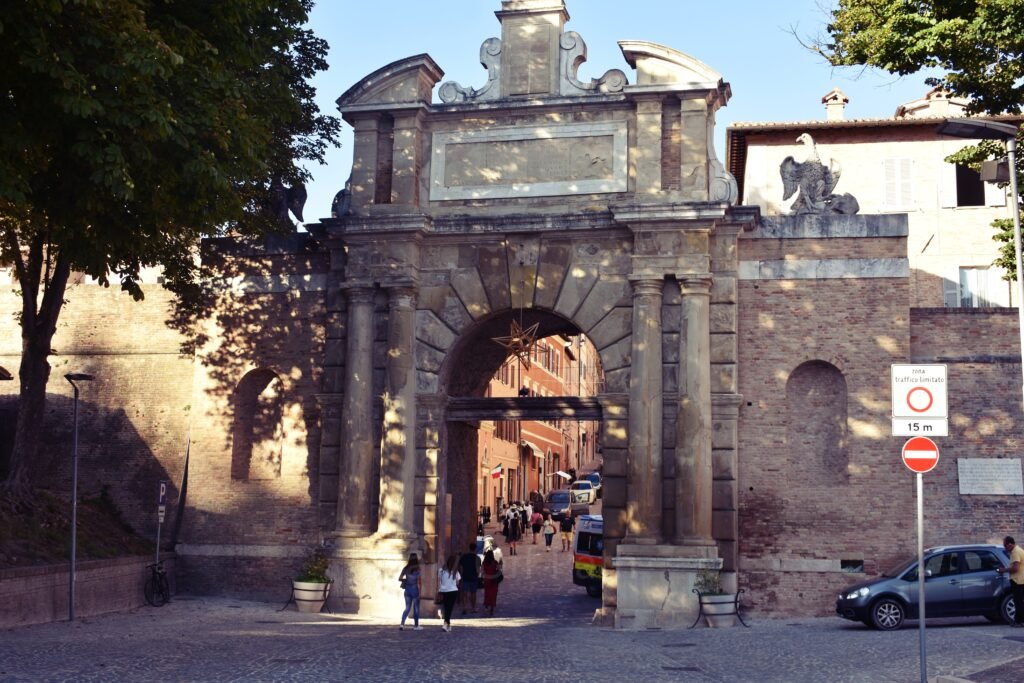
Most of the Renaissance architecture I admired in the city, was inspired by some of the greatest names of the time. For example, the city walls were designed by Leonardo da Vinci.
At the beginning of the 16th century, the duchy passed into the hands of a rich mercenary leader. Fortunately for Urbino, he continued to gather around himself all kinds of artists. With time, the town was marginalized, which was and still is nothing unusual.
Urbino resisted the urban changes in the 19th century, so it has remained practically intact to this day.
Today Urbino is famous for the one of the most prolific artists of the Renaissance – painter Raffaello Sanzio, who was born there. He died at the age of 37; during his rather short life he produced 500 masterpieces with zero modern shortcuts – by hands. And today we can barely finish an email without spellcheck.
The town is still associated with art, crafts and culture. It’s a home of the best Italian universities, which is why the city has more students than residents.
One Day in Urbino – What to See
Before visiting, Mauro said that Urbino was beautiful. I was rather skeptical; Italians rave about everything Italian, just because it’s Italian. We don’t necessarily have the same taste.
The first thing I saw in the city was a church with a reproduction of Rafaello’s tomb.
Palazzo Ducale and Galleria Nazionale delle Marche
Then we went to the viewpoint in Parco della Resistenza, but only because there were supposed to be toilets. There were no toilets, but the panoramic view of the old town with the Palazzo Ducale (15th century) left me speechless. I couldn’t tell if my first thought was beautiful or huge. The palace is actually a small town surrounded by defensive walls. It is impressive and can certainly compete with cities in Tuscany.
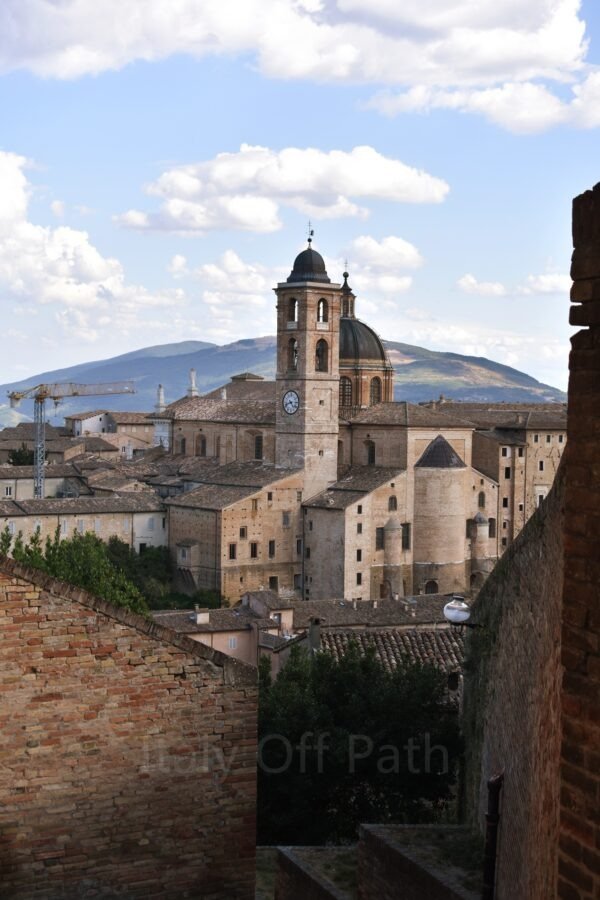
The Palazzo Ducale now houses the Galleria Nazionale Delle Marche (National Gallery of the Marches) and exhibits some of the most important masterpieces of Renaissance art. (the last price was 8 euros)
Fortezza Albornoz and Parco della Resistenza
In the Parco della Resistenza itself, which has no toilets, you can visit the Fortezza Albornos. The entrance fee was 1.50 euros, but in 2026 access to the grounds is usually free, though some interior areas may require a small fee or the city pass.
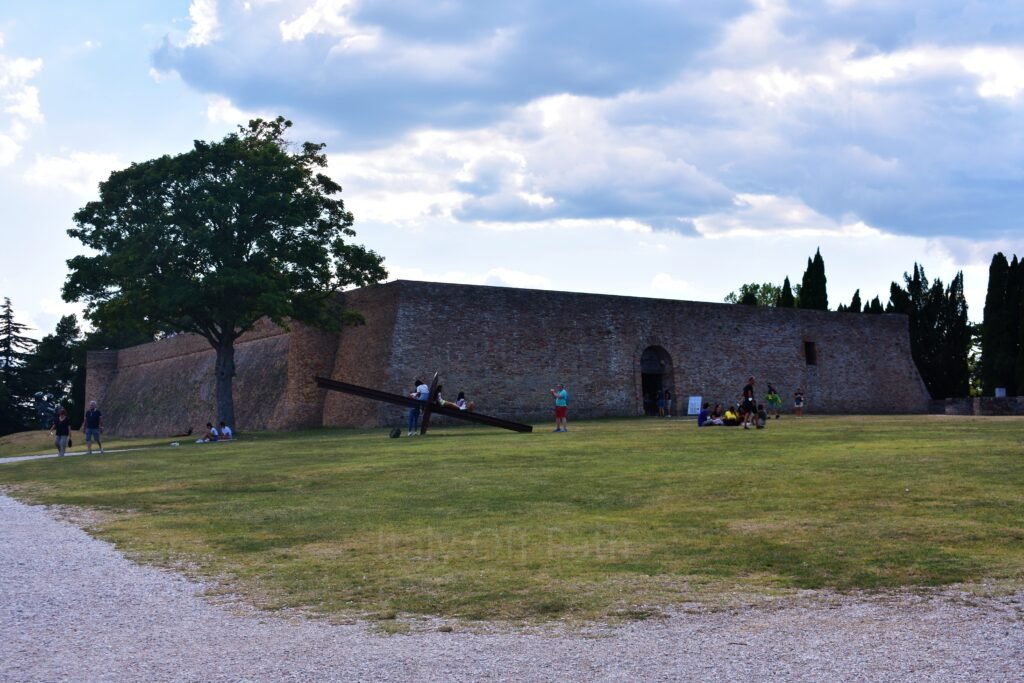
The fortress looks much better from the outside than from the inside, but the view from there is nice.
Casa Natale di Raffaello (Raphael’s Birthplace)
Since Raphael Sanzio was from Urbino, the house where the artist was born has been converted into a museum. It is easily accessible from the central square, and visiting hours can be found here . The exhibits related to Raphael and Urbino displayed there came from private individuals and public institutions. Is it interesting? In my opinion not really, but it depends on your taste. I enjoyed the two-floor building itself, as it gave me an idea of what well-born Urbinians’ homes looked like.
The ticket costs 4 euros. To the left of the main entrance is Giovanni Santi’s studio, currently used as an art gallery. There are a few more things to see, but I like seeing cities themselves and feel their air.
Is Urbino Worth Visiting?
Yes, absolutely. Firstly, the city is full of secrets, such as the fact that the Palazzo Ducale acts as an amplifier, thanks to which all the people could hear what the prince was doing in his ‘studiolo’; it was undoubtedly an incredible pleasure, especially when the prince was using the loo. Nothing better than waking up listening to the prince making weird sounds.
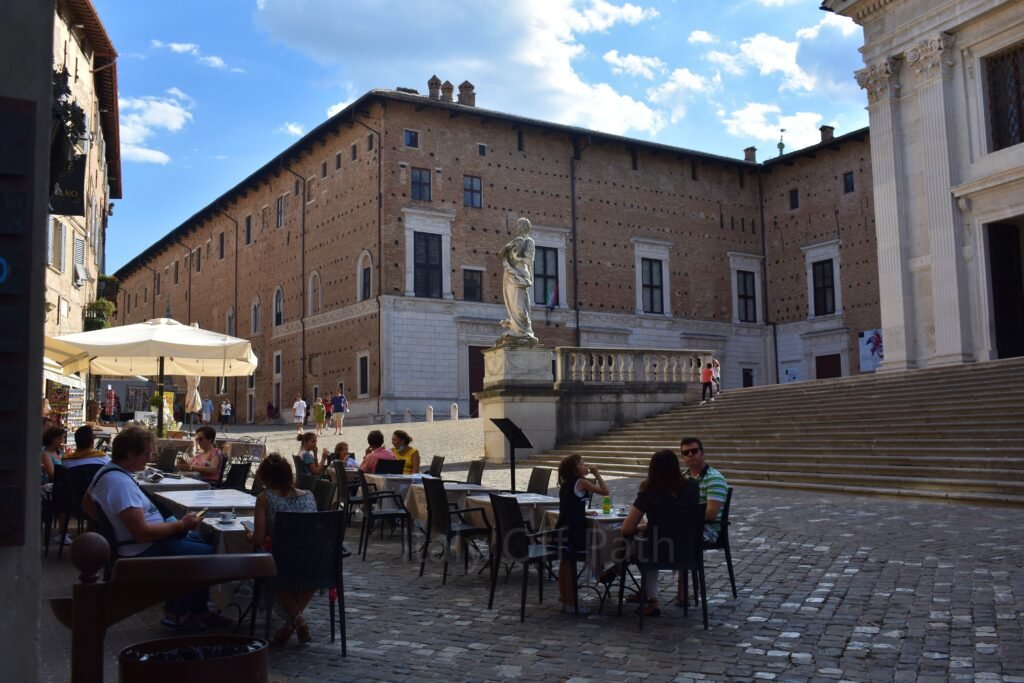
Even the building’s façade has a curiosity: if you talk to someone through the side columns, you can hear each other as if you were one step away. Guards in the past used this trick to communicate.
Secondly, in my opinion, the city has a Renaissance atmosphere in the air. This place exudes history, which you can feel walking along the wide streets among the beautiful houses made of red bricks. Urbino is a city with rather steep streets, which is why many of them have nice wrought-iron railings on the sides, which also are nice objects to photograph.
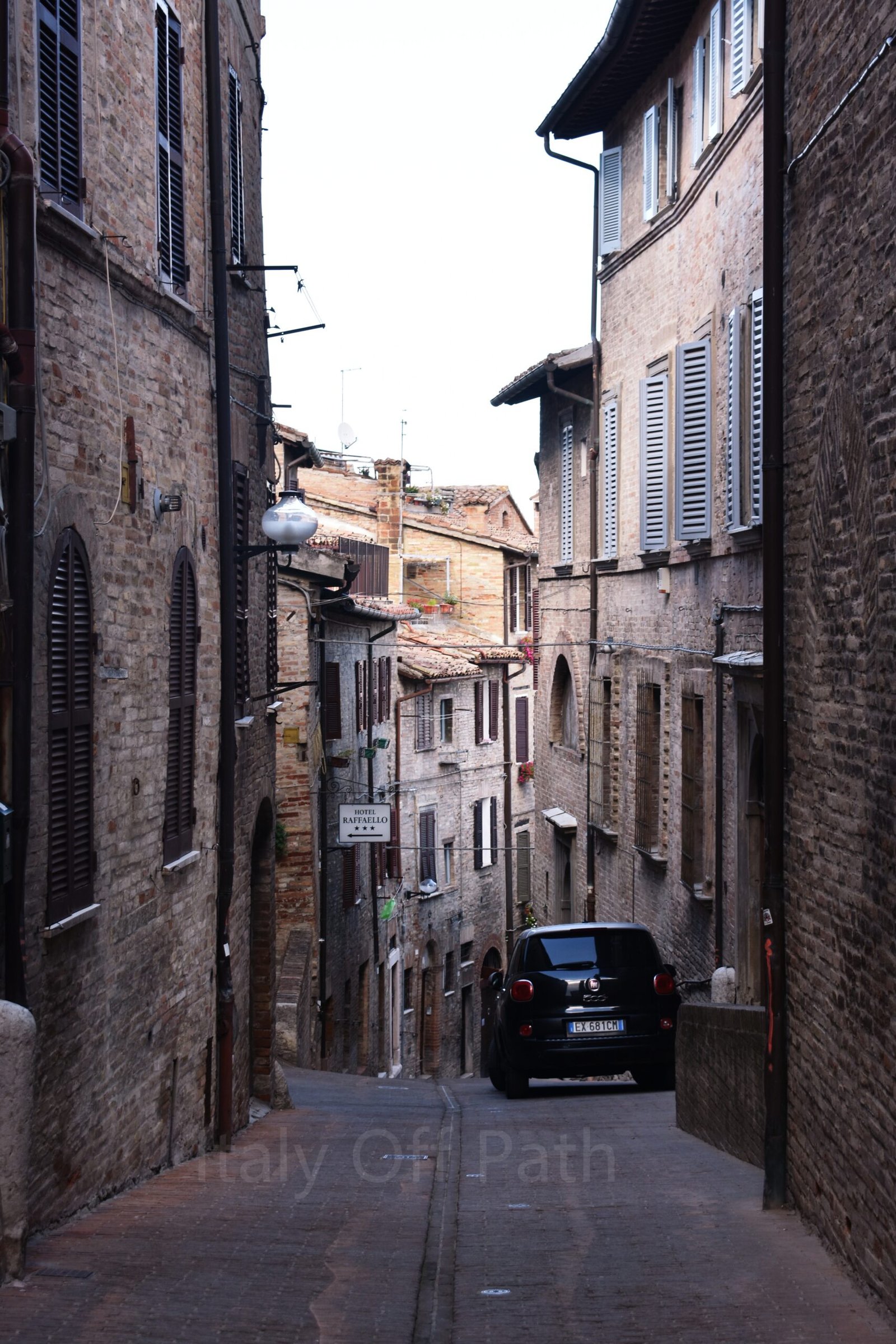
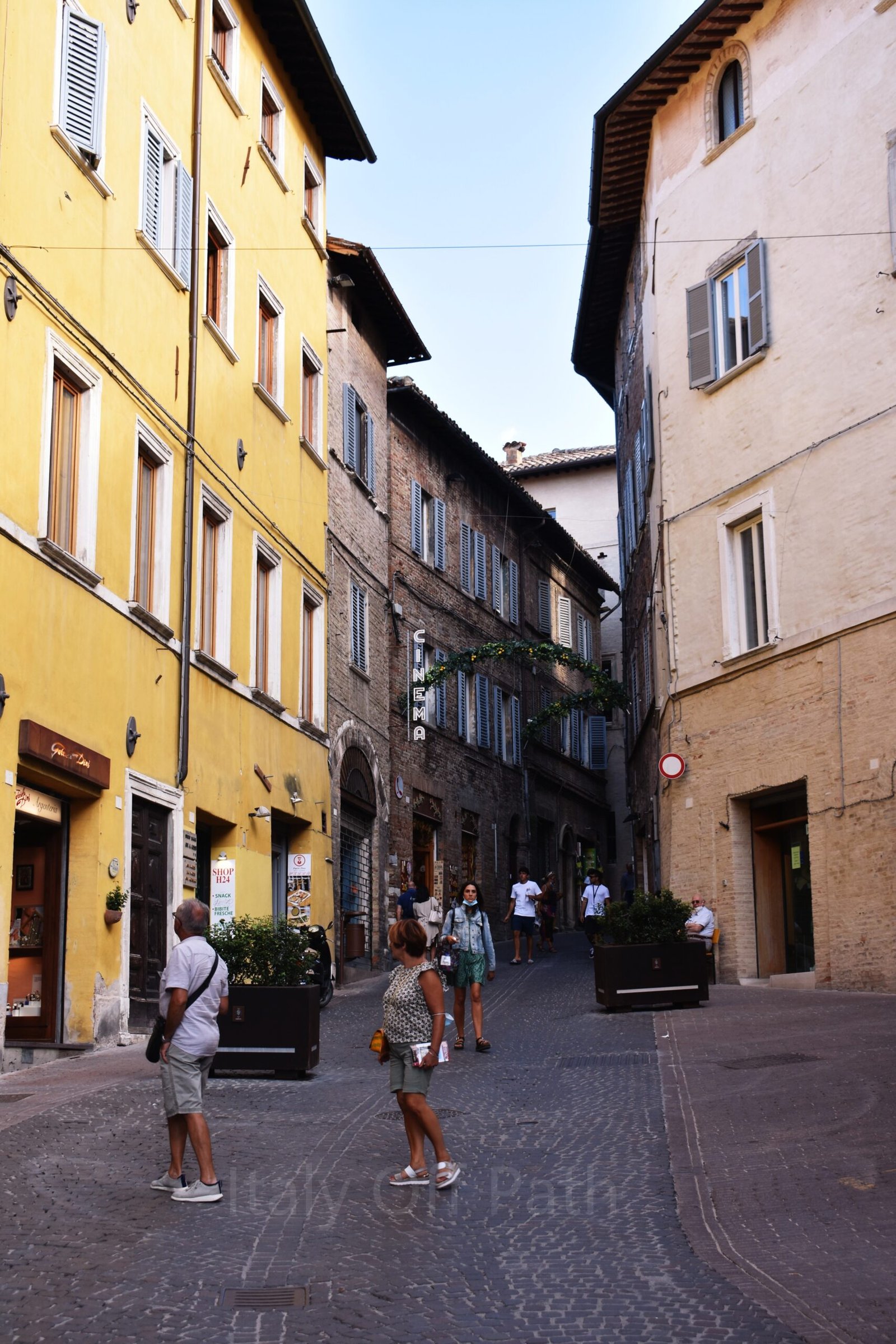
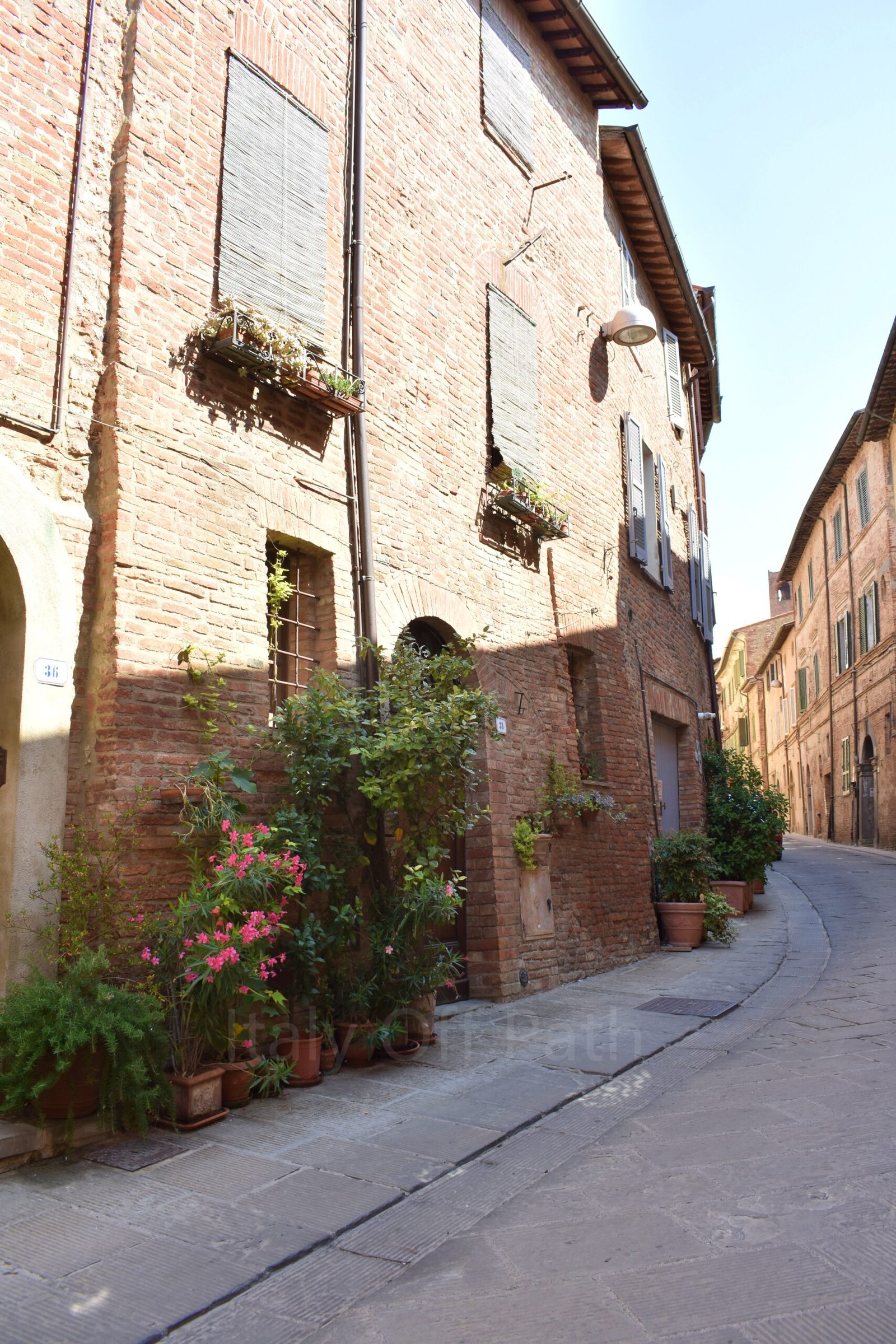
Walking around the city can be a bit tiring, but I always look at places like that as a free open-air gym, so I was pretty OK going up and down. And, at least I didn’t cry that I had eaten a ton of calories in a delicious yoghurt with several sauces and no less delicious ice cream. There is a mini-train for tourists, though, but in my opinion it’s best to explore and get to know places on foot, especially if you have no mobility problems.
Practical Notes: Food and Terrain
Urbino is located in a part of the Marche where you eat a lot of good food, coming from organic farms around the town. The local gastronomy is famous for Crescia sfogliata, truffles, mushrooms, and cheeses. When you decide that you’re stuffed and can’t eat anything else, it’ll be easy to burn calories going kayaking, trekking, cycling, motorcycling, orienteering and so on.
Is it then worth visiting Urbino? Absolutely. And because Le Marche, full of authentic Italian towns and beautiful nature, is one of my favourites, don’t limit yourself to Urbino. Go around the region, it’s really worth your time and attention.
If this post made you laugh, annoyed you, or just reminded you of your own trip, tell me in the comments or drop me an email. I actually want to hear about your experiences—the good and the frustrating.
Sign up for the newsletter for one post a week (usually Wednesdays at 6:00 PM). No spam, no “magical Italy” fluff. Just honest stories and places off the beaten track. I’ll see you there!