
Benevento has a reputation for being very elegant and different from other cities in Campania. I’m not really sure what “elegant city” means in this context, so I don’t know if Benevento is elegant, but I think it’s definitely very Campanian. Actually it’s very Neapolitan, I felt as if I was in Naples’ suburbs,which makes sense given the cities are only 90 km apart. Is Benevento worth a visit then?
When the Romans took control over the city, they changed its name from “Maleventum” (meaning “evil wind” or “bad events”) to “Beneventum”, meaning “good wind”. Well, the new name was definitely more fate-friendly. In a time when people believed ‘nomen est omen’ (the name is the omen), the change was a good PR move . Not many would settle in a city which brand is basically ‘Bad Luck Central’.
The legend of Benevento
On the banks of the Sabato River stood a walnut tree, which was the ‘witches’ club’—these lovely ladies from all over Europe gathered there. Having just female bashes was boring, so wizards would join in to keep them company during their sabbats. They danced together, cast evil spells, and then flew off again.
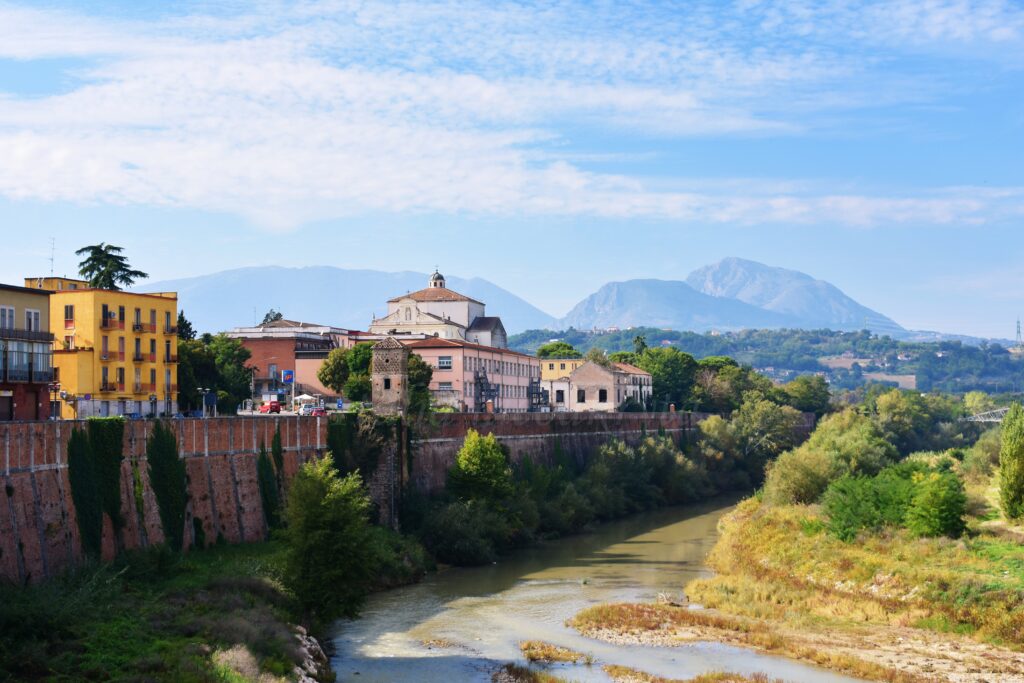
But not only them liked the tree. Also, the Romans, and later, the Lombards believed that it was just a perfect place to practice their pagan rituals.
According to the legend, the Langobard soldiers wanted to get extra/animal power—something that every soldier would enjoy for sure. They would hang goat (or snake) skins from the walnut tree and gallop around them, striking them with spears before consumption. I’m sure a hairy goat skin had to be a real tidbit. Anyway, the rituals lasted several days. Langobards lighted bonfires at night and enjoyed women, dancing, and wine—pretty understandable after eating skin.
What to see in Benevento.
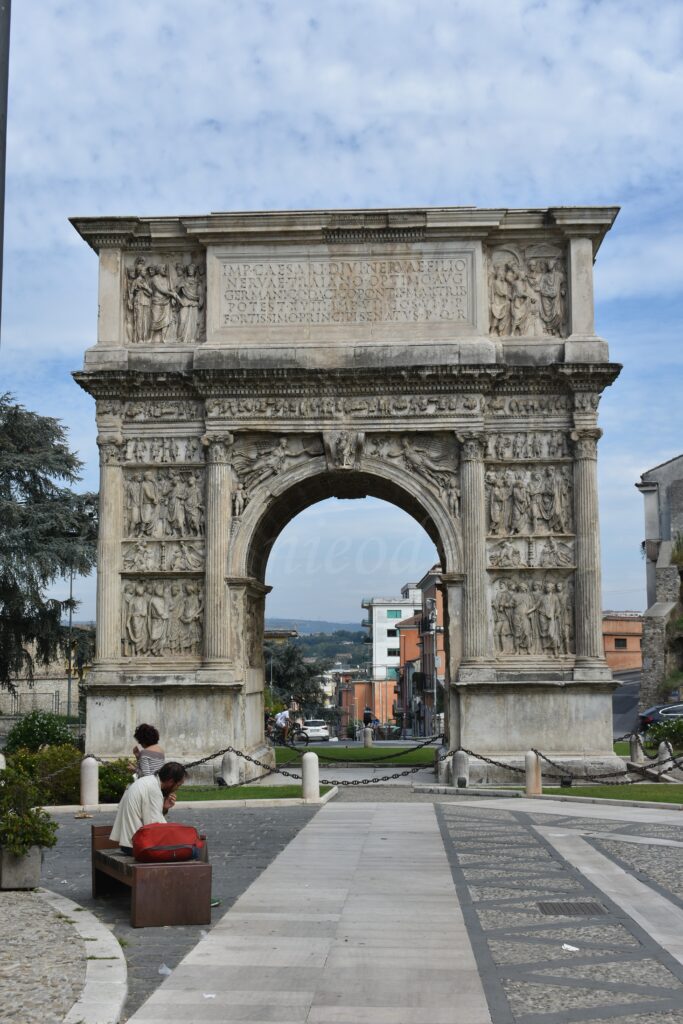
Wandering through the historic center, you’d have to close your eyes to miss the Arch of Trajan (built between 114 and 116 B.C. of limestone and covered with slabs of Parian marble). This 15-meter-high structure is arguably the best-preserved Roman arch in Italy. It was built to commemorate the completion of the Via Trajana and as a reminder of the emperor’s prestige and benevolence.
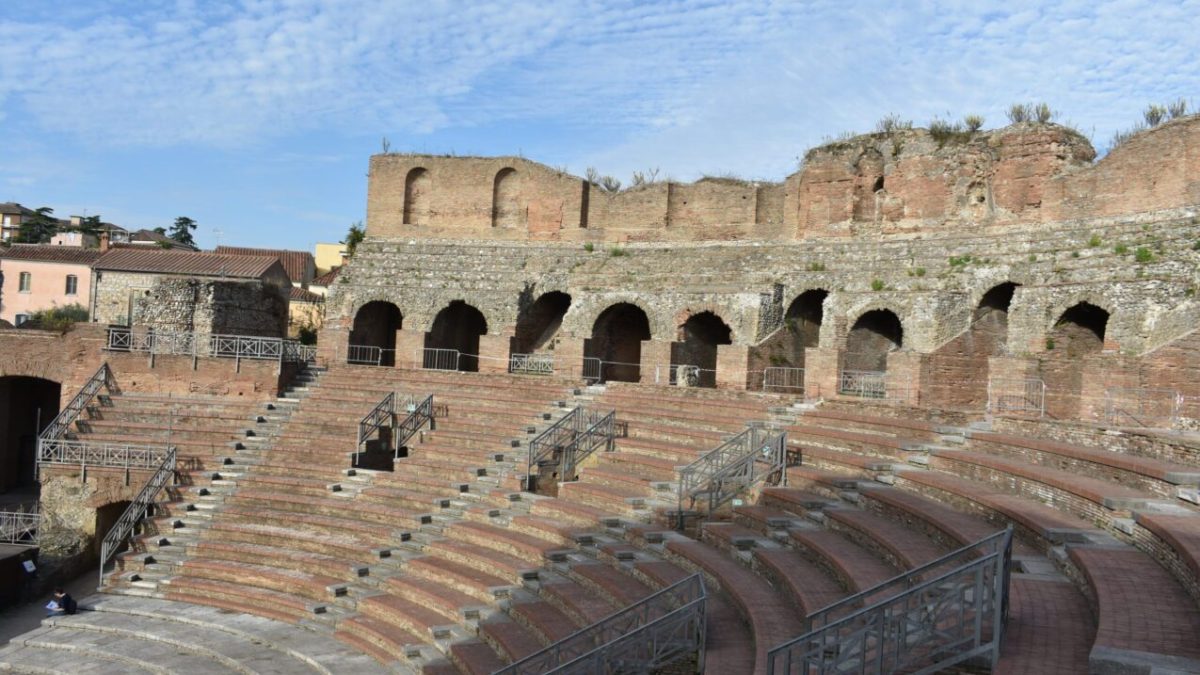
The Roman amphitheater (ticket required, costing 2 euros when I visited it), built in the 2nd century BCE, began operating only between 125 and 128 CE.
The impressive structure, approximately 98 meters long, was constructed of concrete, limestone blocks, and bricks. The steps are covered with marble. The amphitheater, still in excellent condition, could accommodate 15,000 people.
The Church of Santa Sofia has been closed. This is another funny thing about Italy, a country where religion is still important. Churches—public buildings—are usually closed. Mauro claims this is due to potential theft. I’m far from any religion, but I enjoy visiting churches, especially since many of them are architectural masterpieces. Apparently, the Church of Santa Sofia is worth seeing for its exhibition of 16th- and 17th-century paintings.
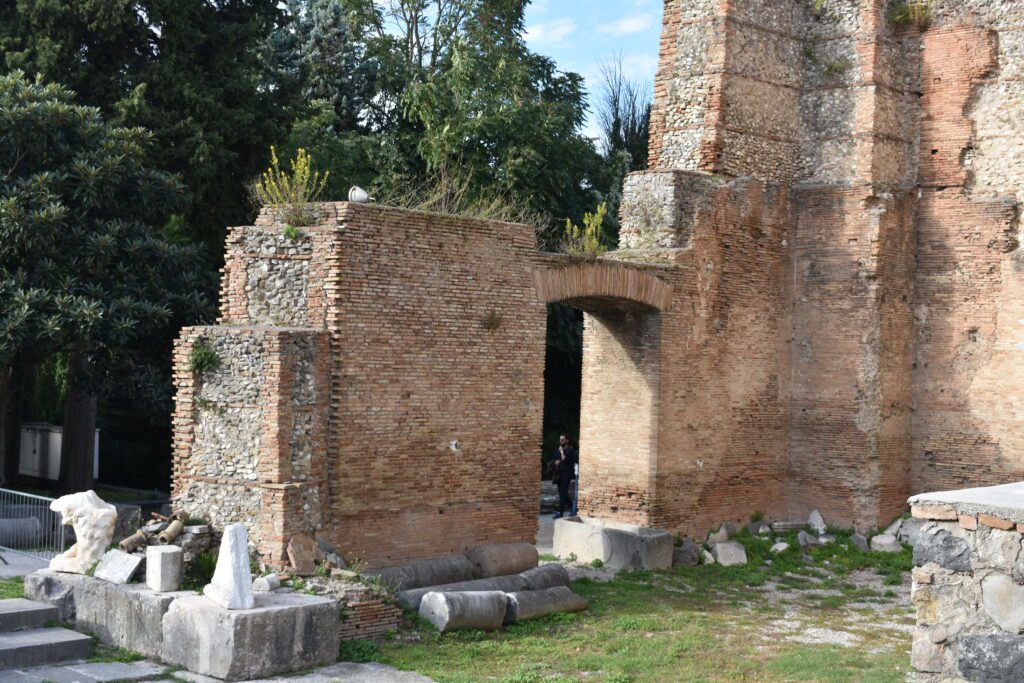
The Sannio Museum, located in the cloisters of the Church of St. Sophia, is divided into 4 sections; they present works and findings from the field of archaeology, art and history of the Middle Ages. The last section is in the castle of Benevento.
And finally, the castle Rocca dei Rettori located at the highest point of the old town. It consists, as castles usually do, of a tower and a small palace added to it. From the moment it was built, the castle was used by local rulers, then by papal governors, and then it shared the fate of many castles – i.e. it became a prison. It now houses the offices of the Province of Benevento and the historical section of the Sannio Museum.
Benevento is known for its local produce, including olives, wine, fruits, and nuts, and is also home to the famous Strega liqueur.
After lunch at a Neapolitan restaurant, we drove to Pouzzoli.
Is Benevento worth a visit?
Well, in my opinion not necessarily; Benevento is like a still-inhabited open-air museum. Decent enough, but I wouldn’t say I was delighted. I liked the amphitheater; its surroundings not so much, as the Roman relic is surrounded by hideous 70s blocks of flats. A short visit is fine, as most of the monuments (if open) can be visited in 3-4 hours, staying there longer – not necessarily.
Benevento is also not a particularly good base for exploring Campania, especiallu yif you’re a nature lover. There are 2 or 3 “technically” routes in the nearby regional parks, but they aren’t really worth the detour, unless you have a lot of time. But that’s my opinion; you may consider Benevento a great place, because – fortunately, everyone has and should have different taste