
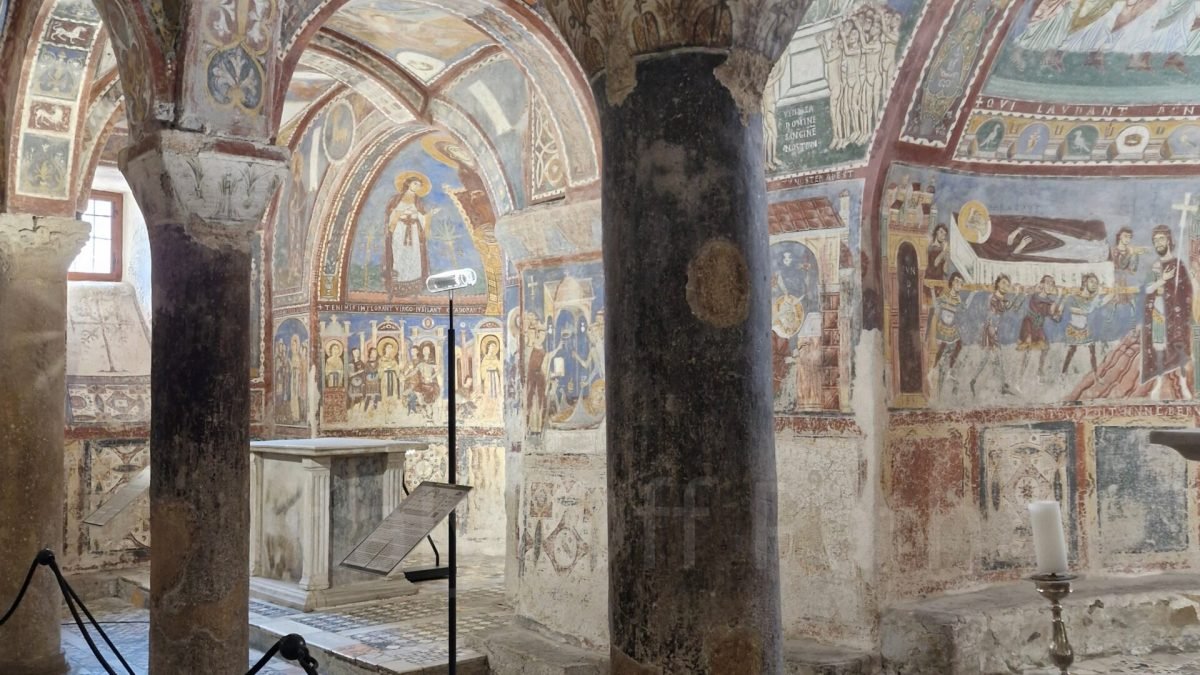
A good holiday should have something for the body and something for the soul. At least in theory. So after seeing the waterfall and having lunch (body), we decided to visit the Crypt of St. Magnus Anagni (for soul).
Go to:
Visiting Anagni: The Papal City and the Crypt of St Magno
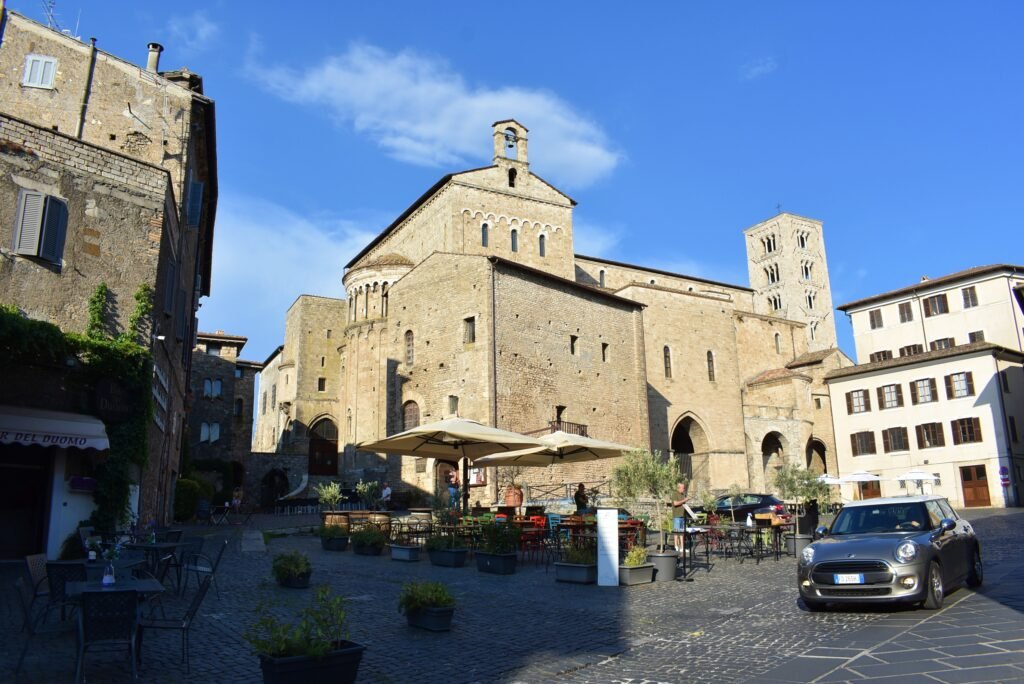
Anagni is about an hour’s drive southeast of Rome. In the Middle Ages, the town was the papal residence. And since there were popes, there was money too, and consequently—interesting architecture.
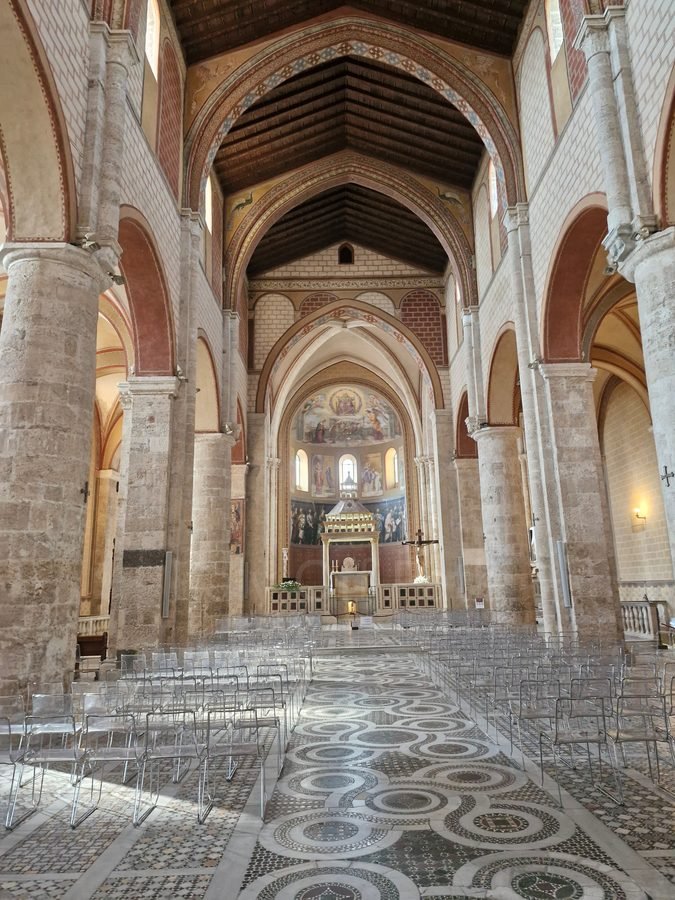
The Romanesque cathedral (12th century) is the main reason tourists visit Anagni.
We also came because of it; being more specific, the Crypt of St. Magnus, hidden beneath the cathedral floor. To visit this Sistine Chapel of the Middle Ages, we bought a ticket (10 euros/person) and made a reservation.
Crypt of St. Magnus Anagni – Is the Ticket Worth It?
Reserving entry to the cathedral might sound a bit weird, but it’s essential if you want to see the crypt with lights. You can do it when you buy a ticket – they’ll give you a few time slots to pick from. During certain hours, the crypt lights are only turned on for 20 minutes. Without booking you can explore it in the dark – not the best option; I tried it.
Is it worth buying a ticket and waiting for the lights to come on? I think the cathedral itself isn’t particularly interesting, and the museum is also quite dull, but the chapel is absolutely worth visiting.
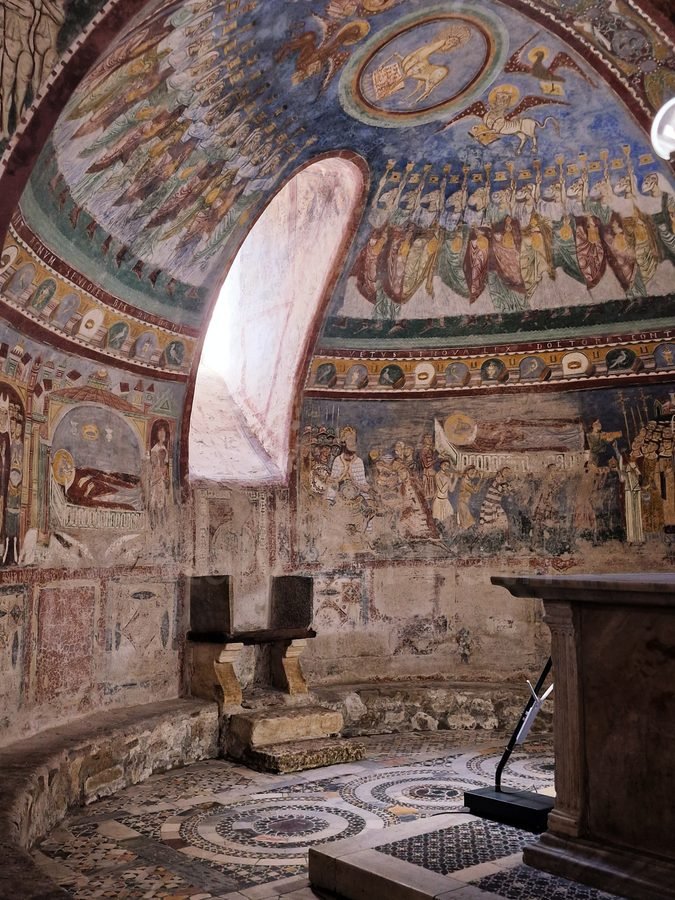
The crypt is quite large—over 500 square meters—and beautifully decorated with colourful frescoes. As befits frescoes, they show saints, martyrs, and apocalyptic scenes. Of course, the colours faded, but after so many centuries, they’re still surprisingly vivid.
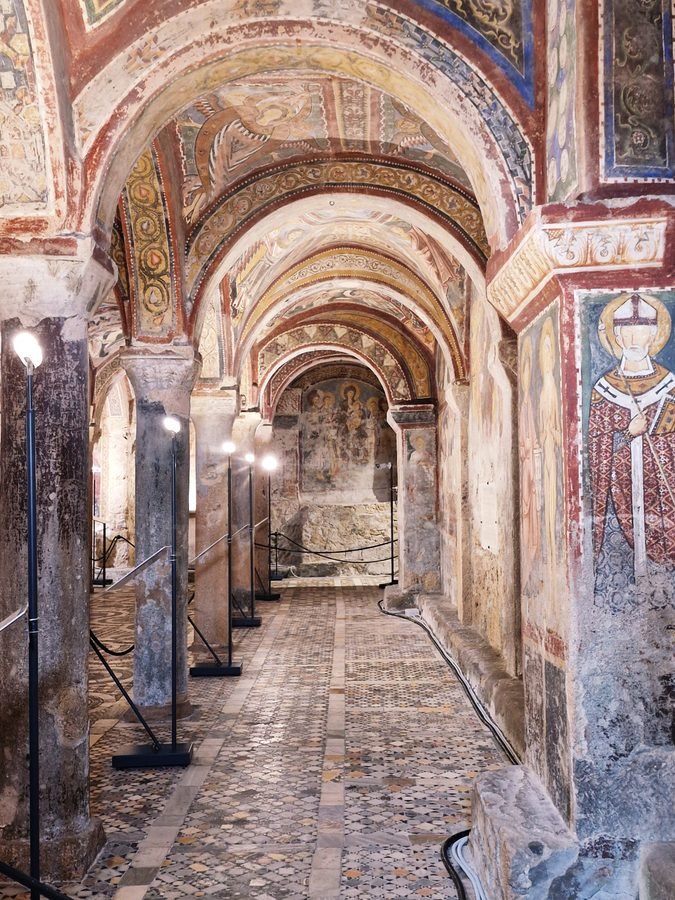
A chapel like this is good to visit with a guide. I believe you can book one at the museum, but there was no guide when we visited it. Probably it’s best just to ask there for such an option.
Afterwards, we had some good ice cream and a walk along the main street. Strada Vittorio Emanuele is lined with beautiful houses with large, mullioned windows. There’s also the loggia of Pope Boniface VIII’s palace and the 12th-century town hall. After seeing the Barnekow House, and a few more buildings, we turned back.
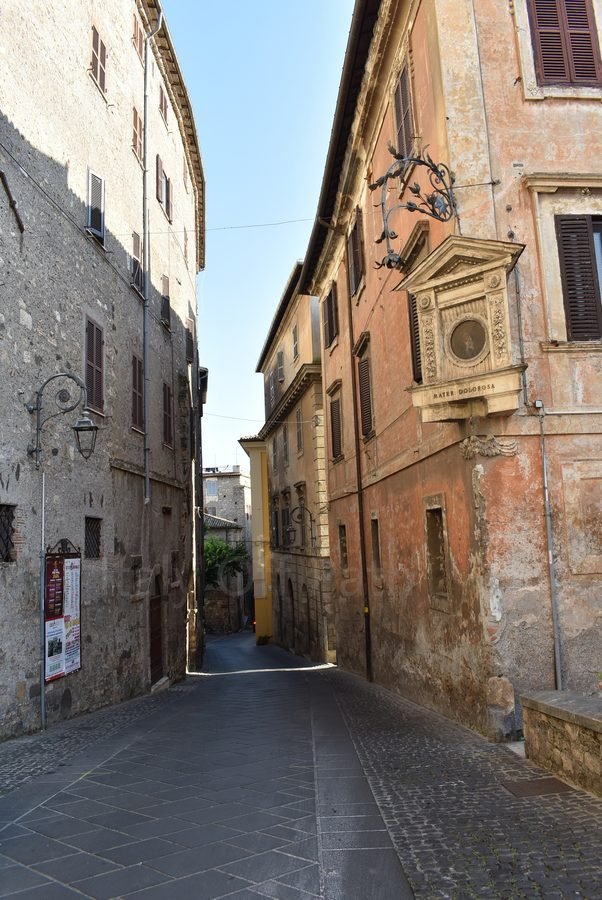
Bernekow House is the famous one because of its frescoes and an external staircase. But common, frescoes aren’t exactly a rarity in Italy, and every 10th or so medieval house has an external staircase.
I know Italians get excited about things simply because they’re Italian, but if you—as a tourist—start marveling at every house that impresses them, you’ll be so busy marveling that you won’t even have time for pizza. So, this legendary house is simply a house you probably wouldn’t even pay much attention to if you hadn’t been told about it.
Ninfeo del Bramante: Renaissance ruins in Genazzano
Skipping the obvious attractions around Rome, we drove to Genazzano to see the Ninfeo del Bramante – one of the abandoned places in Italy.
These picturesque ruins, at first glance resembling the remains of a church, stand in the grass in Genazzano.
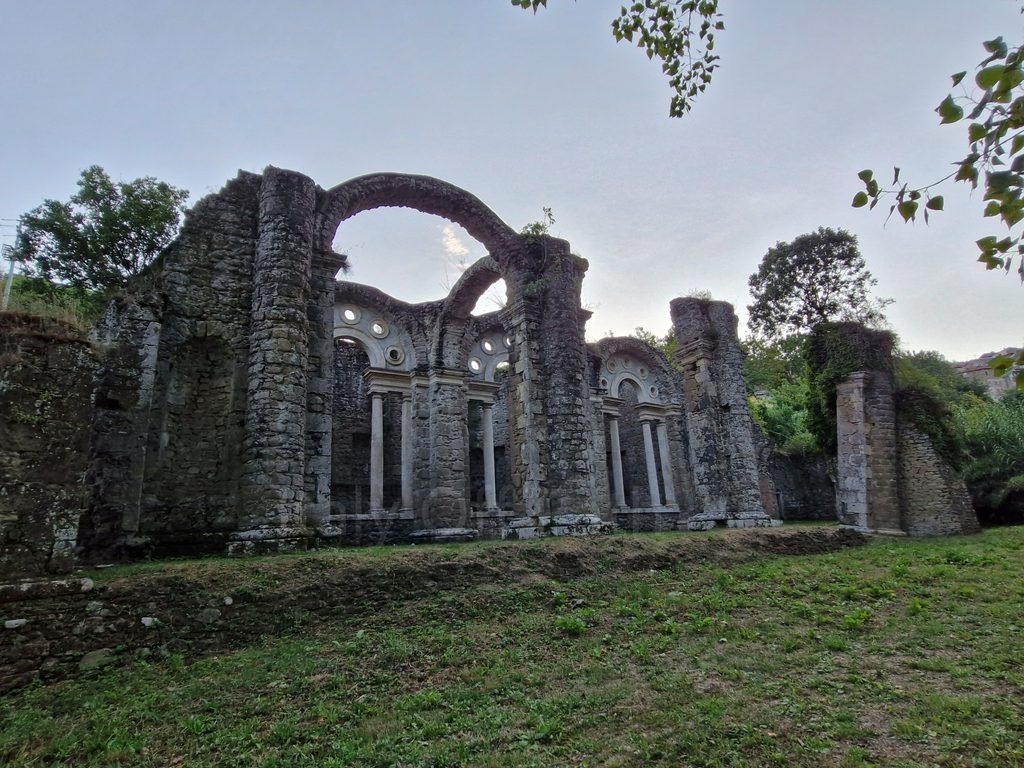
What Was the Nymphaeum Actually For?
In ancient Greece and Rome, a nymphaeum meant a grotto or grove with a natural spring dedicated to nymphs.
Who wouldn’t like to feel like a nymph or at least to meet one? The Colonna family obviously wanted it, so they decided to build the nymphaeum.
As the owners of numerous estates in this area, they hired one of the most famous names of Renaissance architecture and art, Donato Bramante, to do it. Judging by the still well-preserved Renaissance ruins , Bramante’s work must have been great.
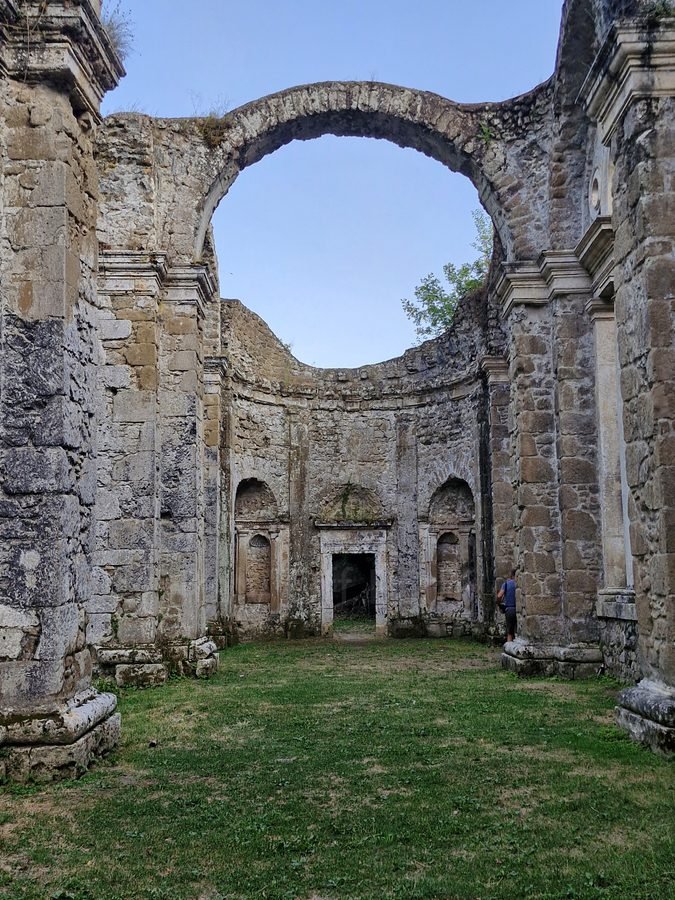
The structure features rooms, decorative windows, and a circular water reservoir. There are sitting areas where the Colonna family indulged in the sweet pleasures of idleness, contemplating life and – very likely – plotting.
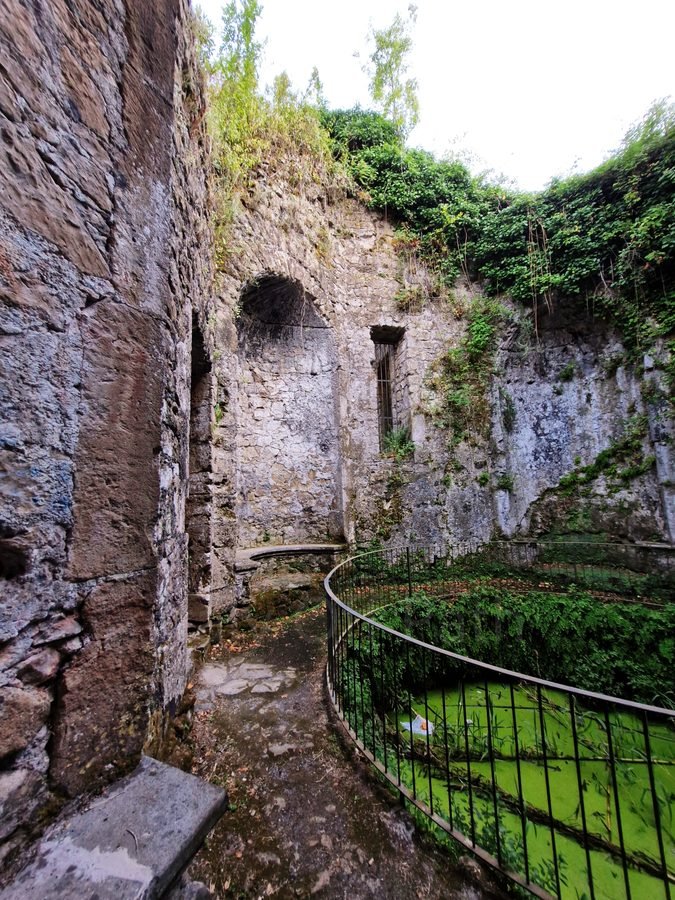
Everyone does this from time to time, so I assume the wealthy of history did too. I found no trace of the nymphs, but I suspect these nature spirits were just an excuse to build a green retreat near a pleasantly babbling stream. After all, “I’m in the ninfeum” sounds much better than “I’m sitting in a gazebo in the garden.”
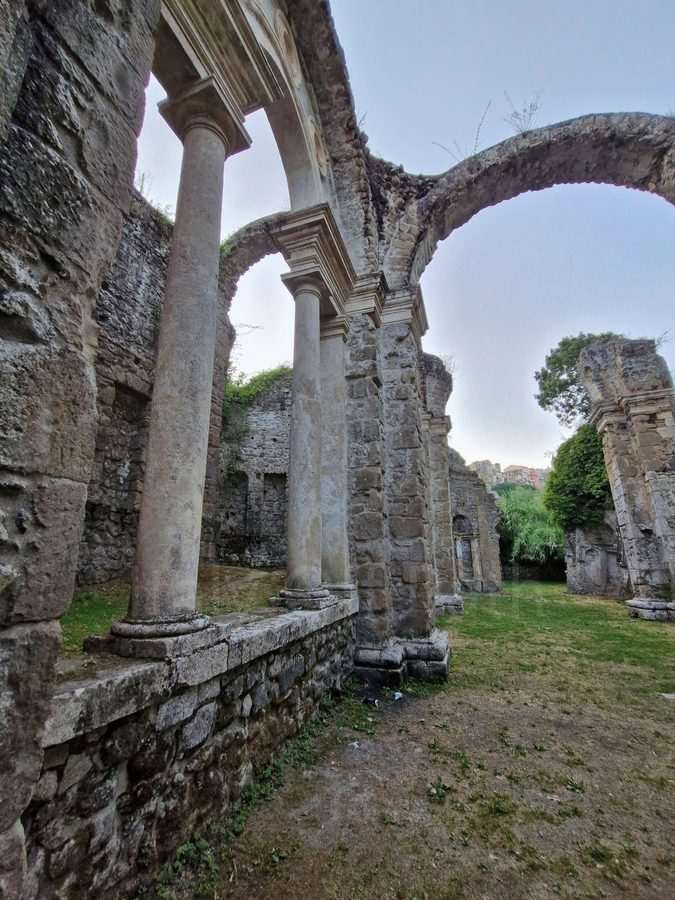
It’s a shame the structure didn’t survive intact, but even the ruins are still beautiful.
And after visiting non-existent nymphs, we returned to Trevi Nel Lazio, where the locals were busy preparing for a local festival featuring a bicycle race and a mountain of food.
If this post made you laugh, annoyed you, or just reminded you of your own trip, tell me in the comments or drop me an email. I actually want to hear about your experiences—the good and the frustrating.
Sign up for the newsletter for one post a week (usually Wednesdays at 6:00 PM). No spam, no “magical Italy” fluff. Just honest stories and places off the beaten track. I’ll see you there!