
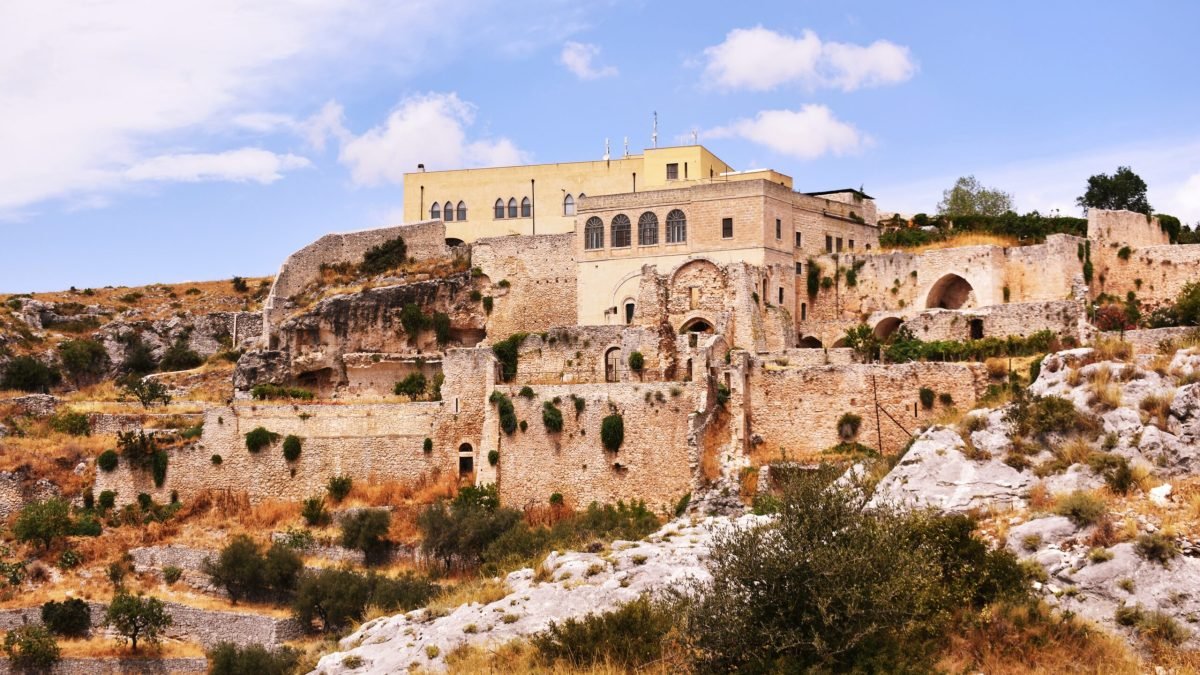
Getting to the Abbey of Santa Maria di Pulsano might be a nice, short walk; it also might be much longer hike with a brief company of teleporting cows. It depends on which way you choose.
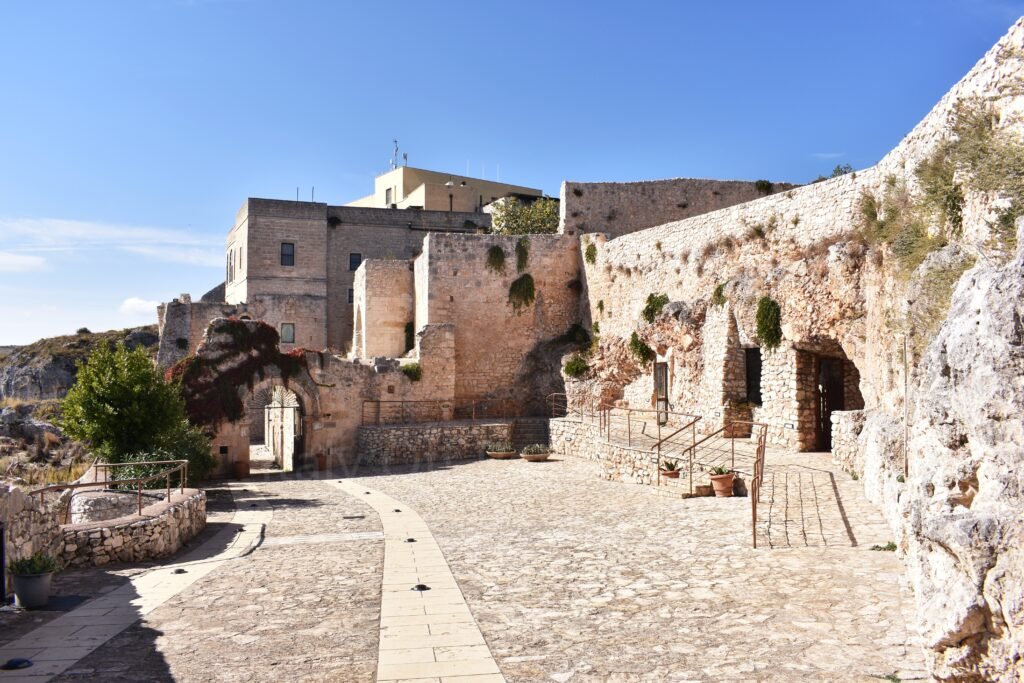
The Abbazia di Santa Maria di Pulsano is a 6th-century Romanesque site famous for its 24 hermitages of Pulsano ‘hand carved into the cliffs. The place attracts both believers and non-believers loking for peace and quiet.
Trail Overview: Monte Sant’Angelo to Abbazia di Pulsano
- Trail Name: Sentiero dei Pellegrini (Pilgrims’ Trail)
- Starting Point: Outskirts of Monte Sant’Angelo (via local farm tracks)
- Distance: ~8 km (5 miles) round trip
- Time: 2 to 2.5 hours walking time
- Difficulty: Moderate (uneven rocky terrain, zero shade, unmaintained markers)
- Elevation Change: ~300 m descent, then uphill on the return
- Key Landmarks: Pasture fields, canyon ridges, rock hermitages (Eremi di Pulsano), Abbey of Santa Maria di Pulsano
Go to:
Medieval monks had many strange customs, such as living in hermitages in weird places, or building monasteries and churches on the ruins of pagan temples. The last one was for a practical reason. Pagan temples often stood on hills, so there was no need to haul building materials uphill; it was simply easier to reuse stone from their structures.
This was also the case with Pulsano Abbey in Gargano – it replaced a temple dedicated to one of Apollo’s cronies.
In the 10th century, the Saracens known for not the best behaviour visited the abbey; they must have had a good time (in the Saracenian sense) – the monastery was in ruins after their visit. Two hundred years later, pilgrims (now often knows as hikers) —rebuilt the Abbey of Santa Maria di Pulsano. And again, for centuries, until 1969 the monastery was a place of religious worship. Then, the monks abandoned it. An abandoned, crumbling monastery is the perfect setting for all sorts of urban legends. And so it happened—they emerged in the Manfredonia and Gargano area about satanists and mafia occupying the ruins and caves.
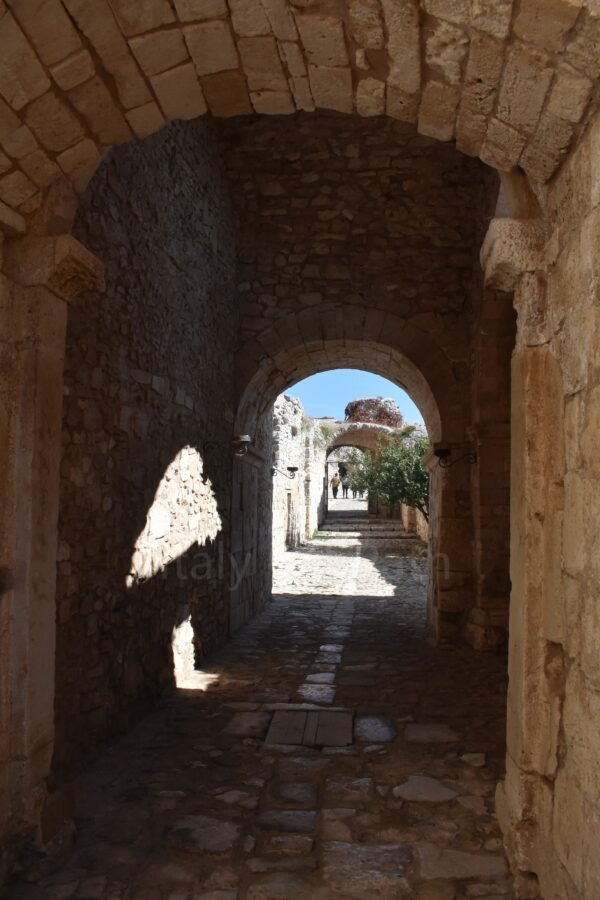
All the legends usually have nothing to do with reality. So instead of mafia soldiers committing crimes in heritages around the abbey (they would have been stuntmen to reach some of them), just local youngsters were doing there what many teenagers usually do when their parents don’t see.
The Abbey of Santa Maria di Pulsano :The Monastic Community Today
But then again, if not for the people (others, of course ), the abbey would probably have shared the fate of many abandoned buildings in Italy.
A group of volunteers from Manfredonia decided to save ithe Abbey of Santa Maria di Pulsano and bring back the religious community. And they were successful; they started working in 1991, and 6 years later, the abbey was opened. I’m curious though how much time they spent battling Italian bureaucracy. It’s a historic building, so getting all the permits must have taken ages— so these people deserved medals.
They created a new self-sufficient Catholic-Orthodox monastic community in Gargano. They farm animals and vegetables, and they created a modern library with about 20,000 old religious volumes.
Staying at the Abbey and Iconography Workshops
In the Abbey of Santa Maria di Pulsano you can taste a monk’s life staying there for a few days. The community allow such an experience, hopefully without making any vows. So you can live with them in the monastery, and you don’t necessarily have to be religious. Many people would give themselves to be chopped into pieces just to escape from reality and slow down. When you feel spiritually renewed, you can also learn new skills there, for example – at iconography workshops.
Visiting the Abbey: The Church and Underground Sections
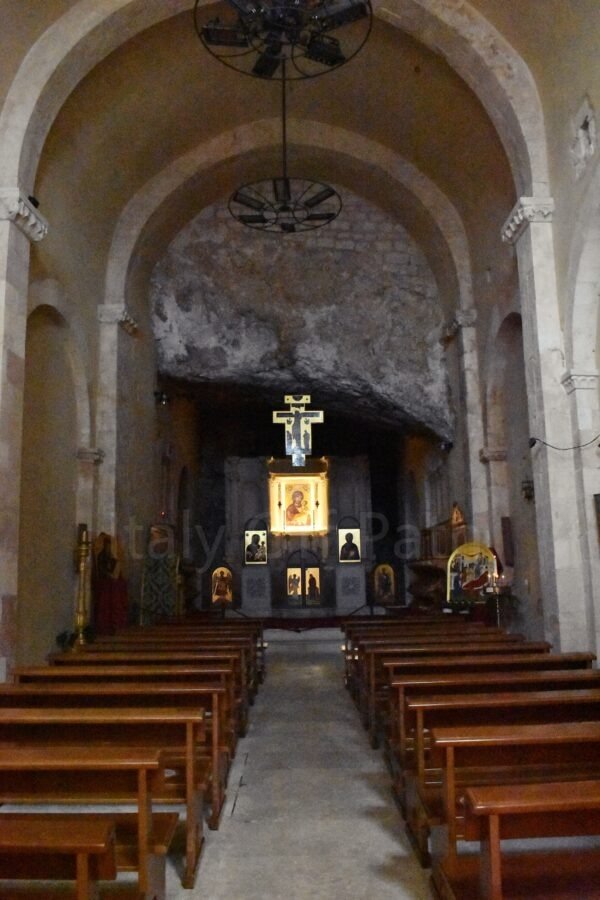
Besides the small church you can see an exhibition of miniatures – a town, probably not Manfredonia, because it’s flat. It might be Monte San Angelo or maybe the Abbey of Santa Maria di Pulsano in its gold age.
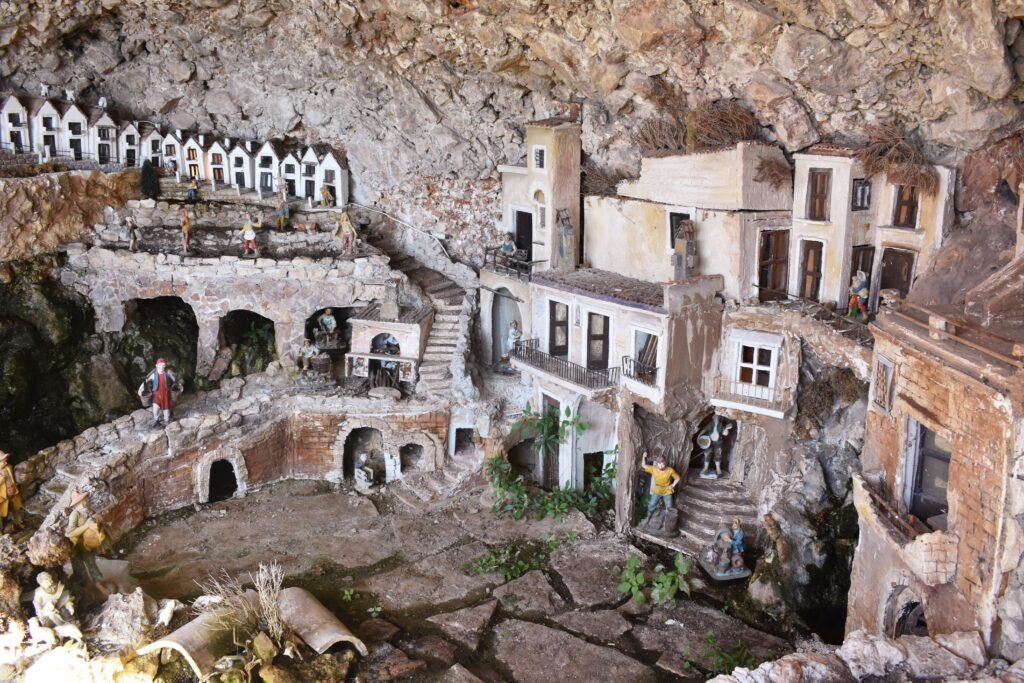
Actually I thought it was a permanent nativity set, anyway whatever it is, it looks cool. The entrance is on the side, in the long wall. There is also an underground section in the monastery, and so far there there’s no entrance fee.
Hiking the Hermitages (Eremi di Pulsano)
The church itself is small, but nice and surrounded by not very high mountains. From them, in good weather, you can see the Gargano and the Gulf of Manfredonia.
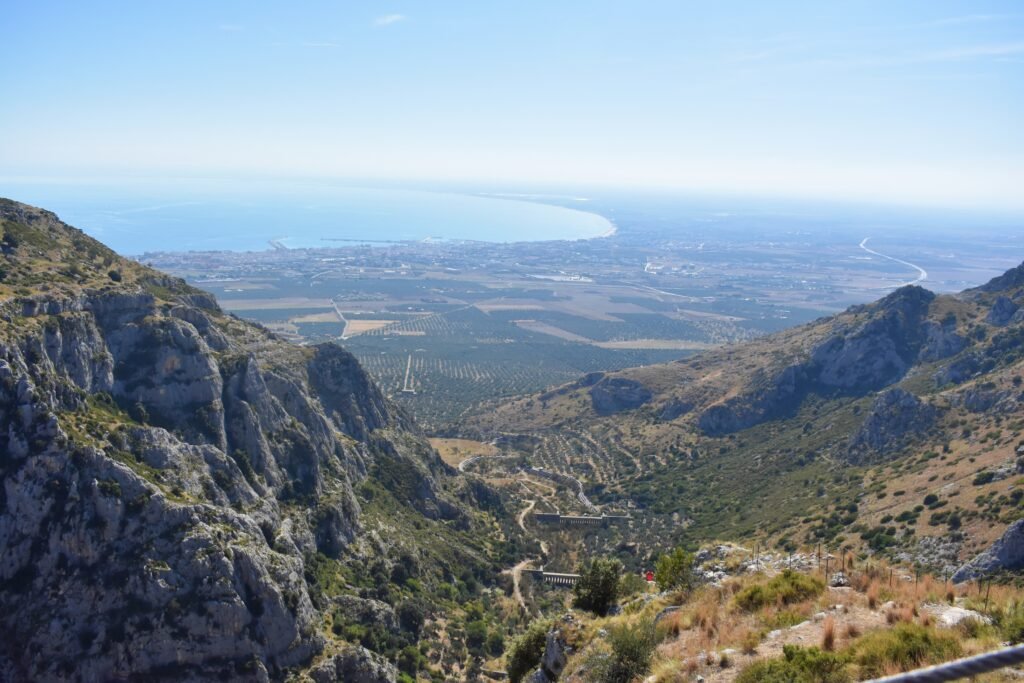
Around the monastery, in the rock walls, there are hermitages ‘handmade’ by crazy medieval hermits. I can imagine them hanging on strings, tapping the rock with hammers to carve out a cave in which they lived. Shame, there’s no medieval statistics of fatal accidents at work.
So far, 24 caves have been discovered; a few of of them, connected by a network of paths and trails, can be reached on your own.
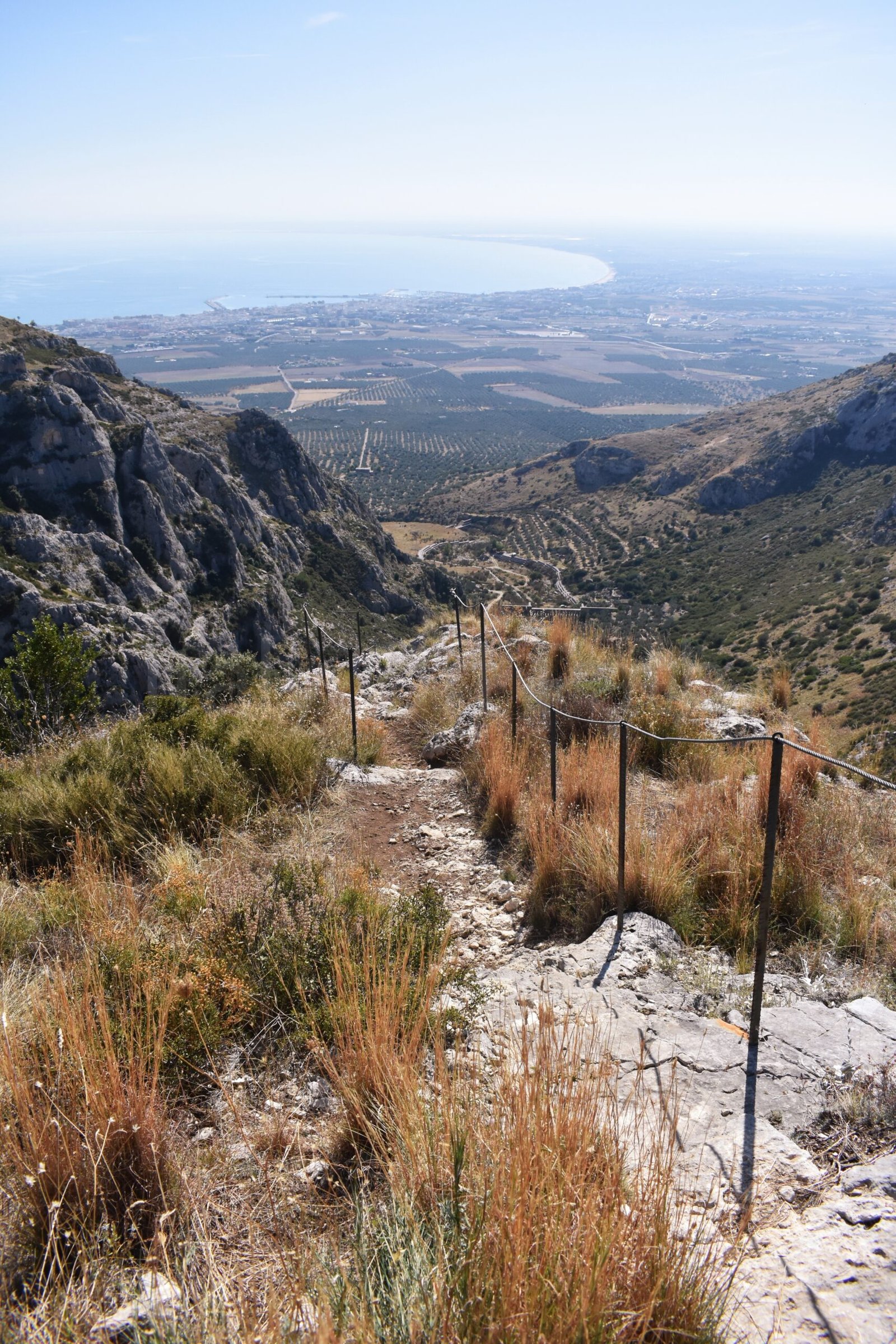
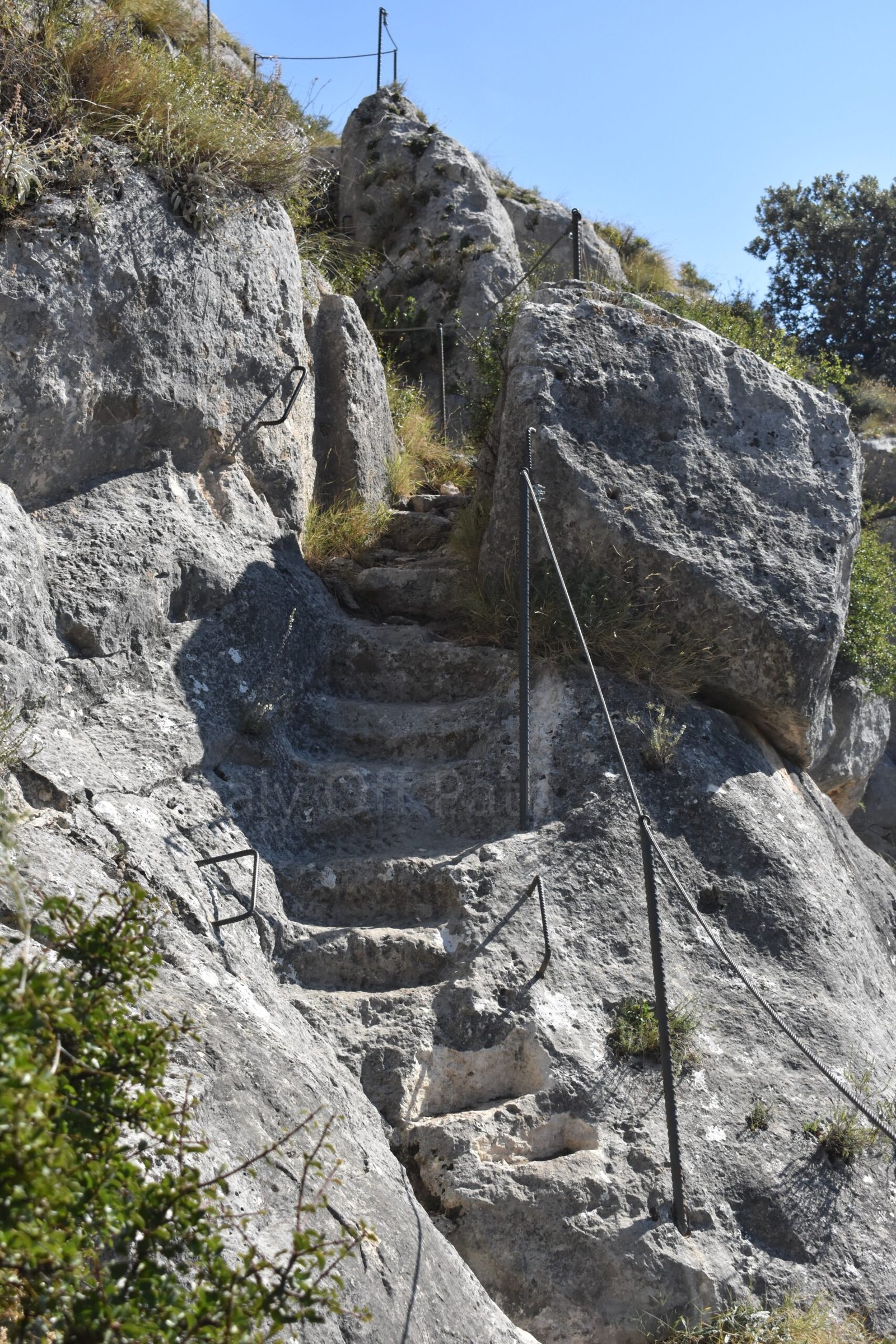
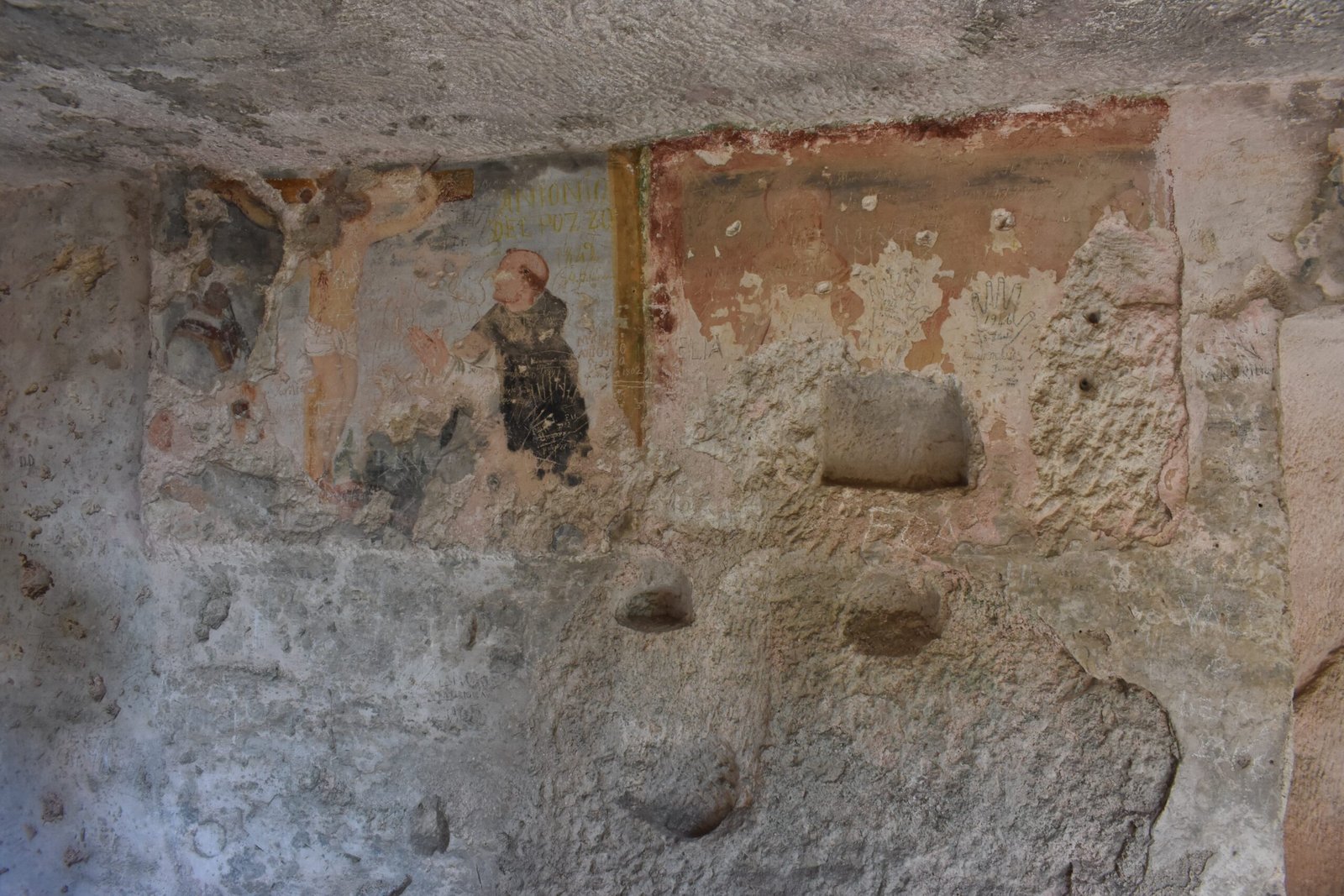
The rest is better to visit with an experienced guide. I went to 3 of them – two below the abbey and one just opposite the church entrance, where’s a field with animals/ donkeys behind the mesh fence. We found a hermitage there following old stone stairs.
How to Get to Pulsano Abbey: Driving, Cycling, or Walking
If you are thinking what to do in Monte San’t Angelo, you can walk to the abbey. It’s about 10 km from the town; this hiking in Gargano National Park takes around 2 h.
Driving, follow the signs for Pulsano. There is only one road to Eremi di Pulsano so you really have to try hard to get lost.
Many people cycle to the abbey – it’s a good route if you’re an experienced cyclists or you want to work on your form. You won’t meet many cars on the way, so apart from the long uphill climb, cycling is not an extreme option.
You can also park your car on the road 3-4 km from Pulsano and walk.
A metal gate is a sign that you’ve reached it. It’s opened by a large red button; if the button is broken, open it using your hands.
Hiking the Old Pilgrims’ Trail to the Abbey of Santa Maria di Pulsano
I’ve been to the Pulsano by car 2 or 3 times, and once I’ve also walked the old pilgrims’ trail.
The route is OK, with nice views, but it is very hard to find the beginning, as it starts in a private field and for some time goes through private land (hard to guess whether if it’s legally private).
Then it leads through the forest with a bunch of insane cows running around, leaving patties everywhere.
One white cow was particularly abnormal: it galloped, hid behind trees, and glaring at us with one suspicious eye. Like a spy, it hid in the bushes, thinking it was probably well camouflaged—its head and large rump were sticking out.
As we approached, it bolted again and hid behind another trunk; teleporting Goku from Dragon Ball came to my mind seeing the cow blinking from tree to tree.
At first, we found it amusing, but when the abnormal cow kept teleporting, Mauro took a sturdy stick to scare it away just in case. After passing the mad cows, the route goes through the mountains.
Practically about Pulsano Abbey in Gargano:
- Footwear: Hiking shoes and long trousers are essential for the hermitages. For just the abbey, regular shoes are fine.
- Summer Heat: Avoid the hottest time of day; there is zero shade. Bring a hat, sunscreen, and plenty of water.
- Kids: Manageable at the abbey, but dangerous near the hermitages due to the cliffs.
- Day Trip: It’s an easy add-on if you are staying in San Giovanni Rotondo or Monte Sant’Angelo.
- Food/Drink: Bring your own. There are no vending machines or shops here.
If this post made you laugh, annoyed you, or just reminded you of your own trip, tell me in the comments or drop me an email. I actually want to hear about your experiences—the good and the frustrating.
Sign up for the newsletter for one post a week (usually Wednesdays at 6:00 PM). No spam, no “magical Italy” fluff. Just honest stories and places off the beaten track. I’ll see you there!