

The Chiena Campagna Water Festival takes place every weekend from mid-June through August. The controlled flood from the Tenza River is the site of passaggiata and one of the wildest Italy summer water fights. And no, you don’t need to speak Italian to participate and enjoy it.
This traditional Campania festival transforms a rather sleepy small town into a vibrant, lively—and very wet — one.
Go to:
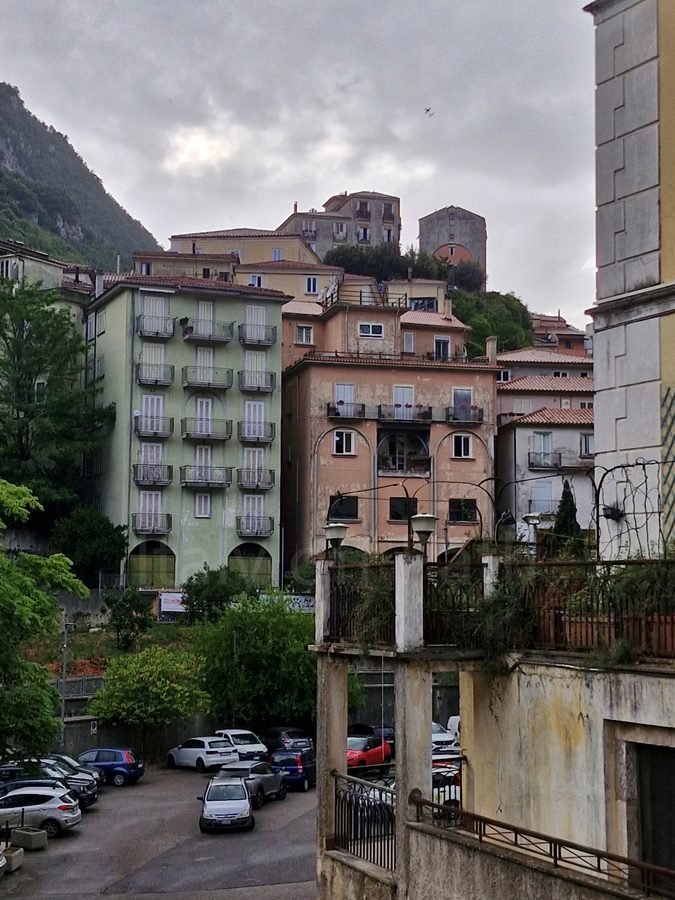
Campagna’s old town reminds me a lot of the Sanità district in Naples: peeling paint on the pretty buildings, narrow cobblestone streets, shops, restaurants, and bars where locals discuss life or simply gossip about passing people
From time to time, youngsters appear looking like a stereotypical Italian Casanova, as do women in stylish dresses straight from films from the heyday of Italian cinema.
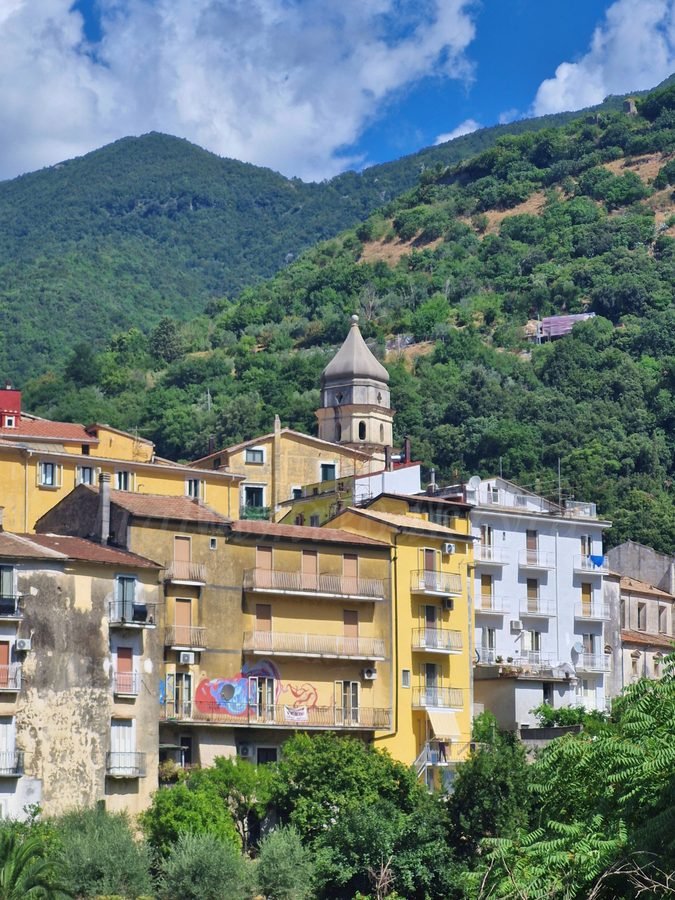
Yes, it’s the real Italy—a dream of many foreigners. On the other hand, people ask whether it is safe to head into these small towns without knowing the language. Yes, it is safe. Very often, the locals will be amazed seeing a foreigner in non-touristy, Italy off-path places. So if you want to see the true Italy, put your fear in your pocket—nobody will eat you there.
But if you have already been to Campania, in Campagna you will immediately feel the atmosphere of the region. And every summer Saturday and Sunday, this quiet place transforms beyond recognition, bringing in tons of money for local businesses. This is thanks to the crowds of tourists, buckets, and water from the river.
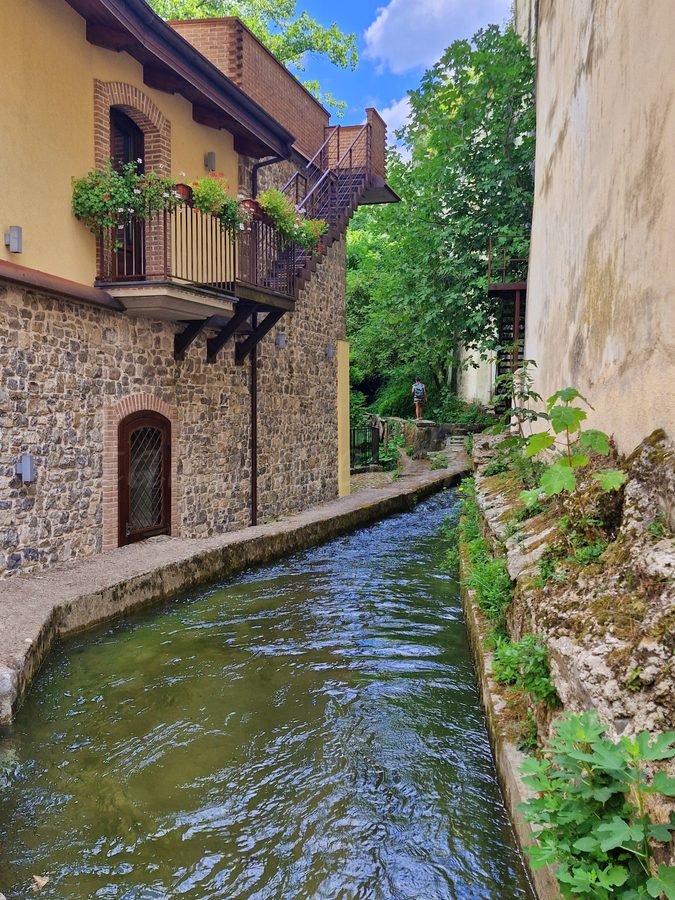
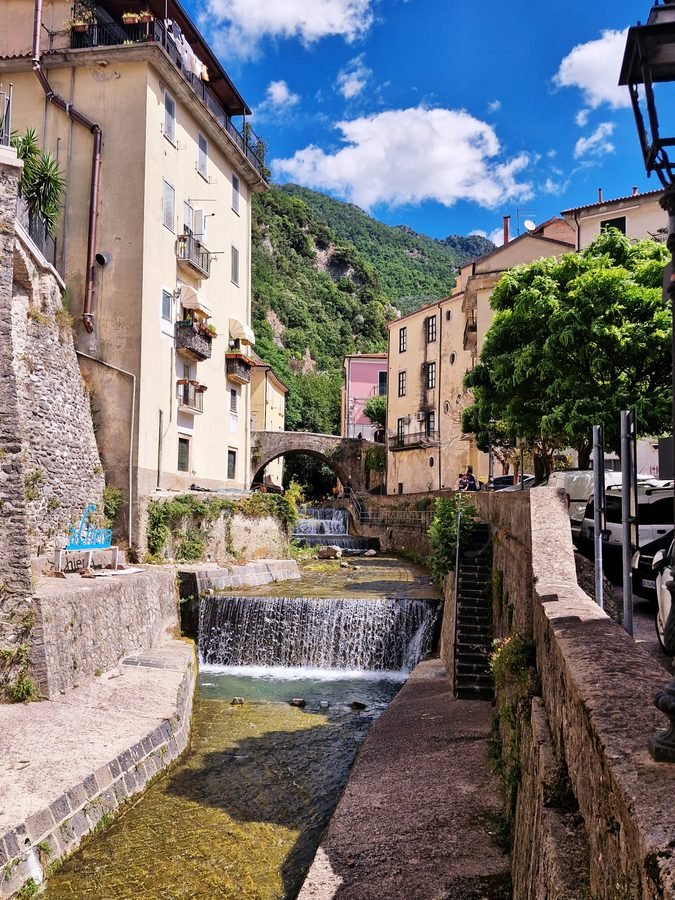
The Tenza River, which you can see from the bridge, flows through Campagna, and it makes even adults behave like children for over an hour. But if you’re too serious to feel like a kid, you can just dine on its banks and visit the small waterfalls.
From Street Cleaning to Survival: A Bit of History
In the 17th century, Campagna’s mayors started flooding the streets with river water—partly to clean them, partly to cool them; over time, “a chiena” became a local tradition. It flourished for centuries; after a long hiatus, and then following the 1980 Irpinia earthquake, “a chiena” was revived. Residents decided to revitalize this economically and demographically declining town by transforming the tradition into a summer festival.
In recent years, the A Chiena Campagna Water Festival has expanded to include the Guerra dei Colori, a Holi-inspired celebration of coloured powder, and the Chiena di Mezzanotte, a nighttime water festival held on August 16th near Ferragosto.
These unusual things to do near Salerno are popular among the locals and inhabitants of Puglia. But not only—A Chiena attracts many Italian tourists. I’ve been there three times—haven’t seen many foreigners. And again—if you have doubts because you don’t speak Italian—to get on the bus or to buy a bucket, you don’t need Italian. Body language and a finger (pointing) will be enough.
High Noon at the Manhole: What to Expect
The event takes place from late June to late August on Saturdays and Sundays. The difference is that Saturdays are quieter—usually no water battle, just a walk.
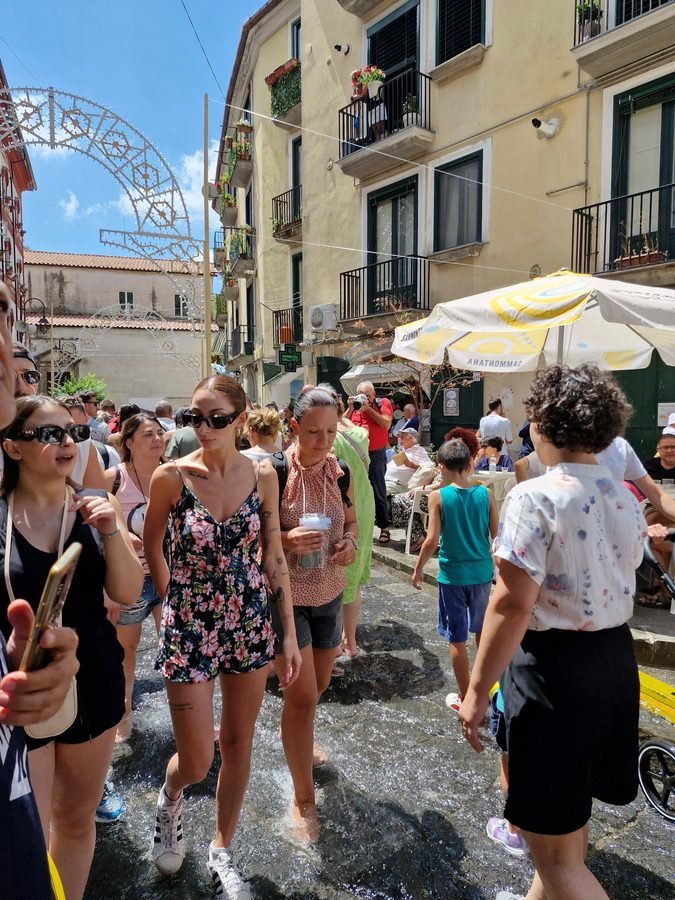
At high noon, people waiting to wade through the cold water witness a mini-performance: young men bring a large key, symbolizing the valve opener and closer. Accompanied by applause and a countdown, the locks are closed, and the manhole—yes, a real manhole—is opened. The main street of the old town is flooded with cold river water.
The flood is, of course, controlled, shallow, and completely safe. The water flows through the main street until 1:00 PM, and during that hour, you can wade in it, run, or sit in a café with river water under your feet. Logically, it’s ridiculous: freezing feet, wet clothes… why enjoy it? And yet everyone did. I did.
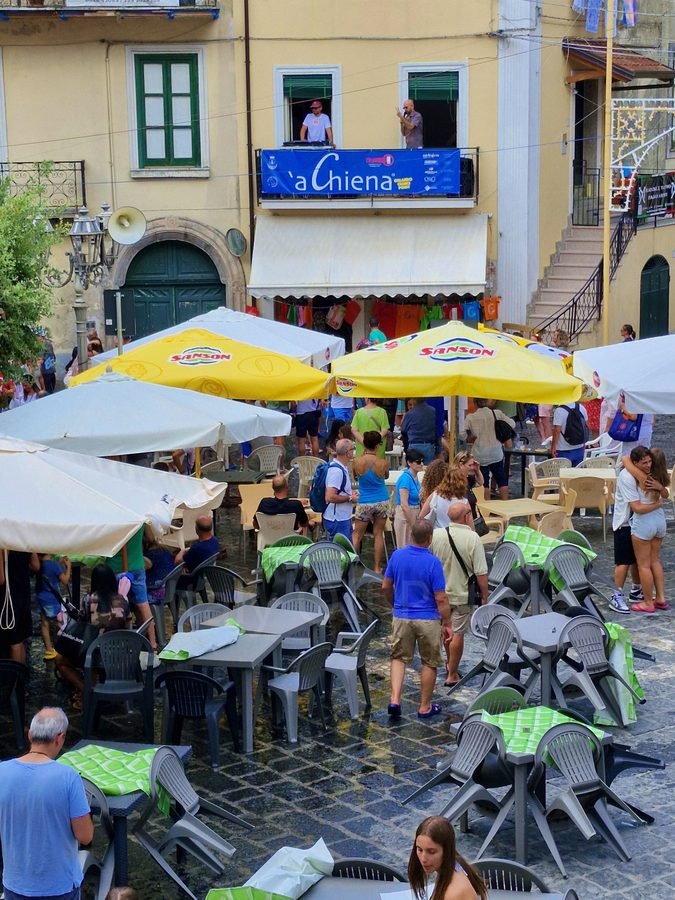
At 1 PM, the river is turned off, like closing a giant tap. Everyone scatters for food, coffee, and buckets. Everyone waits for the battle, which is the main part of a Chiena. Of course, the locals are used to flooding, and local businesses along the route are preparing accordingly. Some shops and restaurants close their doors and hang plastic sheets in their entrances.
The Secchiata: 60 Minutes of Cold Water and Collective Madness
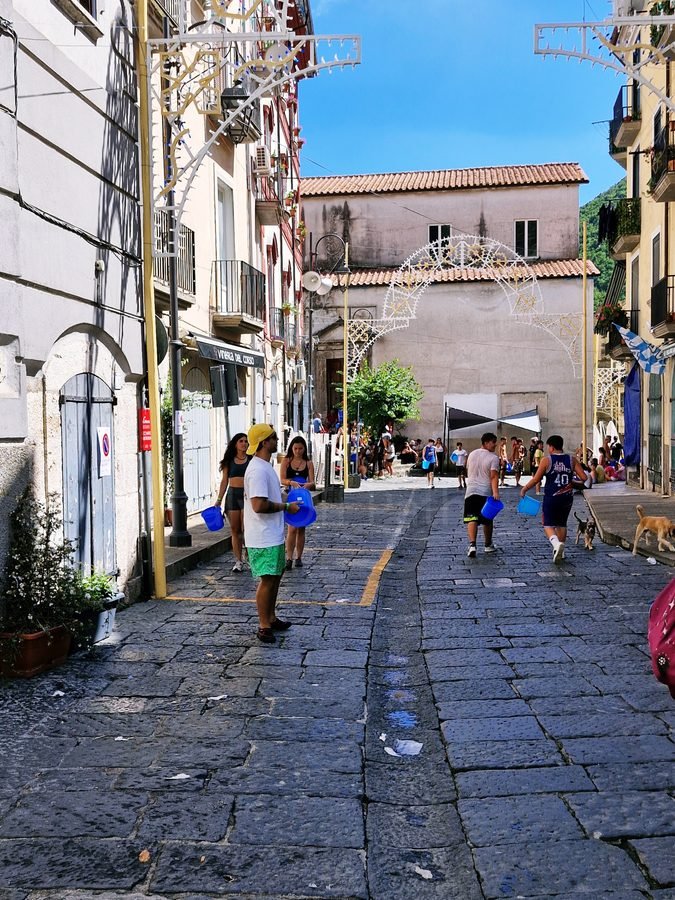
And then everyone waits for the zero hour. It looks ridiculous—a bunch of people sit on the pavements with blue buckets in their hands. A DJ plays music from the balcony in the main square. The battle begins at 3:30 PM, when the river is once again unleashed through the city.
The DJ gives the signal, the crowd counts… tre, due, uno… and the water from the buckets starts flying in all directions.
At 1 PM the river is turned off, like closing a giant tap. Everyone scatters for food, coffee, and buy buckets. Everyone waits for the battle, which is the main part of a Chiena
And so it goes for an hour, although the water is really cold. People splashing and being splashed come and go, and there’s a lot of laughter. Don’t expect that somebody will be nicer to you because you’re a tourist; however, there’s an unwritten agreement of a Chiena. They do avoid attacking bystanders who are clearly not participating. But it might happen that a drop or two will land on you.
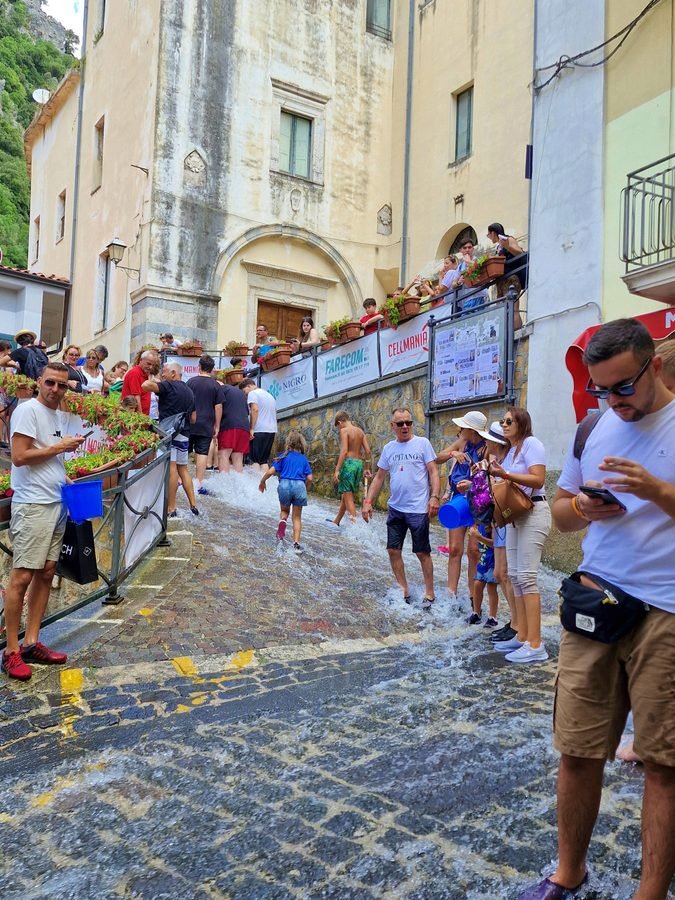
We lasted about 30 minutes. It was warm, but not hot, so our teeth started chattering. We went to change, and that was the end of our water fight in Campagna.
A Chiena Practical Guide: Parking, Tickets, and Buckets
- The biggest battle is in the main square—the further away from the square, the safer/drier.
- The town floods at 12:00 PM for the walk (La Passeggiata), and the bucket battle (La Secchiata) begins at 3:30 PM.
- A Chiena is free; however, with a 10 euro ticket, you can use the bag storage and changing facilities. We bought a ticket, and it was a good decision.
- There’s no parking in Campagna during A Chiena. The access road is closed—volunteers will direct you to the parking lots.
- From the parking, go to the bus stop—transfer to the venue is free.
- Buy a bucket in town—1.5 to 2 euros. There are specific requirements for buckets, so don’t drag your own.
- Wear something you can safely get wet, for example, a swimsuit top and shorts.
- Wear anti-slip shoes.
- Bring a towel.
If you don’t want to participate but just watch, there are steps leading from the main square to a small terrace. Don’t go too close to the stone railings, as the water will reach you.
The Verdict: Is a Campania Water War Actually Worth It?
Yes, it is. A Chiena is refreshingly simple: the water is real, the people are local, and the fun is authentic. It’s a tourist/non-tourist event. It’s for tourists, because there were many Italians. But it’s not touristy in the way foreigners in Italy understand it. So yes, maybe you’ll have to use your fingers to communicate, and even feel—“My God, what am I doing here?“—just sit down in a café and feel the water flowing under your feet.
I had a great time; even just walking in cold water was enjoyable, but to truly experience the fun of collective madness, you should get a bucket and simply get thoroughly soaked. And douse others.
If this post made you laugh, annoyed you, or just reminded you of your own trip, tell me in the comments or drop me an email. I actually want to hear about your experiences—the good and the frustrating.
Sign up for the newsletter for one post a week (usually Wednesdays at 6:00 PM). No spam, no “magical Italy” fluff. Just honest stories and places off the beaten track. I’ll see you there!