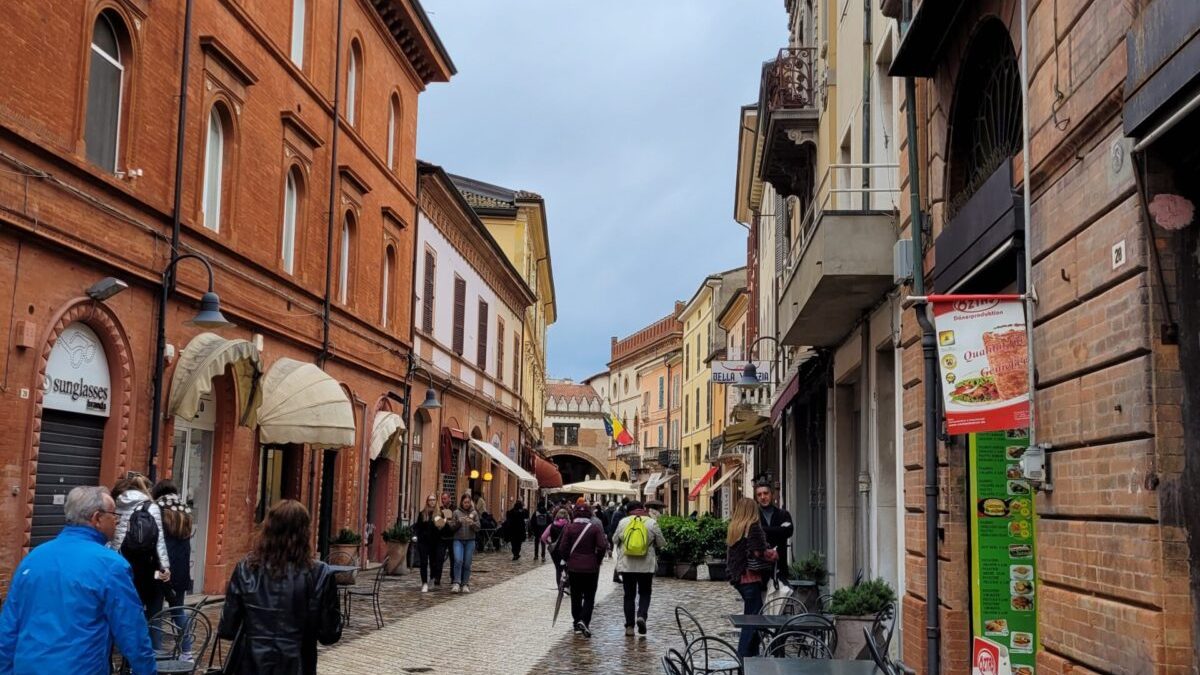
I went to Ravenna by chance. The only thing I knew about it was that it was located in the Emilia-Romagna region.
Even though the weather was bad, Ravenna seemed to be a very elegant city. I think it’s a good adjective to describe the town. It’s also a popular tourist destination, not only among Italians. However, what sets Ravenna apart from other popular destinations in Italy is that it seems tourists there have more specific interests than just going here and there. It was my impression; the town was crowded, but not overcrowded and without ‘Made in China’ souvenir stalls like in Venice, for example. Still, Ravenna is a popular place, so if you want to avoid crowds, the best option is to visit the sights in the morning or at lunchtime.
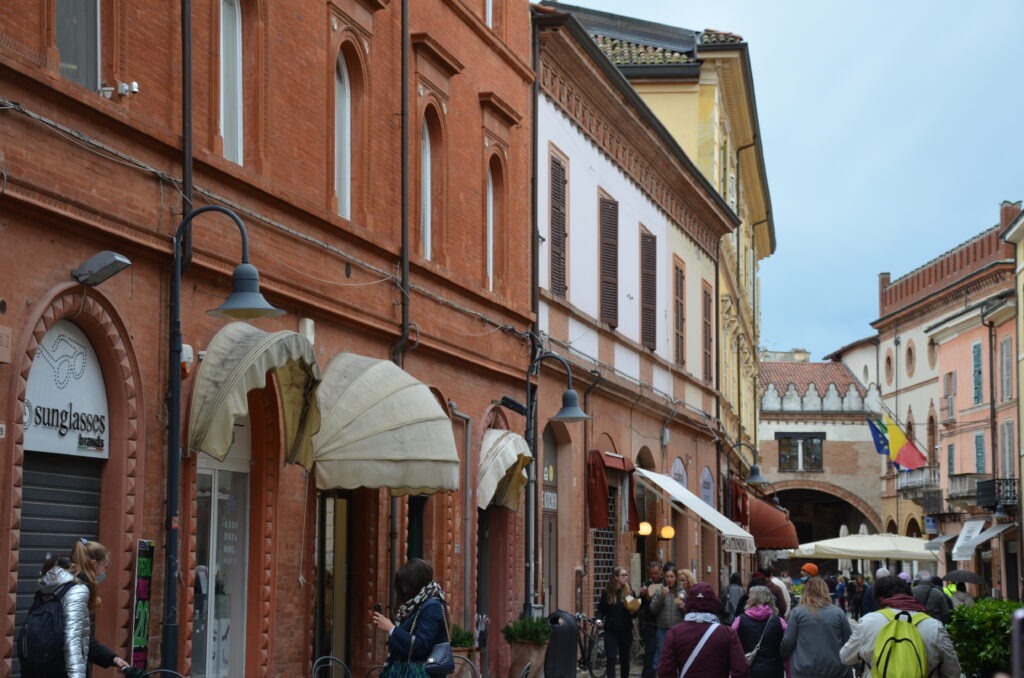
The town is a pretty place to explore on foot. A day or two will probably be enough to see it all. Ravenna is best known (I learned it during my visit) for its fantastic early Christian and Byzantine mosaics (a UNESCO World Heritage Site) dating back to when Ravenna was the capital of the Western Empire.
What to See in Ravenna
The most important tourist attractions in Ravenna are the mosaics in the numerous churches. I visited three of them, but if you want to see more, the first five can be visited with a combined ticket (the price at the time was €8.50).
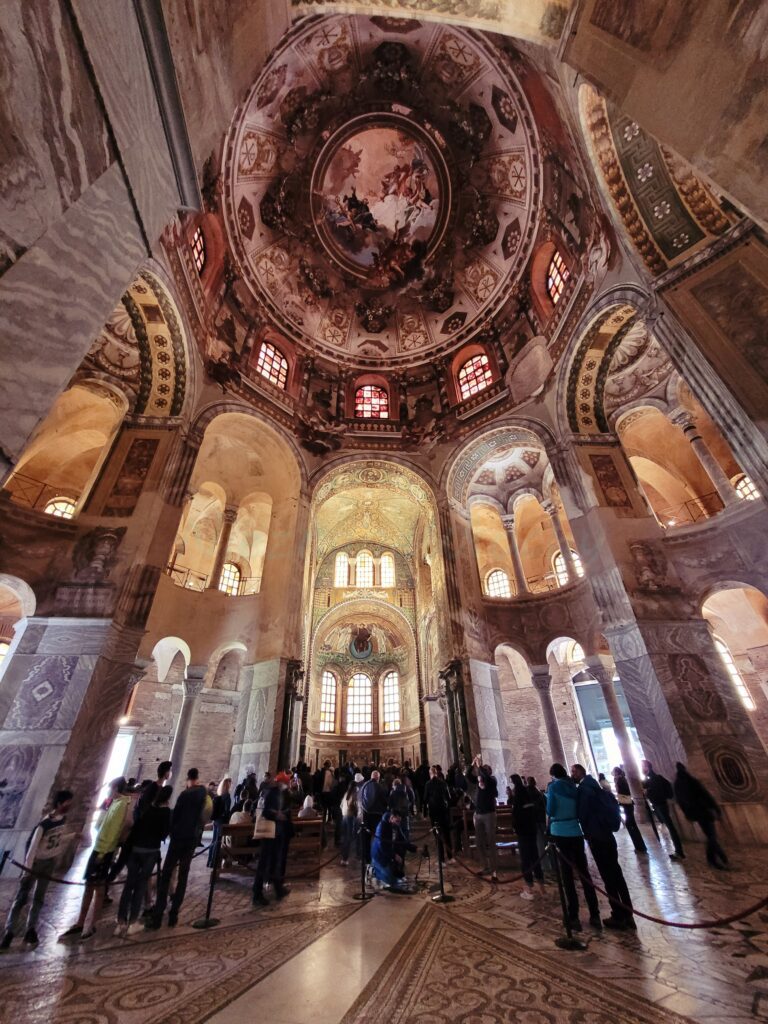
The Basilica of San Vitale made the biggest impression on me. Built between 526 and 547, the building looks very simple and modest from the outside, but inside it is rich in marble and beautiful mosaics. They illustrate scenes from the Old Testament, as well as scenes with Emperor Justinian and Empress Theodora.
Next to the basilica is the Mausoleum of Galla Placidia (Mausoleo di Galla Placidia), who was an important woman in Ravenna. Daughter, sister, wife and mother of Roman emperors, she enjoyed a full and colourful life. The mausoleum was built as her tomb, although Galla Placidia made a joke and died in Rome.
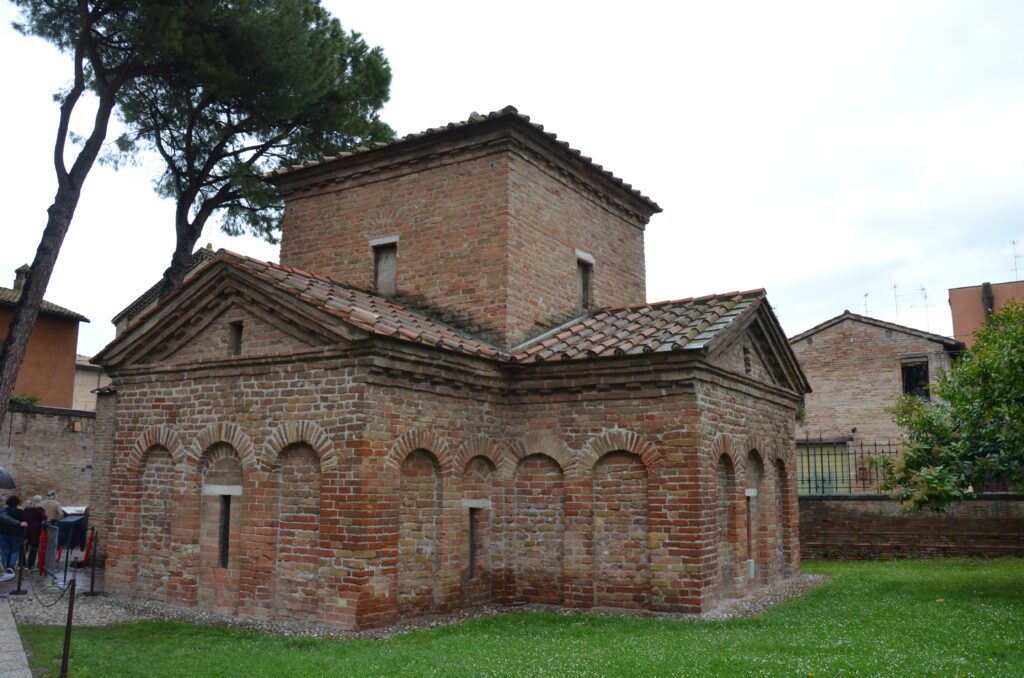
The mausoleum is very small, so it’s hard to move when there are a lot of people there. The ceiling is an intense blue field with a thousand small golden stars, a cross in the middle and symbols of the evangelists in the corners. Definitely worth a visit just for the beautiful, still vivid colours.
The next building I saw was the Battistero Neoniano. Built in the early 5th century in an octagonal shape, it used to serve as a baptistery. Inside, like probably all religious buildings, it is decorated with marble, sculptures and mosaics.
The next church I popped into was the Basilica of Sant’Apollinare Nuovo, full of mosaics depicting processions of martyrs and virgins leaving Ravenna.
The last church you can visit with the same ticket is the Cappella Arcivescovile, also known as the Cappella di Sant’Andrea, with mosaics from the 6th century. I skipped the place.
What Can You See With Another Combined Ticket
Mausoleo di Teodorico (The Mausoleum of Theodoric), Museo Nazionale and the Basilica of Sant’Apollinare in Classe.
I think I wrote somewhere that Italians have sign-phobia, and evidence of this phobia can be seen everywhere: for example on the road, when you try to find directions, or the name of a street, or when you visit an Italian museum.
It’s the same in Ravenna museums, at least in the Museo Nazionale. The direction of the visit is not marked, I couldn’t figure out if I visited all the rooms, it was difficult to locate the exhibits, etc. However, if you like surprises and have time, it’s worth dropping by one or two museums in town.
The city has more museums, churches and parks to offer. I liked the old town of the Rocca Brancaleone fortress, which now has a small park with a café and a playground for children within its walls. Next to it is the tomb of Dante Alighieri, who died in Ravenna in 1321.
Also, the main square in Ravenna, Piazza del Popolo, is a nice place. Surrounded by beautiful old buildings, with lots of pubs and taverns, tables and a place to sit, people-watch and relax.
In addition to the many monuments, Ravenna has many events. The tourist information office publishes and distributes an information magazine, so if you are interested in an event, the office is a good place to get information.
Is Iy worth Visitng Ravenna?
Ravenna is a beautiful city, and although I’ve never planned to visit it, I think I’ll visit again. But I won’t be exploring churches and admiring mosaics (though you definitely should), I’ll be soaking up the city’s incredibly artistic and cultural atmosphere. Maybe I’ll even take a mosaic-making workshop.