
Tuscany is a region with capricious weather, especially in spring and autumn – it rains a lot. If you’re a tourist who limits your visit to Florence, the rain probably won’t bother you – there are many things to do in the capital of the region.
But what about those who want to see Tuscany beyond Florence? This is what happened to us during our four-day stay – it was pouring every day. Even so, we still enjoyed our off-beaten-path short break. Tuscany beyond Florence exists, it’s doing well and has a lot to offer. Actually, much more than the gem of this region – Florence.
Go to:
Abbey of San Galgano: The Roofless Ruin in Val di Merse
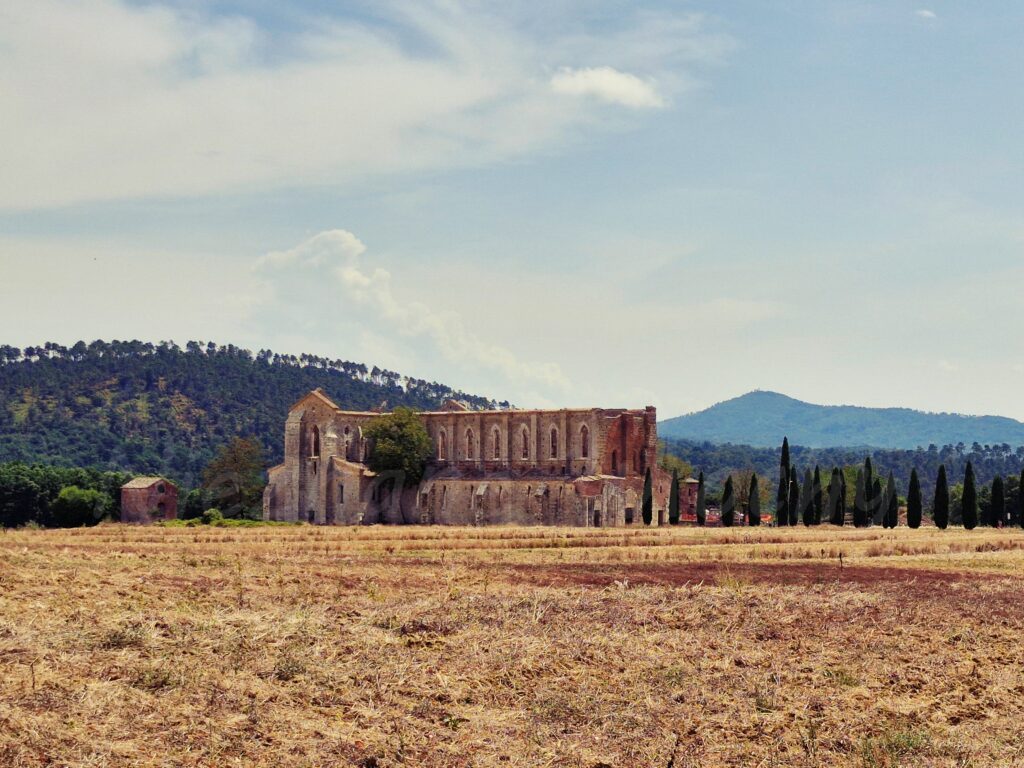
The reddish ruins (not that ruined) of San Galgano Abbey stand in the middle of nowhere (Chiusdino, Val di Merse); it’s not possible to overlook it from a distance. The never-finished roofless abbey and hermitage are located about 30 km from Siena. There’s a spacious free parking area located 100–150 meters from the monastery.
The abbey had been intensively built for about 70 years (1218–1288). The Middle Ages were full of weird things such as famine and plagues — these were some of the reasons why this Gothic building began to decline from the 14th century. In the meantime, the Cistercians, for whom the abbey was built, made friends with the authorities in Siena.
Ignoring the local community of Chiusdino, the monks moved to Siena. Well, living in Siena was more appealing than living in the middle of nowhere in Val di Merse.
The locals of Chiusdino had no reason (and money) to maintain the building belonging to the Church. The monastery began to deteriorate: some parts collapsed, and the building became a picturesque ruin of a roofless abbey.
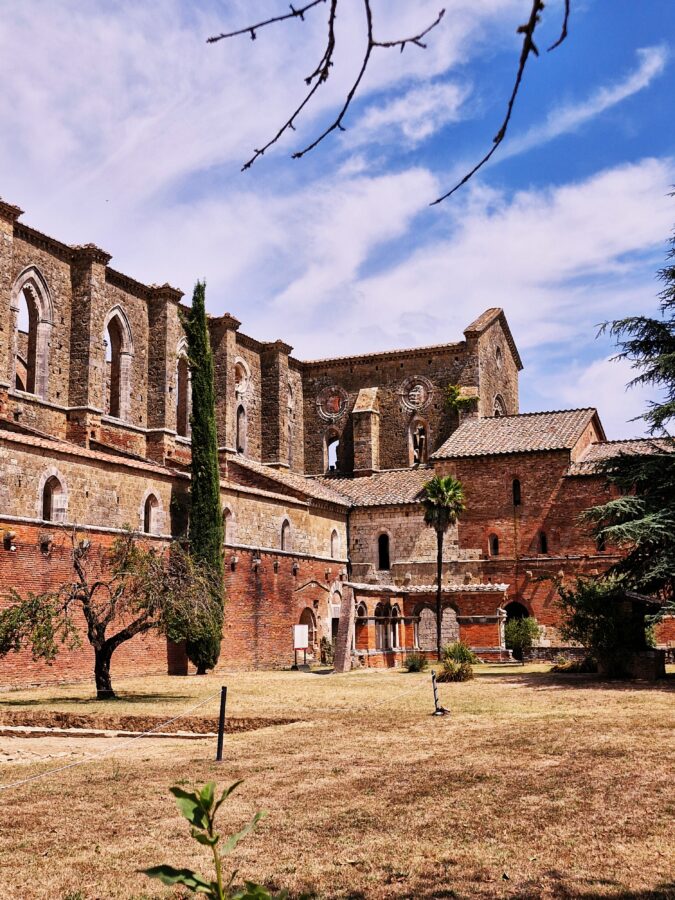
The abbey is undergoing a research and reconstruction program; gradually, all previously closed rooms will be opened to the public. Currently, the following are open: the scriptorium, the chapter house, the remains of the cloister, and the interior of the church.
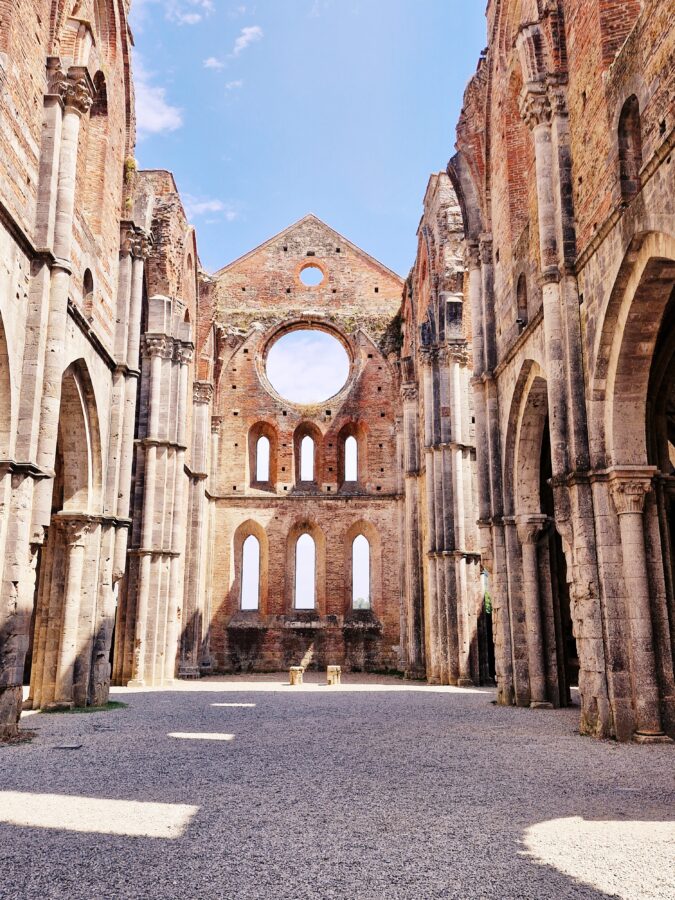
The ruins are impressive and beautiful, so no wonder that occasionally they are used in films and for concerts. If I remember correctly, you can also get married there. That would be something original and remarkable – where did you get married? In the ruins.
Even if you don’t have such plans, the abbey is worth visiting. In places like this, I’m always impressed by the mastery of the builders, and I regret that people lose their manual skills. A combined ticket to the abbey and hermitage costs 5 euros.
The Montesiepi Hermitage: Tuscany’s Real Sword in the Stone
The Montesiepi Hermitage is 100 years older than the abbey. It is close to the monastery, on a hill that you have to climb along a forest path.
There is a legend associated with the hermitage, or rather, not a legend, because it is based on proven facts from medieval history.
And as Italians believe, their ‘The Sword in the Stone’ legend is as fascinating as the story of King Arthur and his Excalibur. Is it?
Saint Galgano Guidotti, the hero of this story, was a rogue knight — probably not such an isolated case in the Middle Ages. But this rake later became a saint. He changed after his father’s death, when Archangel Michael appeared to him in a dream.
Under the influence of the Archangel, the sinful knight decided to turn his life upside down. During this radical change, sanctity became an inseparable element of his dreams, including his waking dreams/hallucinations.
One day, a divine messenger appeared to him and led him to the nearby hill of Montesiepi, where Galgano met the Twelve Apostles. They suggested that he should become a hermit and build a house for the glory of God, the Virgin Mary, and the Apostles. Hmm, the story sounds like the former knight was on drugs.
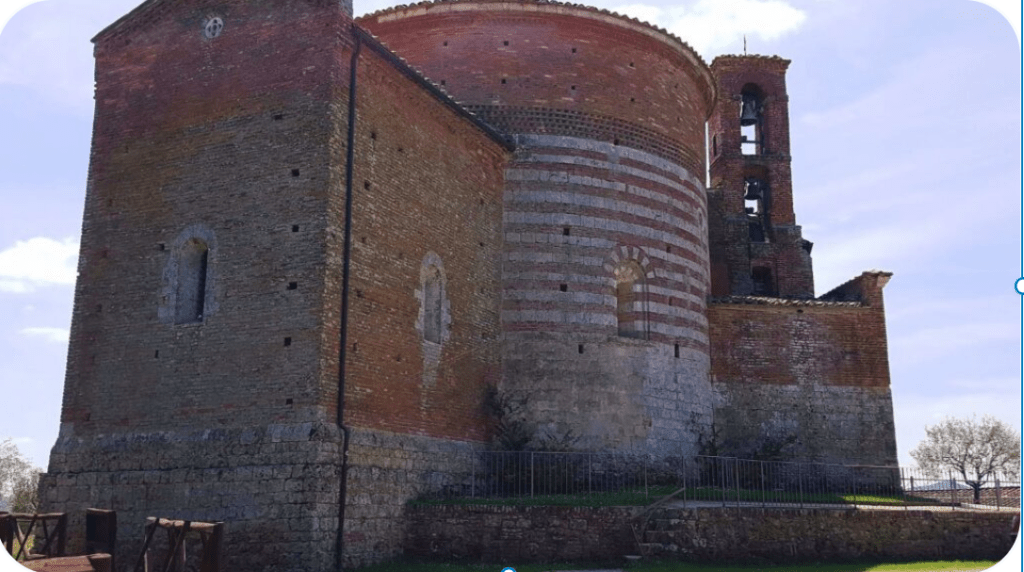
Anyway, Galgano found this idea tempting and began searching for a place for a hermitage. And since a man who meets the Apostles cannot just like that find a worthy place for a hermitage (it had to be more complicated), his horse chose the place.
The visionary horse led Galgano to Montesiepi, stubbornly stood still, and refused to move. For Galgano, it was a mystical experience, and he became a hermit. Well, considering the weird and inaccessible places hermitages were located, the choice of the horse wasn’t so bad.
As a sign of his renunciation of his former life, he plunged his knightly sword into the ground. Rumors of the new hermit spread quickly throughout the area, and pilgrims began to come to Montesiepi asking for prayers and miracles.
One day, while the new local celebrity-hermit was away, someone broke the sword, so Galgano placed it in the Montesiepi boulder, the same one where it stands today. Today, the sword is protected by a glass cover.
In the round building of the hermitage, there is a shop where you can buy handmade local products. They have good herbal teas there.
Frosini: Escaping the Hustle and Bustle in a Tiny Tuscan Borgo
To see places like Frosini, you have to visit Tuscany beyond Florence. On the way to the abbey, we came across buildings on a hill, so we decided to check them out. In this way, we discovered a mini-village of Frosini, where 45 people lived in 2001. I don’t know how many live there now, but probably even fewer.
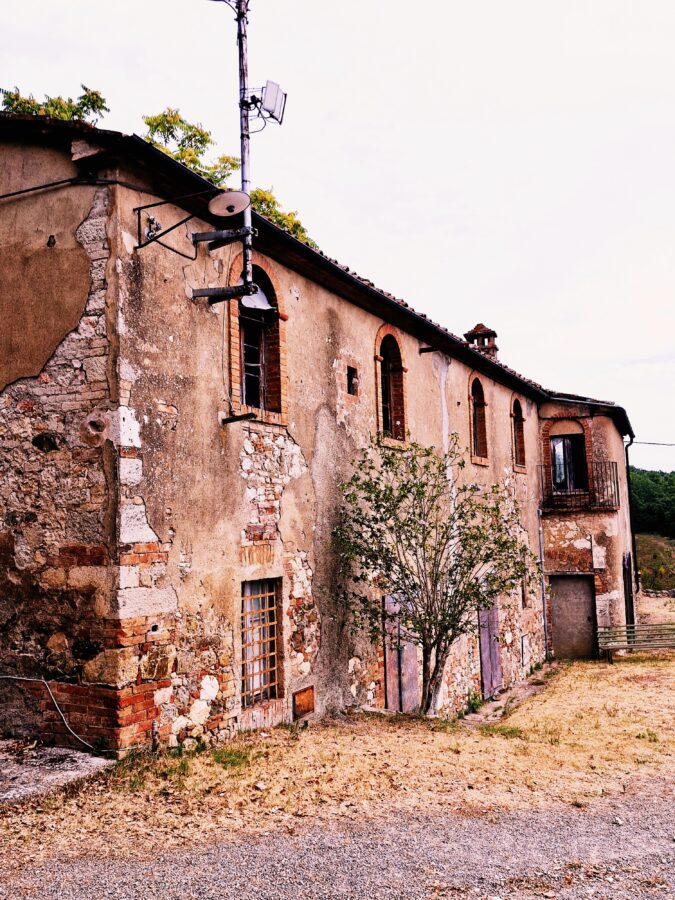
This tiny borgo is old — the first mention of the Frosini castle appeared in 1004. In addition to the remains of the castle, Frosini has a dozen or so cool stone buildings overgrown with vines, a picturesque well, a garden, a monument, and a closed church.
According to local legend, a ghost appeared there, announcing the plague epidemic in the 14th century. Within a few months of his visit, all the nasty inhabitants of the castle died; the epidemic did not spare the less nasty inhabitants of the neighbouring villages either. Only one man survived the plague; he hid in the fortress for a few years and avoided infection.
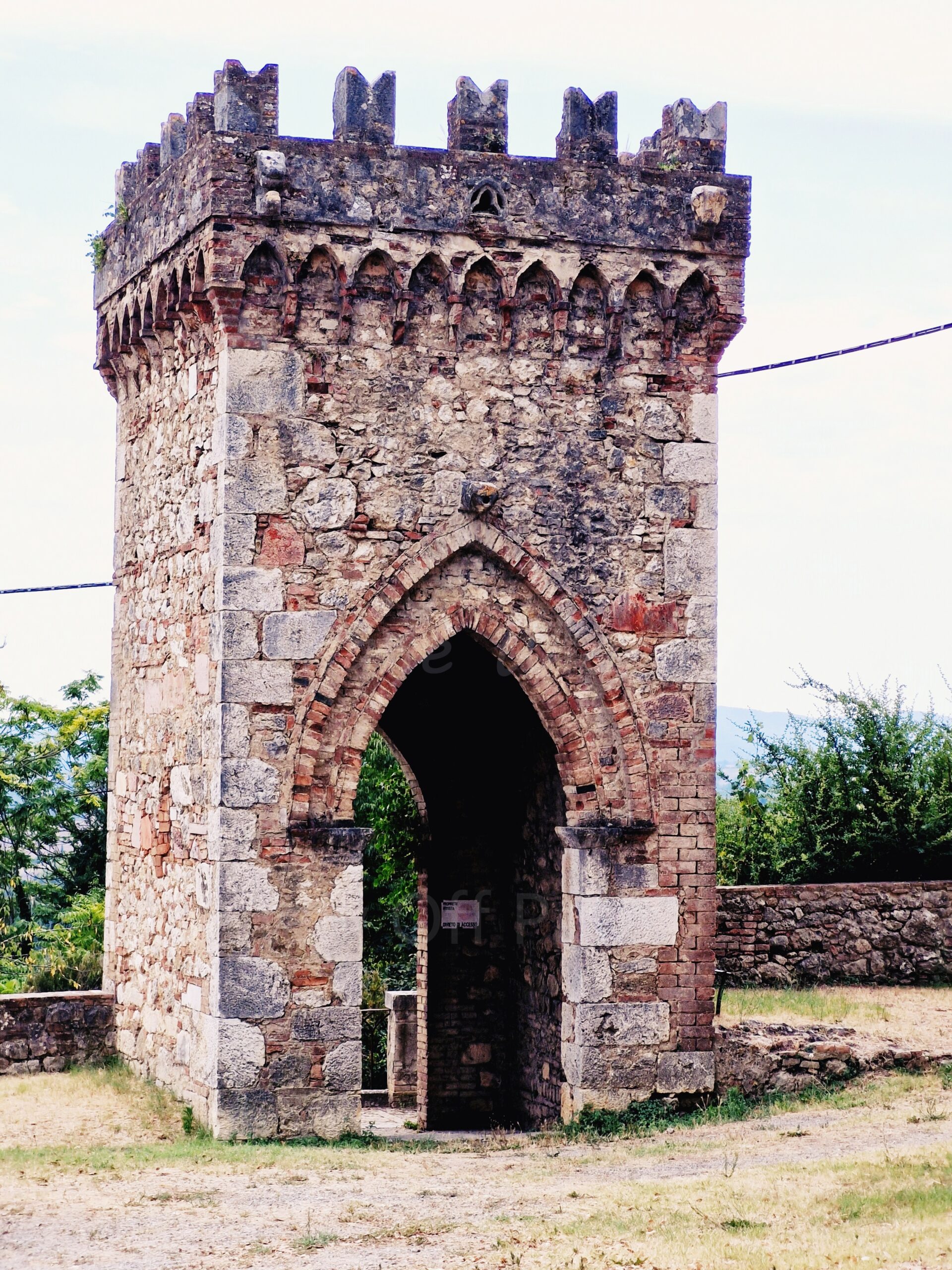
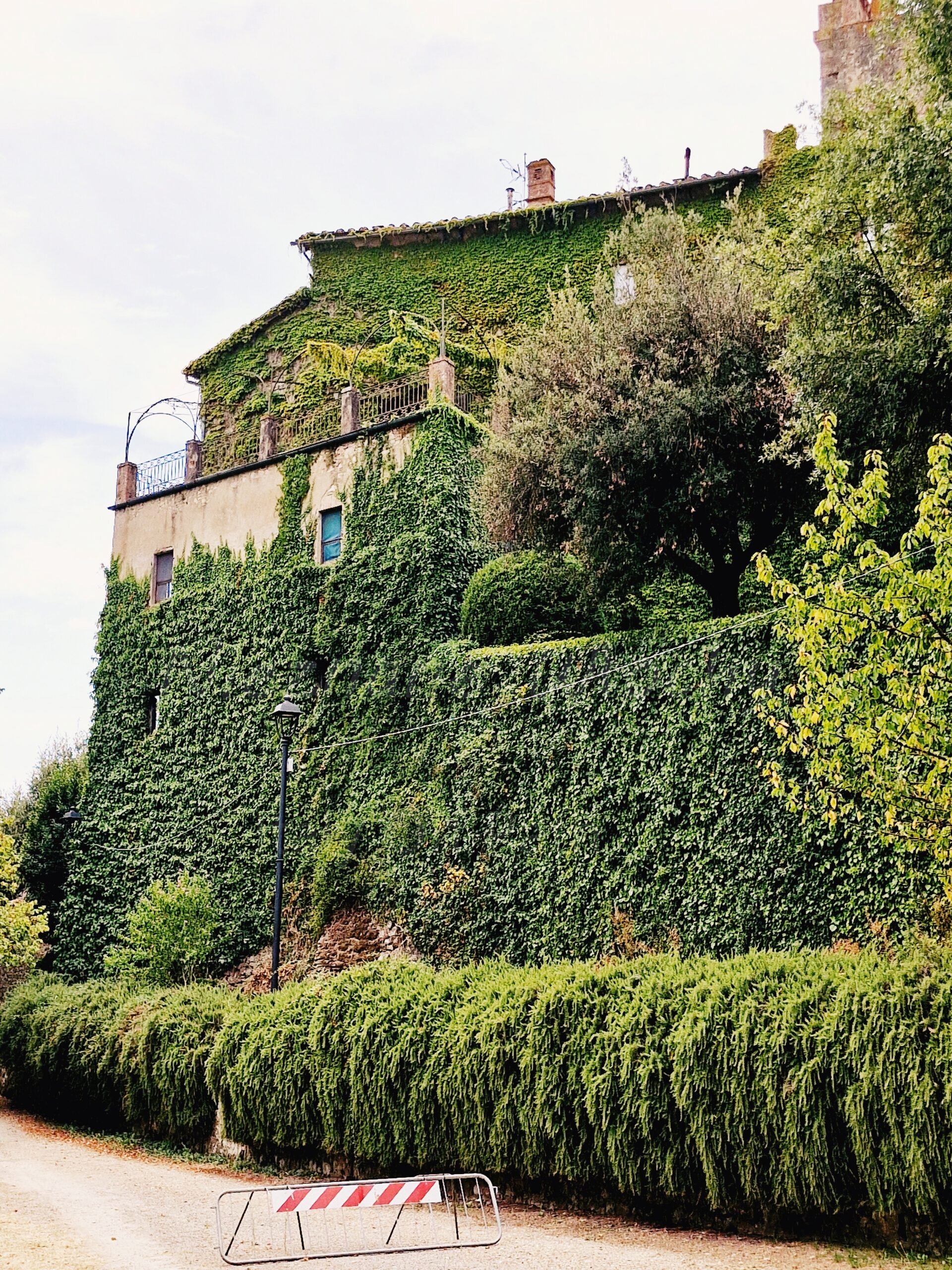
There are two hotels in the town, so even with its small size, Frosini seems to attract tourists wishing to see authentic Tuscan villages.
I think this charming and very Tuscan place may be quite a nice base for a weekend. And even though there aren’t many things to see in Frosini, just escaping the hustle and bustle of everyday life, enjoying silence or coffee in a local bar , is sometimes more worth than all the monuments of Tuscany.
Monteriggioni: A Beautiful View, But a Quick Stop
Monteriggioni — a very nice-looking borgo from a distance — was a point of our next visit. ‘Visit’ is a big word; ‘popped into’ sounds better, because we spent maybe 10 minutes there.
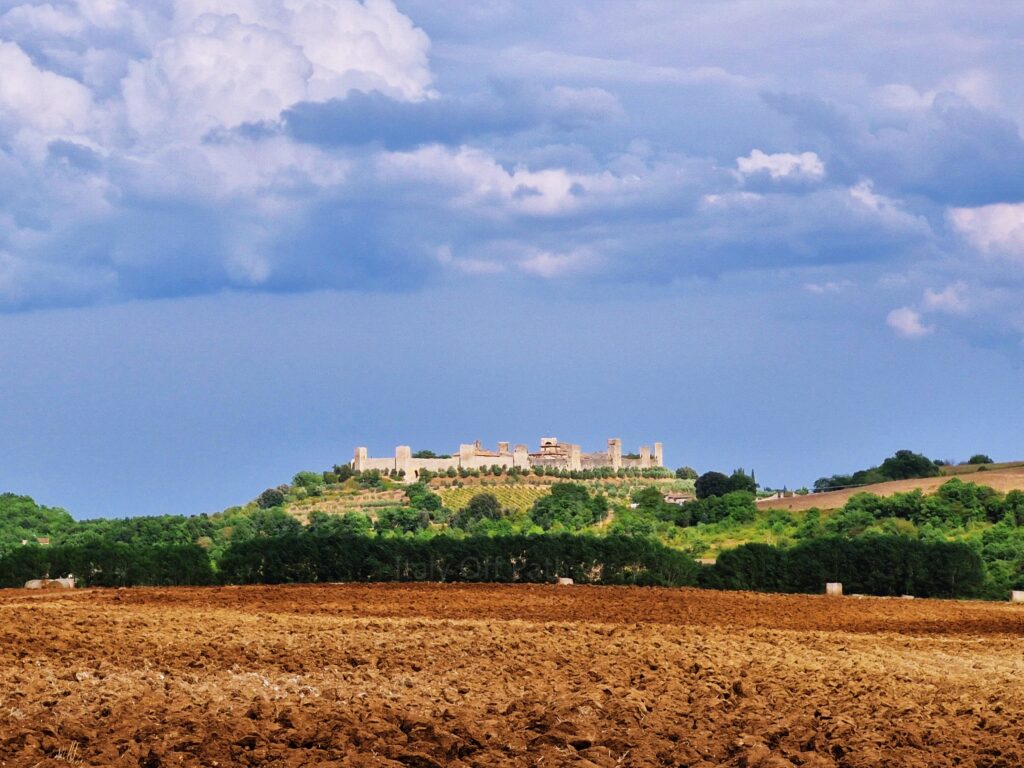
Recommended (on the internet) as extraordinary, a ‘hidden gem’, and all the usual labels, Monteriggioni is not special at all in my opinion. Just a rather overrated borgo; I’ve seen much more beautiful ones, so we could safely skip Monteriggioni. But because our visit was really short, I didn’t cry that we wasted our time there.
Colle di Val d’Elsa: The Italian City of Crystal Beyond the Walls
Heading towards the next place to visit, we saw walls on the way. We stopped to see what was hidden behind them. Hidden away is Colle di Val d’Elsa — a very pretty town with a long street leading from the main gate to the old town.
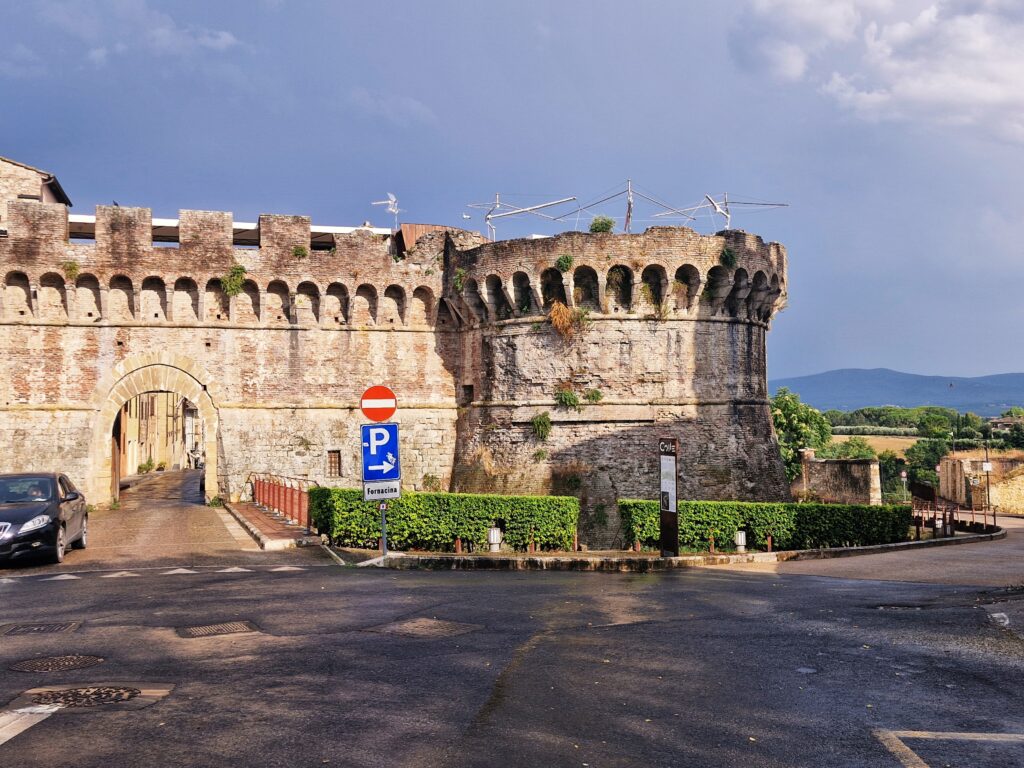
The newer part is located lower down. In the Middle Ages, Colle di Val d’Elsa witnessed endless battles between Guelphs and Ghibellines, i.e., the supporters of the Pope and the supporters of the Emperor.
To avoid constant invasions, the town built fortifications – that’s what we saw from the way. Apart from its impressive walls, Colle di Val d’Elsa is famous for the production of crystal and precious glass. That’s why the town is called the ‘Italian City of Crystal’.
Because we didn’t have time, after ten minutes of walking along Via delle Volte, we got back to the car. Because Colle di Val d’Elsa looks tempting, I want to take a closer look at the town during my next visit to Tuscany beyond Florence.
Florence: The Crowded Gem of Tuscany
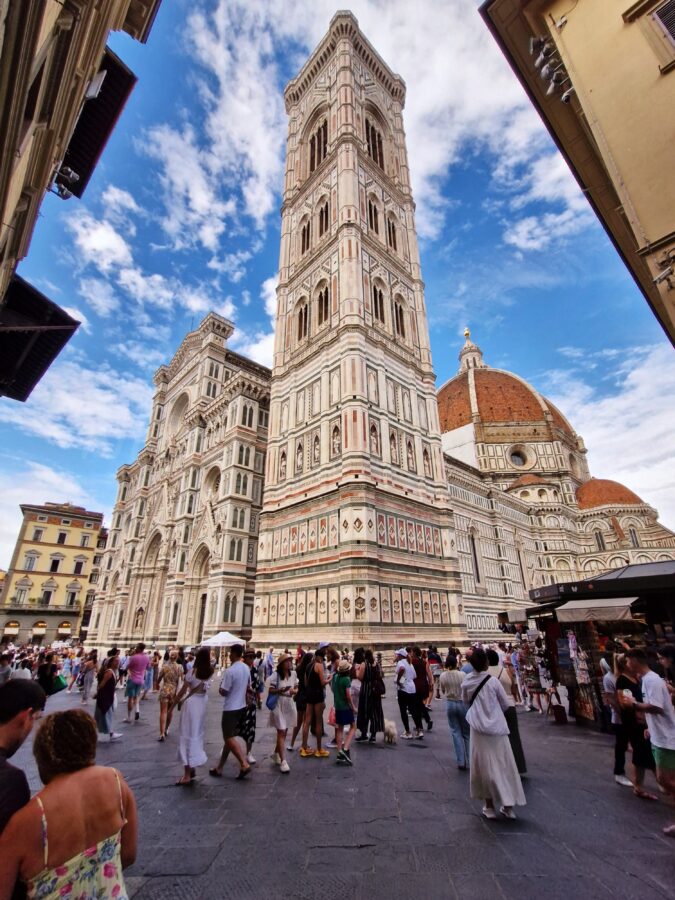
Florence is usually a must-see for a trip to Tuscany. We didn’t plan to visit it; I’d already been there, and I don’t like crowds of tourists. Florence is overcrowded. Since the weather had cancelled the rafting and Florence was the only place without rain that afternoon, we visited the ‘gem’ (this time not the hidden one) of Tuscany.
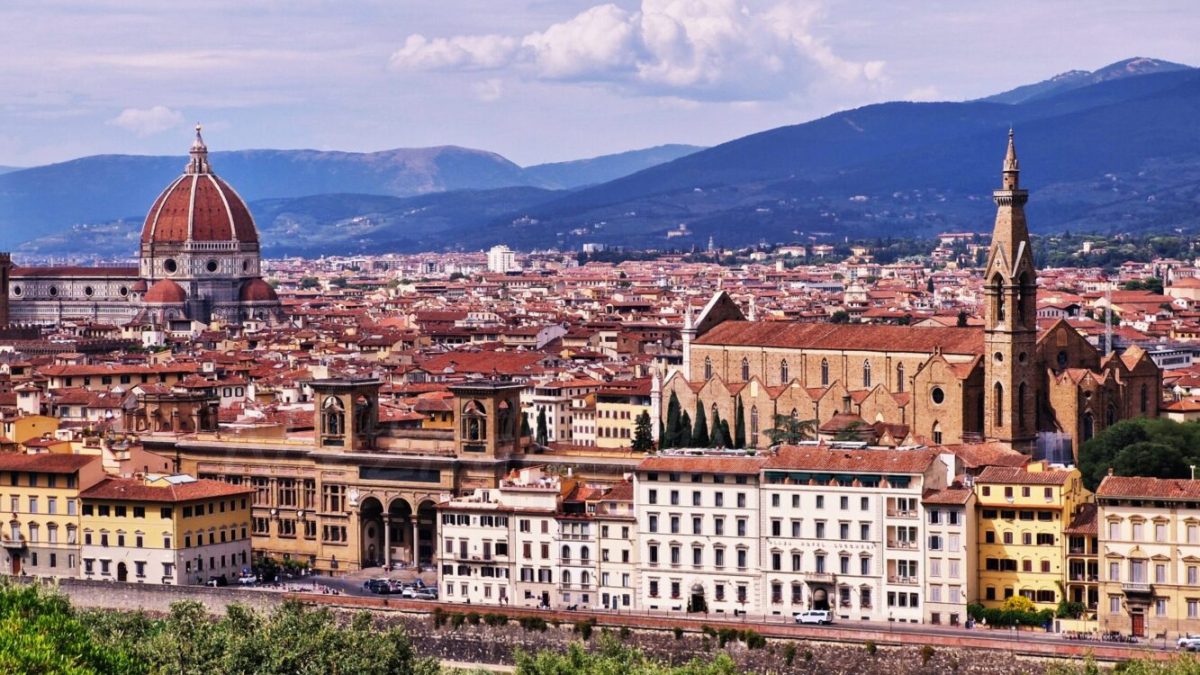
Florence is supposedly the most stunning city in Italy. Indeed, the panorama of the brick-coloured roofs, the towers and domes of the churches, and the river winding through them is amazing.
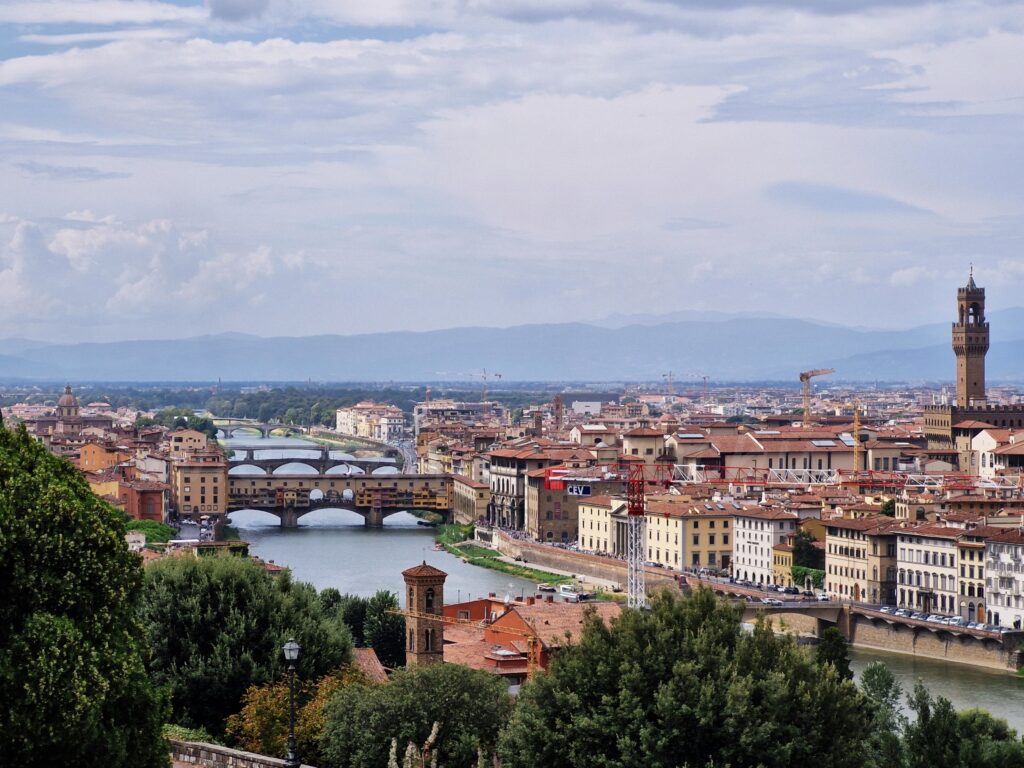
There are many wonderful buildings in the city; I like architecture. But, in general, Florence doesn’t excite me; in my opinion, the more snobbish Siena is nicer. And at least Siena centre doesn’t have a weird mixture of Renaissance and modern buildings, as Florence does.
Despite this, I think Florence is worth al least one visit. Because Florence is very well-known, there’s no reason to write what to see and do there.
Is a 1.3kg Florentine Steak Worth €160
Apart from its numerous monuments, the city also offers (at least in theory) top-quality steak restaurants. Tuscany meat – Chianina beef – is generally considered one of the best. Or the best, depending on who you ask. As a former vegetarian, I still avoid meat, but this time I decided to check if I like meat at all.
We chose Trattoria Dalloste, recommended by one of the locals. On his advice, we ordered Bistecca alla Fiorentina– a 1kg 300g steak for the two of us. We also had wine and a salad, for which we paid 160 euros. Quite a lot. I ate a small piece of my portion and I have no idea if the steak was good.
I have no reference because I hadn’t eaten animals for over 25 years, so I don’t know what good meat tastes like. So I’ll quote Mauro, who said that the steak was delicious, and it was so tender it melted in his mouth—unlike typical beef. In his opinion, if you want to splash out on a steak, a trattoria is a good place to have dinner in Florence.
Volterra: Etruscan Walls, Slow Strolls, and “Boiled Sock” Truffles
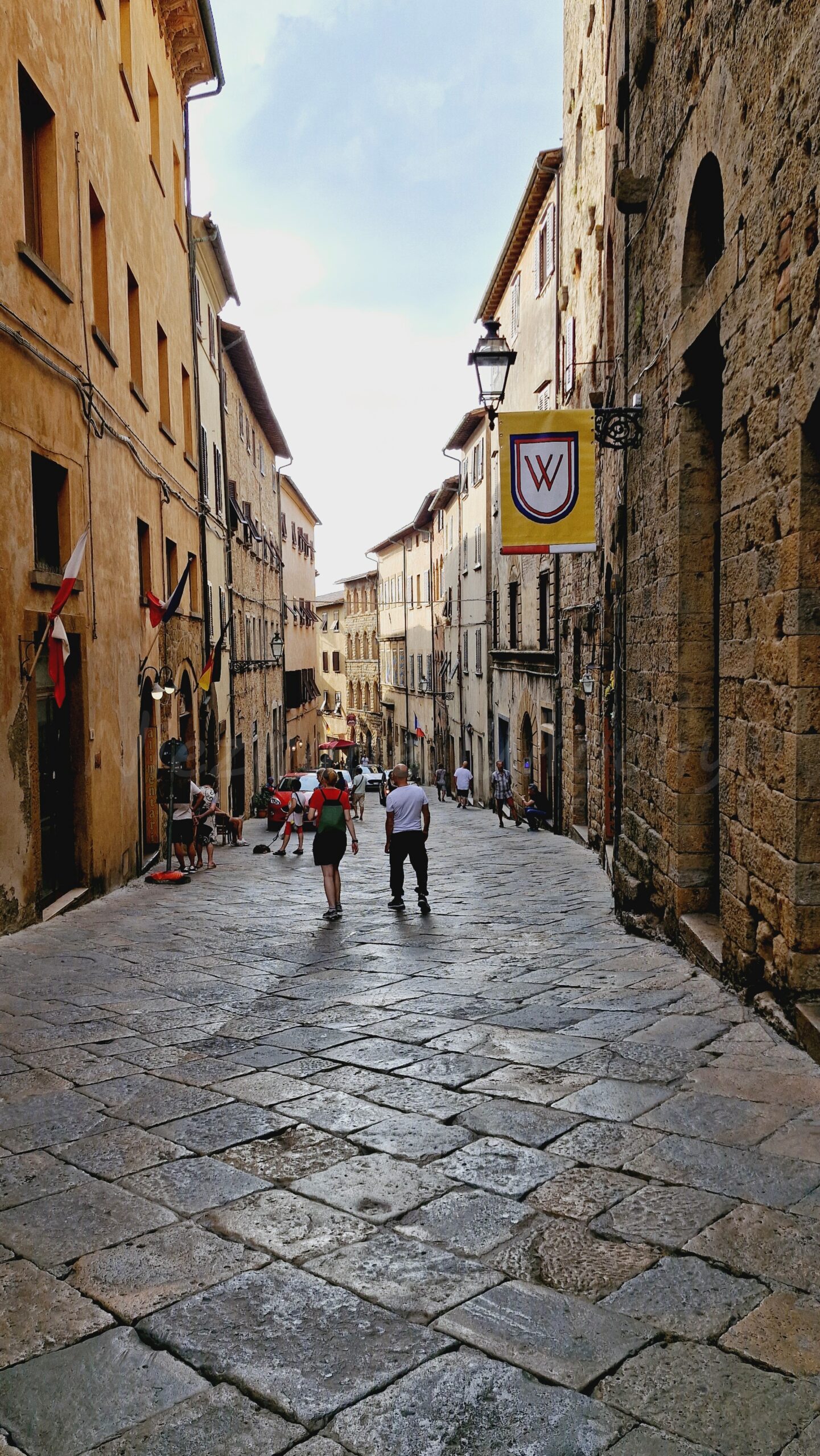
The last town we visited was Volterra in the province of Pisa. Volterra is a picturesque place with a very long history, starting with the Etruscans. That’s why it has a specific urban layout: narrow, winding streets and a compact layout following the ancient Etruscan wall circuit.
Part of the majestic defensive walls (5th–4th BC) and the entrance gates, Porta dell’Arco, and Porta Diana, are still visible.
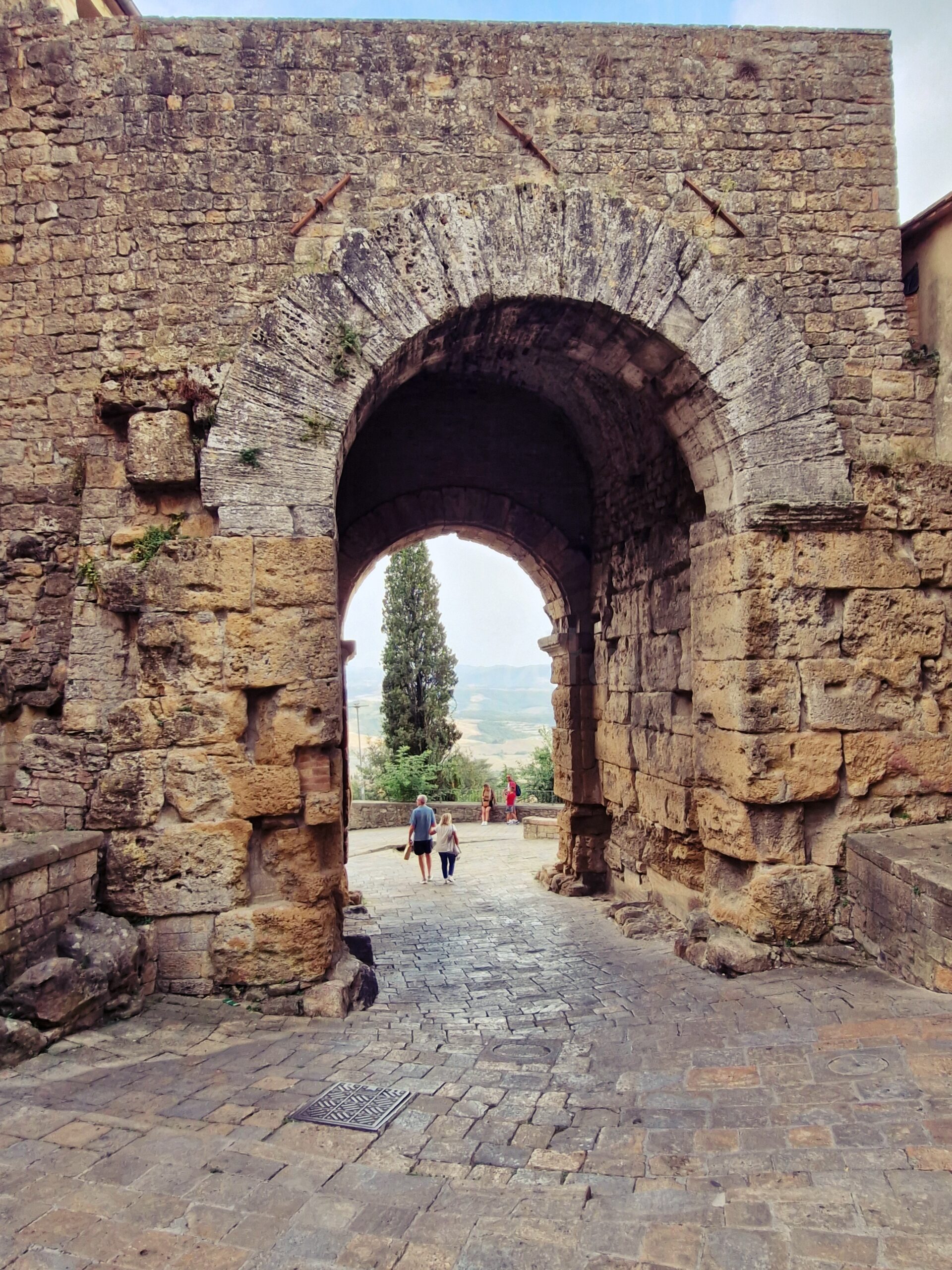
Volterra also has its own Acropolis (do Athenians know it?), and of course, numerous Roman remains.
The streets lead from the main square of the city, encouraging a slow stroll, so exactly how you should enjoy Tuscany beyond Florence. I tend to walk fast, but sometimes I slow down, and then I notice a nice door, a strange plant, or a dog pretending to be dead so as not to go home…
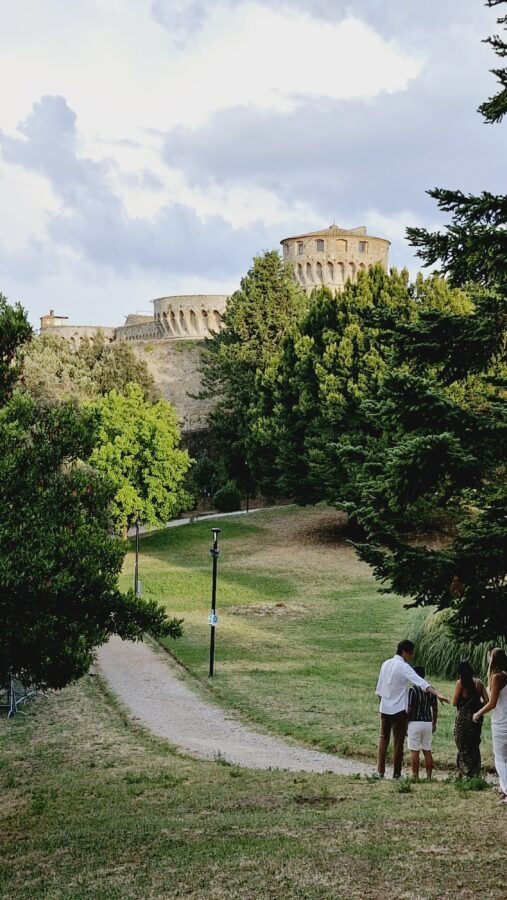
Volterra, like Lucca, is the perfect place to slowly enjoy the unique Tuscan climate. Putting one foot in front of the other, we crawled to a point with a panoramic view of the coast. In good weather, you can see Corsica from there. But the weather in Tuscany didn’t like us that time, and we saw nothing.
We decided to have dinner at Osteria La Pace by the fortress, which is now a prison. I don’t check the reviews on TripAdvisor; Mauro does it with passion, and according to the reviews the restaurant was great.
The thick spaghetti was OK, mine with tomatoes, Mauro had it with wild boar sauce.
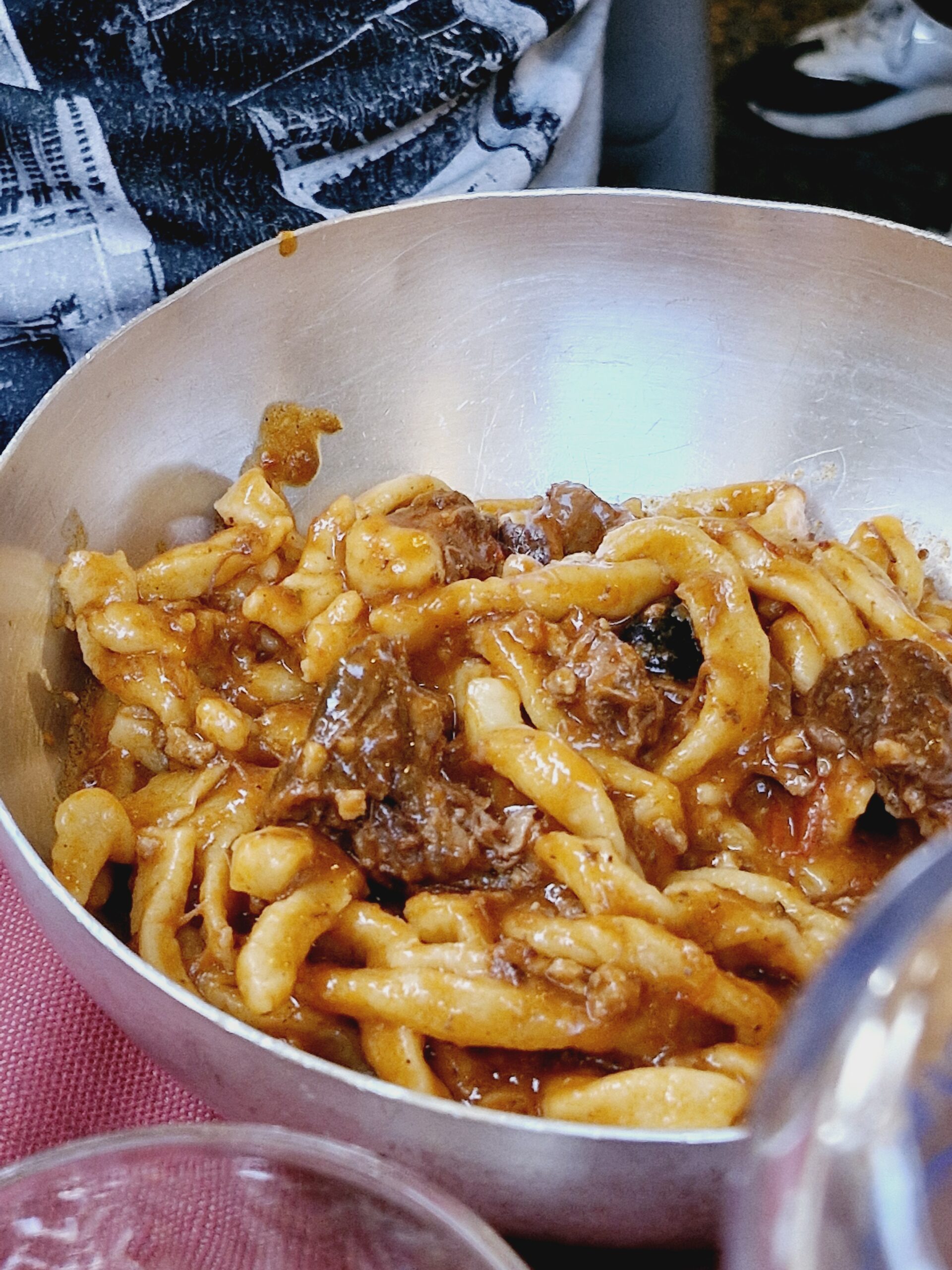
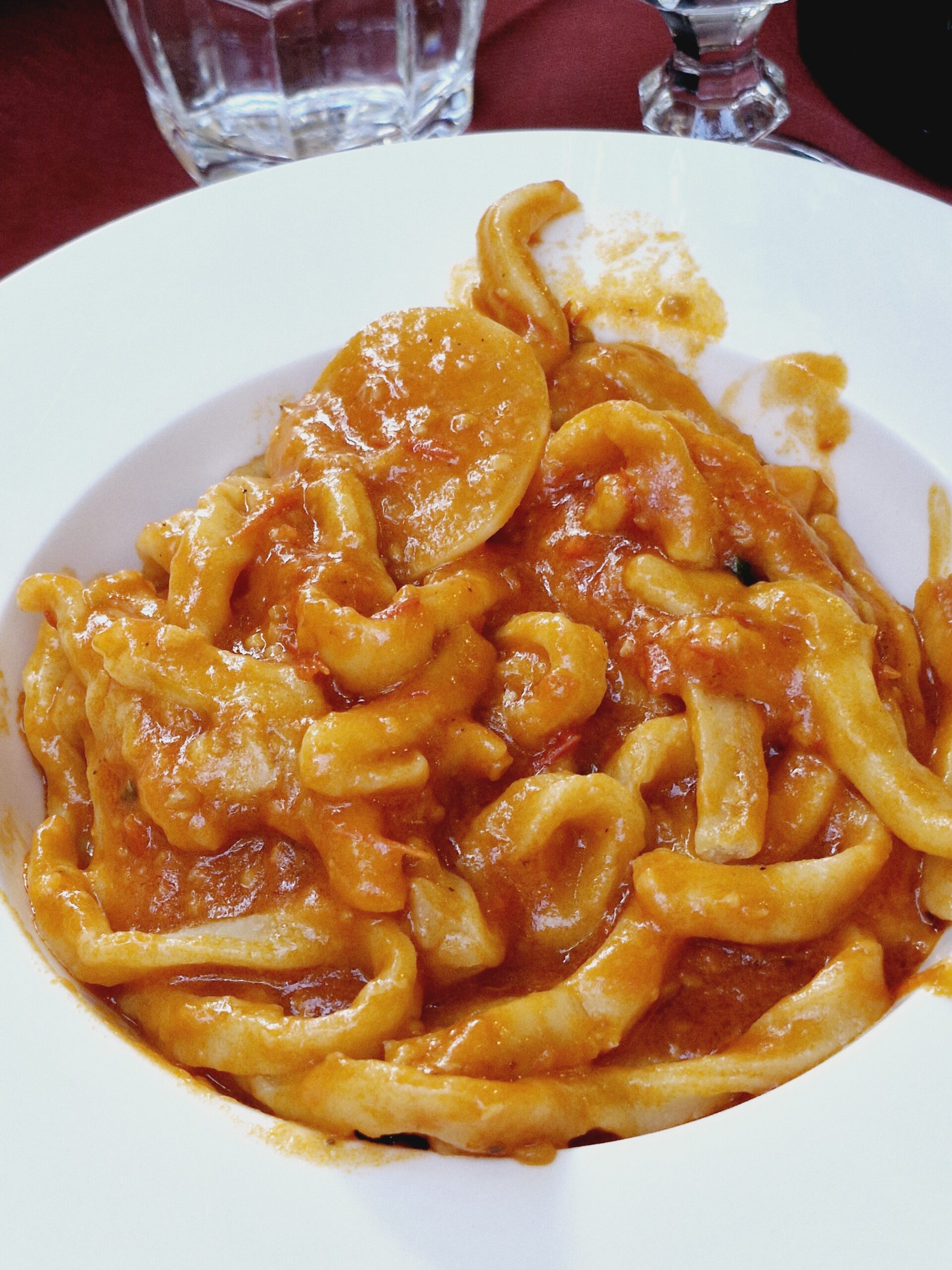
The second course consisted of meat with something (for Mauro) and for me ravioli in truffle sauce. And it wasn’t OK at all. Mauro had to chew the meat thoroughly, and the sauce in my dish was made of overcooked truffles that tasted like boiled socks. I like truffles, but I find them inedible when cooked. We also had salad and wine; we paid about 80 euros.
Of course, everyone has different tastes; at the next table, there was a group of tourists raving about the food; none of us liked the second course.
Ascoli Piceno: Olive all’Ascolana and the Myth of “No Bad Food” in Italy
Going back to Manfredonia, we stopped in Ascoli Piceno in Marche; if I remember correctly, it was my 4th visit to this city. A short one this time, because it was only for lunch and ice cream.
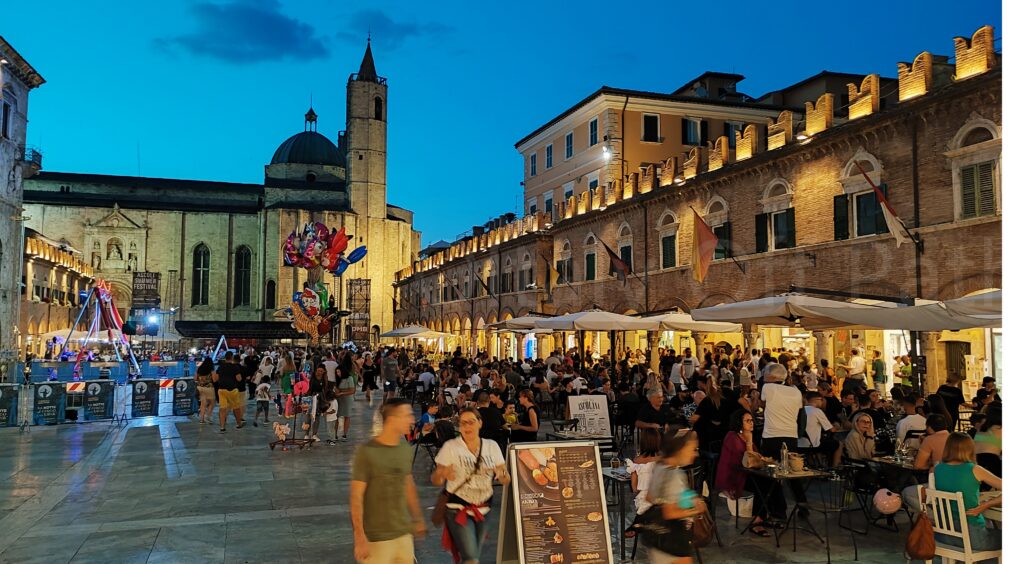
If you don’t have an Italian partner, you can’t imagine how long it takes to find a place to eat. Mauro can’t just eat at the first restaurant he comes across. He has to compare the menus with 20 nearby ones, read the reviews, it can’t be a tourist spot, etc. Maybe other Italians aren’t so annoying when it comes to food, but I doubt it. That’s just how it is.
And when we finally find a suitable restaurant, it’s very often too late for lunch because the kitchen is closed. That’s what happened this time (again). So we went to Migliore Olive; we were there 2 years ago. The restaurant/olive shop is in the city centre.
Ascoli Piceno specialises in olives. Olive all’Ascolana is a local delicacy, so everyone eats them stuffed with whatever they can.
You can buy olives in Migliore, but you can also eat other things there. Last time we had a great mix of olives, ravioli and something else, I don’t remember. It was cheap and tasty. Now it was just cheap, although not as cheap as it used to be, and pretty tasteless.
The olives are still very good there, but the mushroom pasta and gnocchi with sage were disgusting.
If anyone thinks that there’s no awful food in Italy, they should go to Migliore Olive and order a meal from the menu. Or to Siena; unfortunately, I don’t remember the name of the restaurant where I had a really awful pasta dish.
Walking around Ascoli at the end of our 4-day-long weekend in Tuscany, I was thinking about the places we visited.
I liked Volterra and Lucca the most. If I’d never been to Tuscany, this is how I’d imagine the region. If you really want to feel it, then in my opinion, these two cities are the best places to soak up the Tuscan atmosphere.
If this post made you laugh, annoyed you, or just reminded you of your own trip, tell me in the comments or drop me an email. I actually want to hear about your experiences—the good and the frustrating.
Sign up for the newsletter for one post a week (usually Wednesdays at 6:00 PM). No spam, no “magical Italy” fluff. Just real stories and places off the beaten track. I’ll see you there!