A weekend break in Tuscany sounds like a dream; this region is widely considered the most beautiful in Italy. Is that right? I’d argue (I’m a huge fan of Abruzzo), but undoubtedly, Tuscany is a lovely, atmospheric, and always full of tourists.
And also plenty of things to see and do, so even a rainy weekend in Tuscany can turn out to be an interesting experience. And If you want to move a bit off beaten path, you might happen to see interesting and crowds-free places.
Go to:
Rainy weekend in Tuscany: Expectation vs. Reality
We decided to visit Tuscany in August, having very ambitious plans for our 4-day break. Mauro was a bit sceptical as the weather is very changeable there, so he suggested I shouldn’t be so optimistic. Maybe, but I was ready for rafting, climbing, and crossing rivers on ropes.
And yes, the weather changed our plans.
Since there is no bad weather, there is only bad clothing, so we just adjusted our ideas, and instead of being active, we became lazy, visiting
- Pistoia, Lucca, and Pisa
Abbazia and Eremo di San Galgano
Monteriggioni and Volterra
Colle di Val d’Elsa and Florence
Parco Fluviale Alta Val d’Elsa
The weather, without asking for our permission, pushed us to experience slow travel in Tuscany, which was actually interesting.
Before the rain: A quick stop in Rasiglia, Umbria
But before heading off to Tuscany, we stopped for a few hours in Rasiglia in Umbria – a lovely village in another region I like very much.
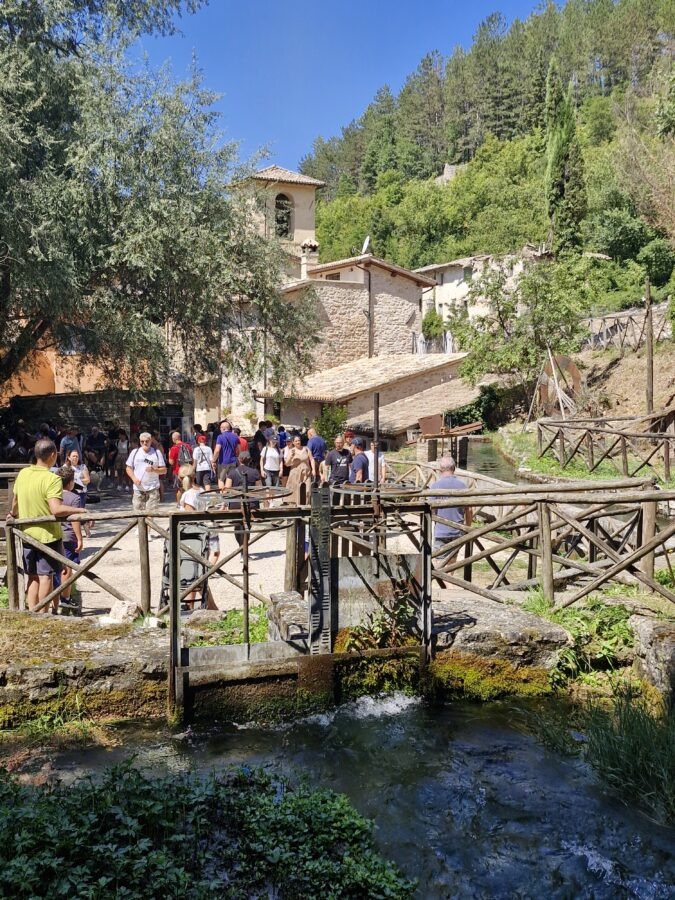
A lot of water, many restaurants, good food, and mainly Italian tourists.
Pistoia in August: A quiet base for our rainy weekend in Tuscany
And then we went to our 4-day base, Pistoia, where we started our “not-so-adventurous” adventure. In the evening, we visited the town; it was empty. Maybe it was the weather, or maybe it was Ferragosto, so Italians traditionally spent it away.
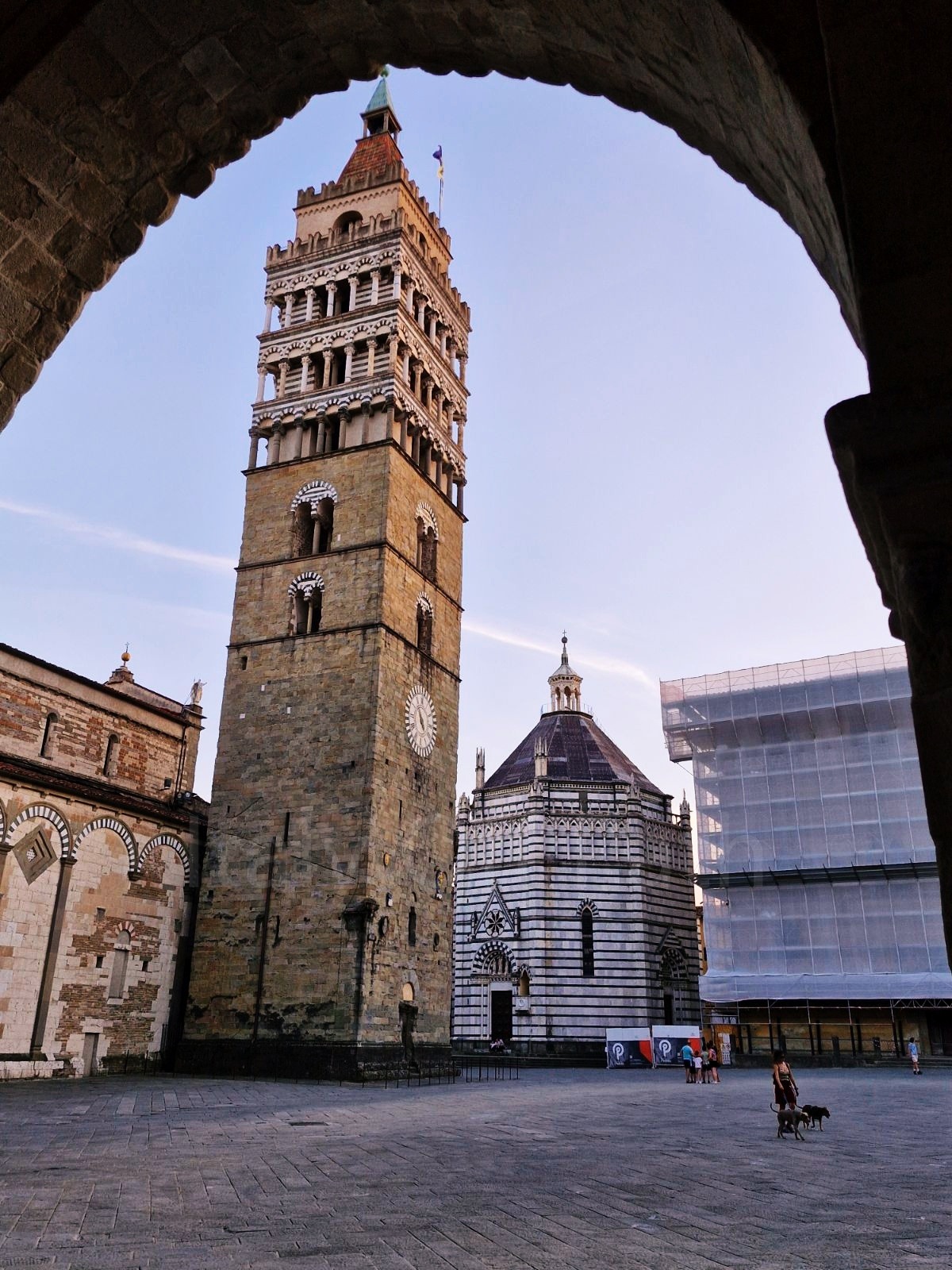
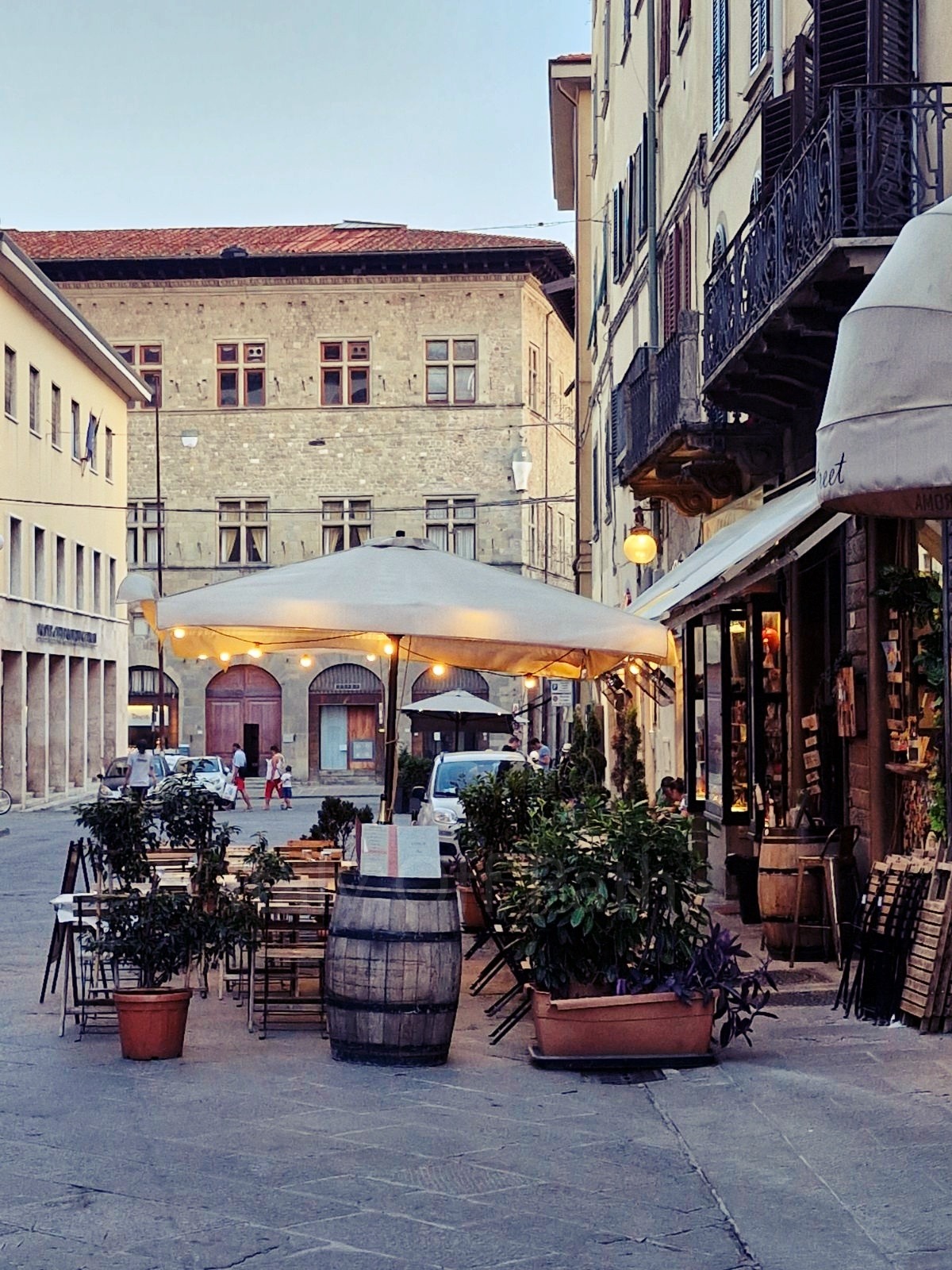
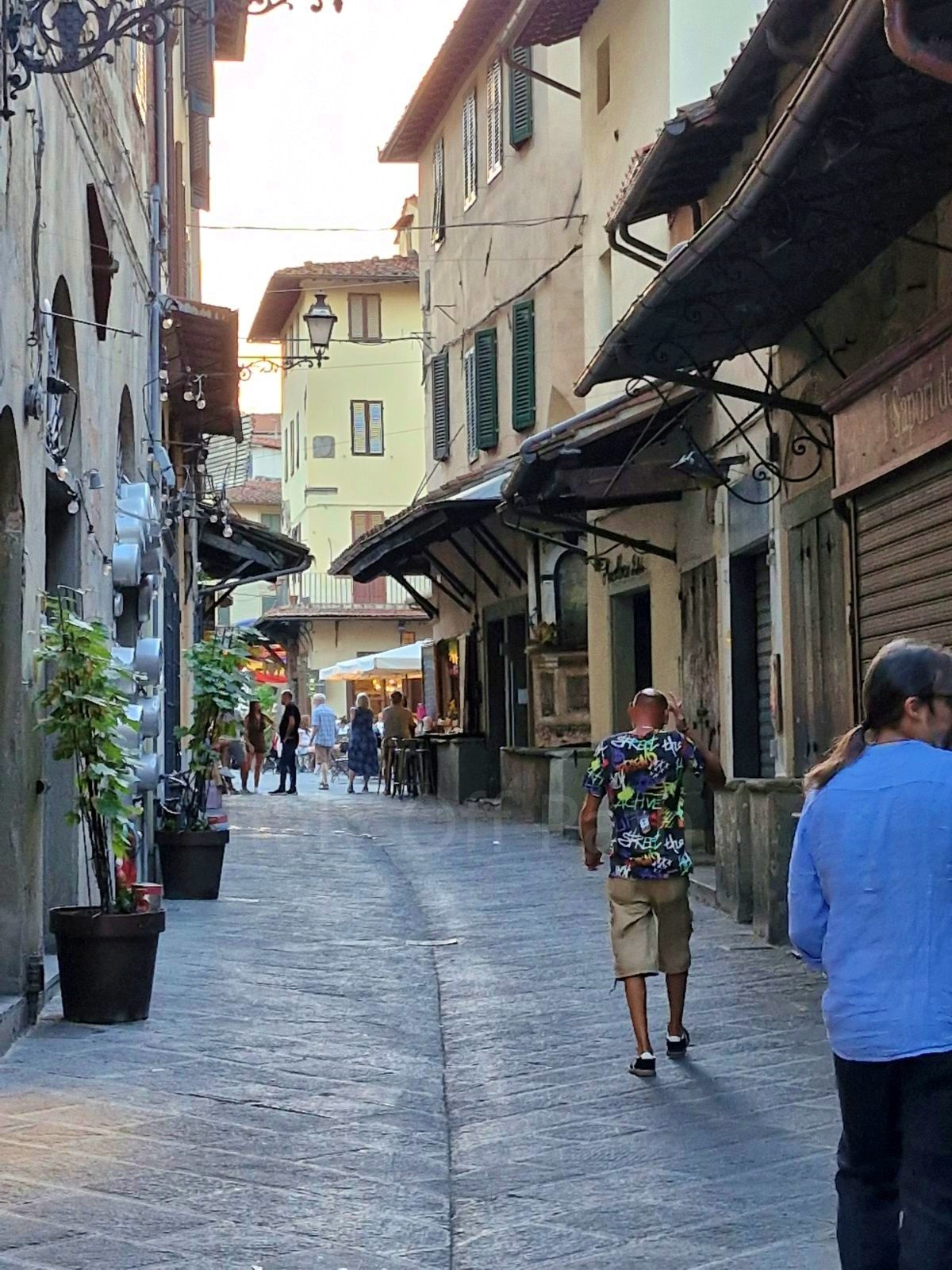
Fortunately, we brought something to eat with us, as everything was closed. It’s not surprising—during Ferragosto, the whole of Italy stops, and everyone eats a lot. Walking around deserted streets, I felt that our rainy weekend in Tuscany had started.
Rainy weekend in Tuscany: Lucca and finding the charm under a torrential downpour
Lucca was the first place we visited, and I liked it immediately – it’s the perfect town for wandering around. Even the torrential rain didn’t change my opinion. On the contrary – it actually added some charm to it, as we were lying on benches under a huge tree waiting for the rain to die out. Super.
When writing about the cities of Tuscany, it is difficult to ignore history, so just a few words about the past of Lucca. As usual, historians can’t agree on the origins of the town. For some of them, it was a Ligurian settlement, for others, Etruscan roots. Without getting into a discussion, I simply state that it’s very old.
Over the centuries, like everywhere in Italy, various families passed through the town. At some point in its history, Lucca became part of the Grand Duchy of Tuscany, and then of the Kingdom of Italy.
Walking the Walls and Climbing Towers: Lucca from Above
The first thing that caught my eye when we arrived in Lucca was the impressive defensive walls, built in the 16th and 17th centuries. They are the second longest in Europe (after the Croatian ones), and even if they lost (fortunately) their defensive purpose, they’re still useful.
The 4 km-long walls are planted with trees and lawns, so they became a kind of park great to walk, admire the town from above, or lie under a tree, as we did during our rainy weekend in Tuscany.
Beyond the “Must-See” Lists: My Way of Discovering Lucca
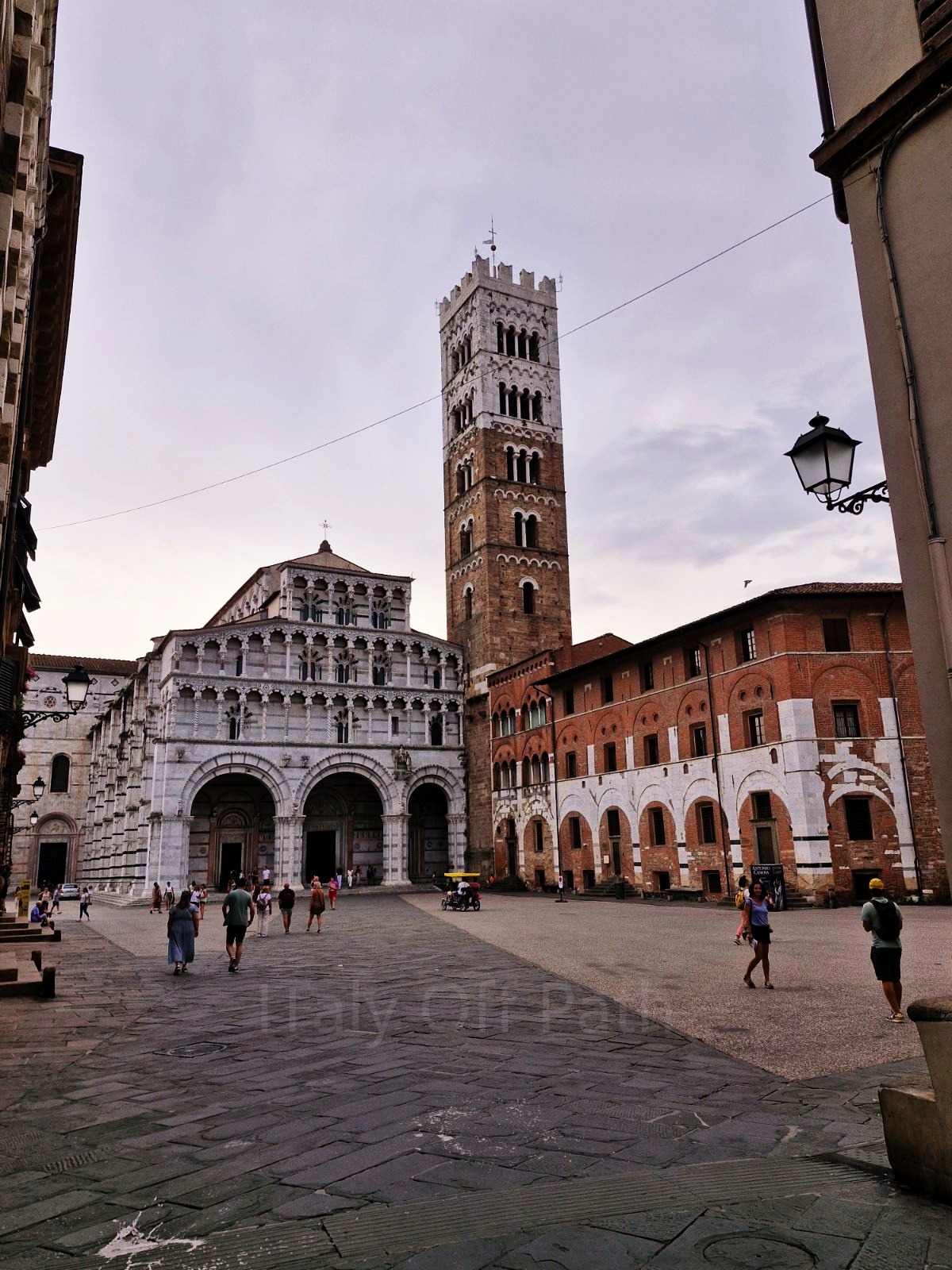
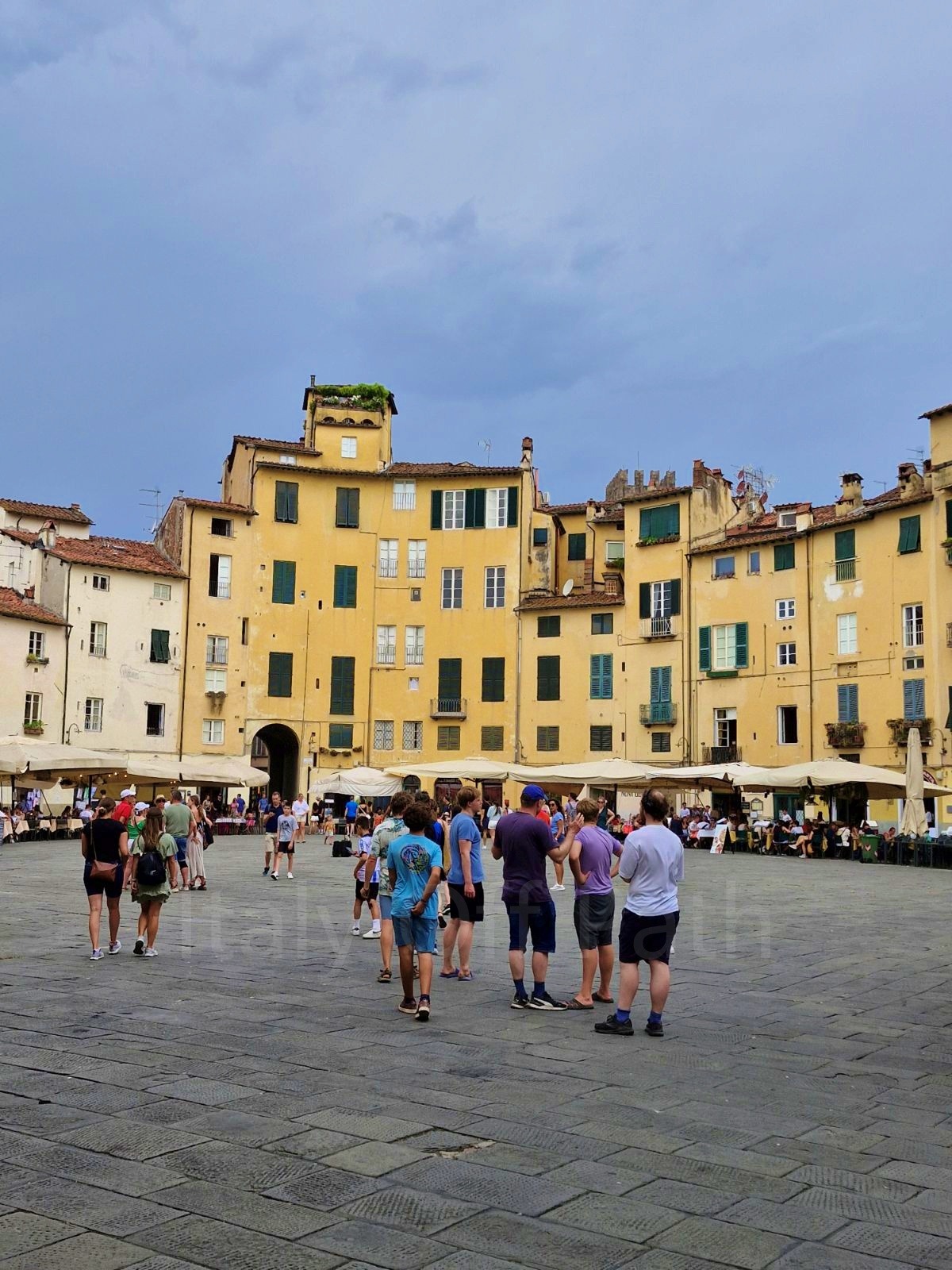
Lucca is rich in monuments, and actually, this is not a particularly distinguishing feature in Italy. The town is called ‘the city of a hundred churches’ – the most important is the Cathedral of San Martino with a beautiful ceiling.
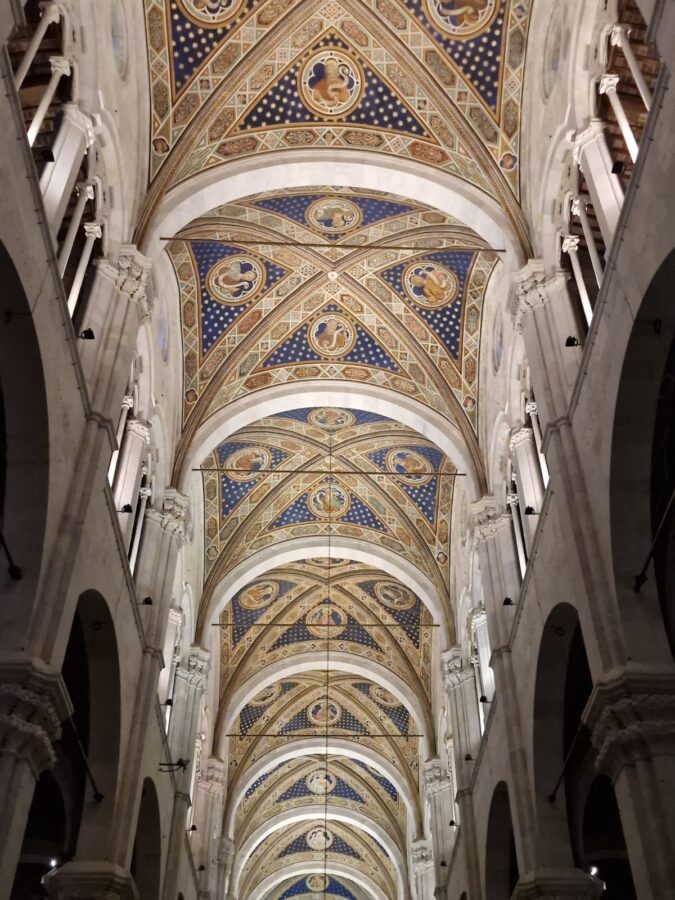
Actually, nobody exactly knows how many churches there are in Lucca, as the number of small private chapels might or might not be added to the list of these holy buildings.
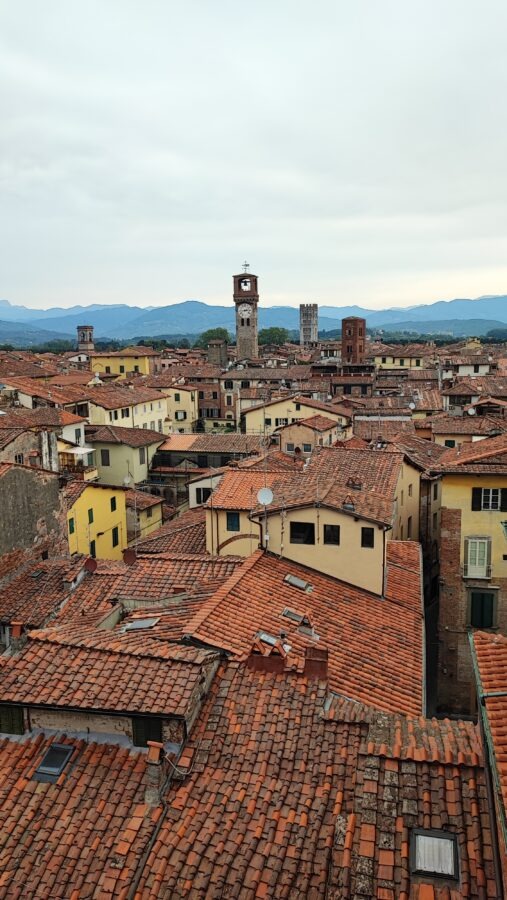
But the number of the skyscrapers of the Middle Ages, ie, the towers standing throughout the town, is precisely known – i.e nine. In the pas they were a symbol of the wealth and power of noble families. Now they’re great viewpoints.
Giving our legs and bottoms a short training, we climbed three of them. The first was Torre Guinigi with 232 steps. The second was in the Cathedral of Saint Martin, and the third was also in the church; I’ve just forgotten the name; in a town of a hundred churches, it’s easy to lose track.
I don’t like the ‘must-see’ lists, and ticking off all monuments just because they exist and absolutely have to be visited, but this is how Italians travel. Actually, not only Italians. Of course, there are famous places that interest me, but it’s not every single historic building in turn.
My way of discovering places is simply walking the streets and admiring what is around me. And if I happen to visit a museum or come across a famous monument, that’s great.
For me, discovering places doesn’t mean running through the streets to see everything. It can also mean taking off beaten paths, enjoying the atmosphere, weird doors, or plants covering walls. Just wandering around. It’s called ‘slow travel’, but I just prefer calling it my own way of travelling. And that’s why I like Lucca; it perfectly suits it.
Of course, as befits an Italian city, Lucca has all kinds of cafes and eateries on almost every corner, so you have plenty of places to rest if you get bored with sightseeing.
Pisa: Beyond the Leaning Tower and the Crowds
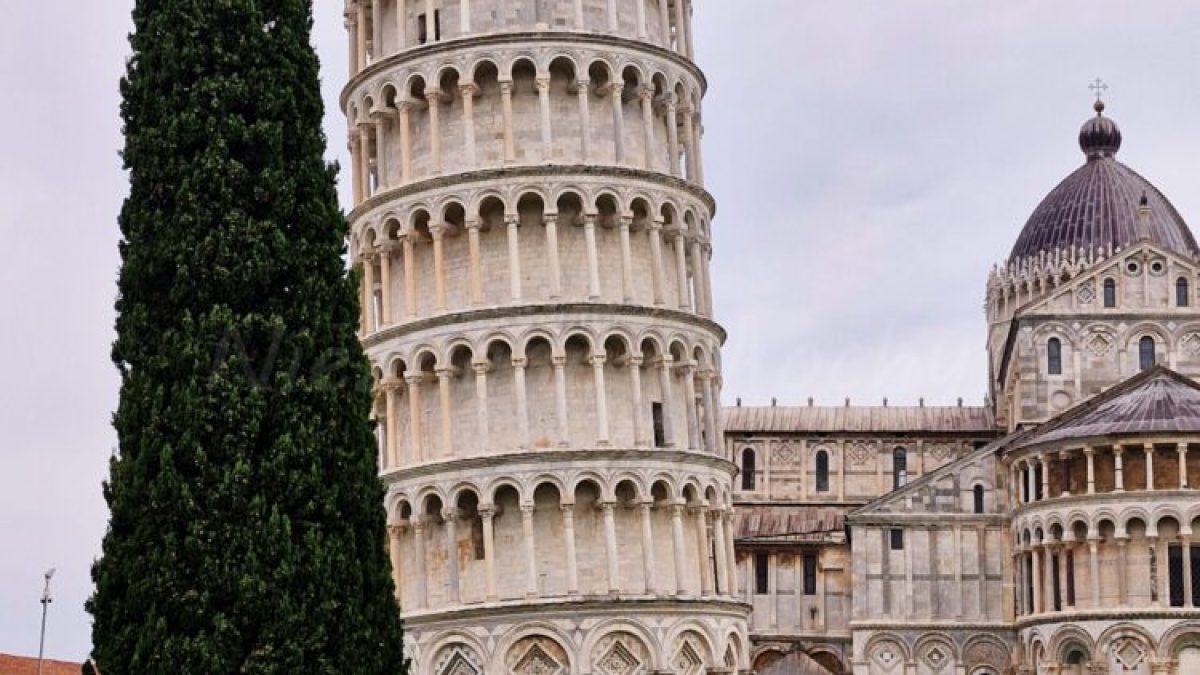
I actually wanted to see this famous city and its symbol – the Leaning Tower of Pisa.I was curious if it was really leaning. Yes, it is. And just as I thought, it’s surrounded by a ton of tourists, even during a rainy weekend in Tuscany.
The name Pisa comes from the Greek word for “marshy land”. A former maritime power, the Republic of Pisa in the Middle Ages had access to the sea, a powerful fleet, and money to pay artists and architects to build beautiful buildings. Over time, Pisa’s power crumbled, but the buildings remained.
Of course, the most famous is the Tower, considered one of the 7 wonders of the world. Built on marshy land between the 12th and 14th centuries, the tower began to collapse under its own weight and tilt during construction. And it remained so; to balance it a bit, wise medieval architects moved the top floor a bit in the opposite direction to the tilt.
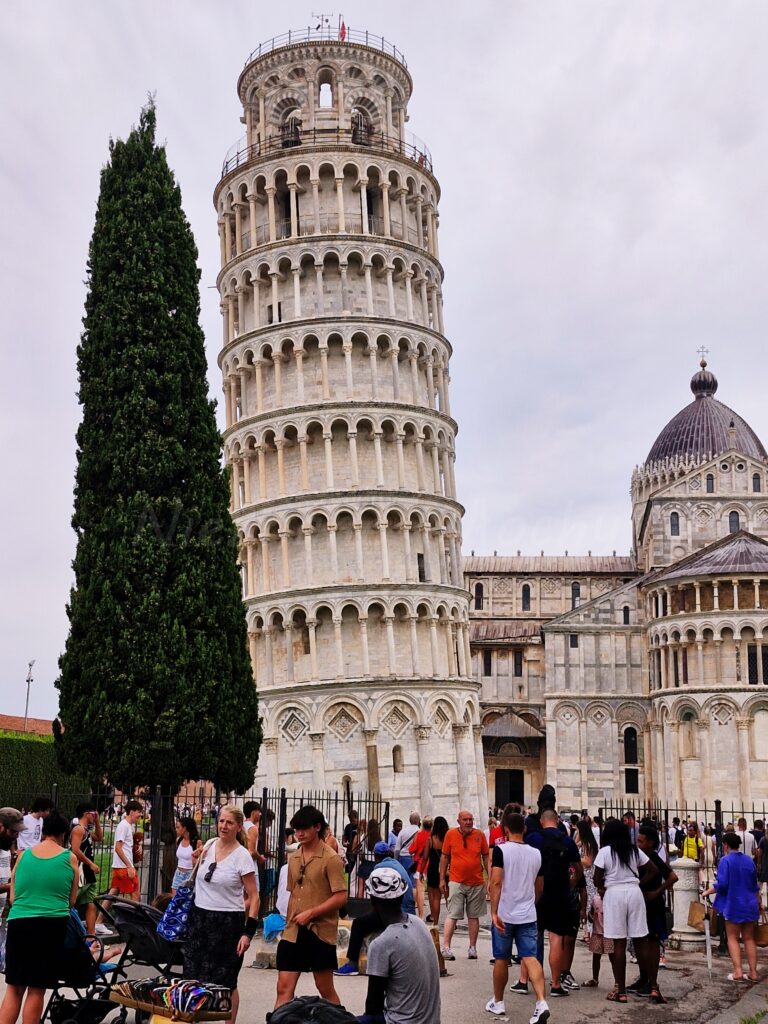
Despite how famous the Leaning Tower itself is, it was not intended to be a stand-alone structure. Actually, it’s part of a larger cathedral complex: the cathedral stands right next to the tower, and behind it, the baptistery and cemetery.
Built on the same land, these absolutely beautiful buildings are also slowly sinking. Looking at them, I was (again) amazed by the extraordinary skill and craftsmanship of the medieval builders.
All of these wonders can be visited by buying a combined ticket. We found three main options:
€28: The full package (including the Leaning Tower climb).
€11: Everything EXCEPT the tower (Baptistery, Cemetery, and Museums). This is what we chose.
€7–8: Individual tickets if you only want to see one specific building.
Since it was late and there were a lot of people waiting to climb the tower, we decided to skip it and visit the rest of the Piazza dei Miracoli.
The Cathedral “Scandal” and the Gothic Beauty of Camposanto
I don’t know if we happened upon a rainy weekend in Tuscany or if this is a regular practice, but the center of the cathedral was cordoned off right at the entrance. So there’s no way to see the sculptures and paintings on the walls up close, and there’s a lot to admire there. In my opinion – scandal.
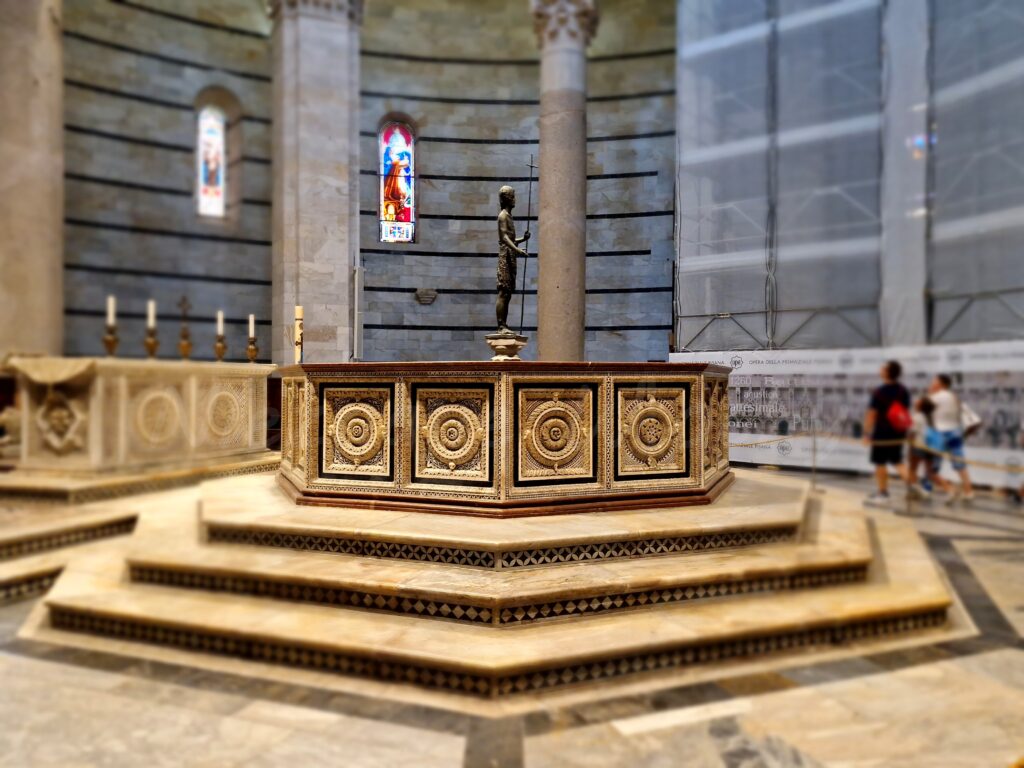
I liked the baptistery outside more than inside, but the interior was still interesting with a nice view of the cathedral from the windows. Built in 1277 (according to local legend) on sacred soil brought from Golgotha in the 12th century, the Cemetery (Campo Santo) is an impressive Gothic building with large columns and arches. The diocesan museum (Museo dell’Opera del Duomo)was simply boring.
Escaping the 90%
Leaving the crowds of tourists taking selfies and, of course, photos titled: ‘holding the tower’, we decided to walk along the river. There are old, colourful buildings there, and what I like most is that they are old and not pretending to be. There’s no mixture of old and new houses, like in Florence, for example. There’s also a small, pretty church by the river. Interestingly, this part of Pisa was almost empty.
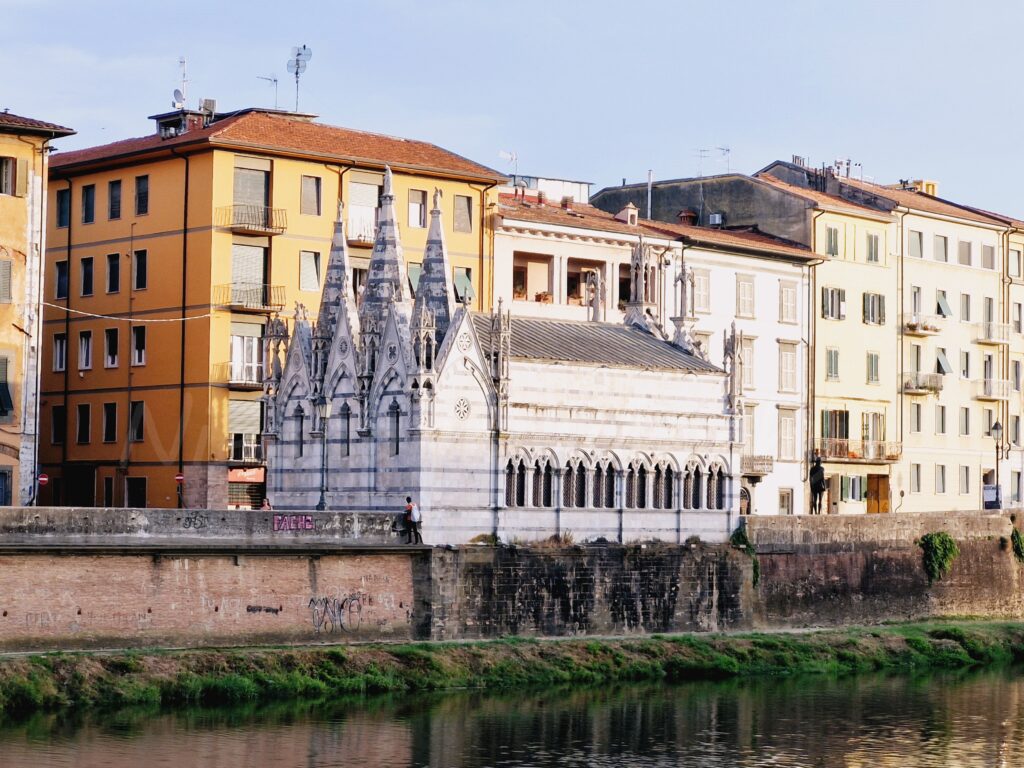
I’ve read somewhere that 90% of tourists visit 10% of tourist destinations. And comparing the crowds at the tower and the emptiness in the immediate vicinity, I think it’s true. And I hope it’ll stay that way.
The first two days of our rainy weekend in Tuscany turned out to be quite successful, despite the water from the sky. What we saw in the last 2 days, you can read here.
If this post made you laugh, annoyed you, or just reminded you of your own trip, tell me in the comments or drop me an email. I actually want to hear about your experiences—the good and the frustrating.
Sign up for the newsletter for one post a week (usually Wednesdays at 6:00 PM). No spam, no “magical Italy” fluff. Just ronest stories and places off the beaten track. I’ll see you there!