
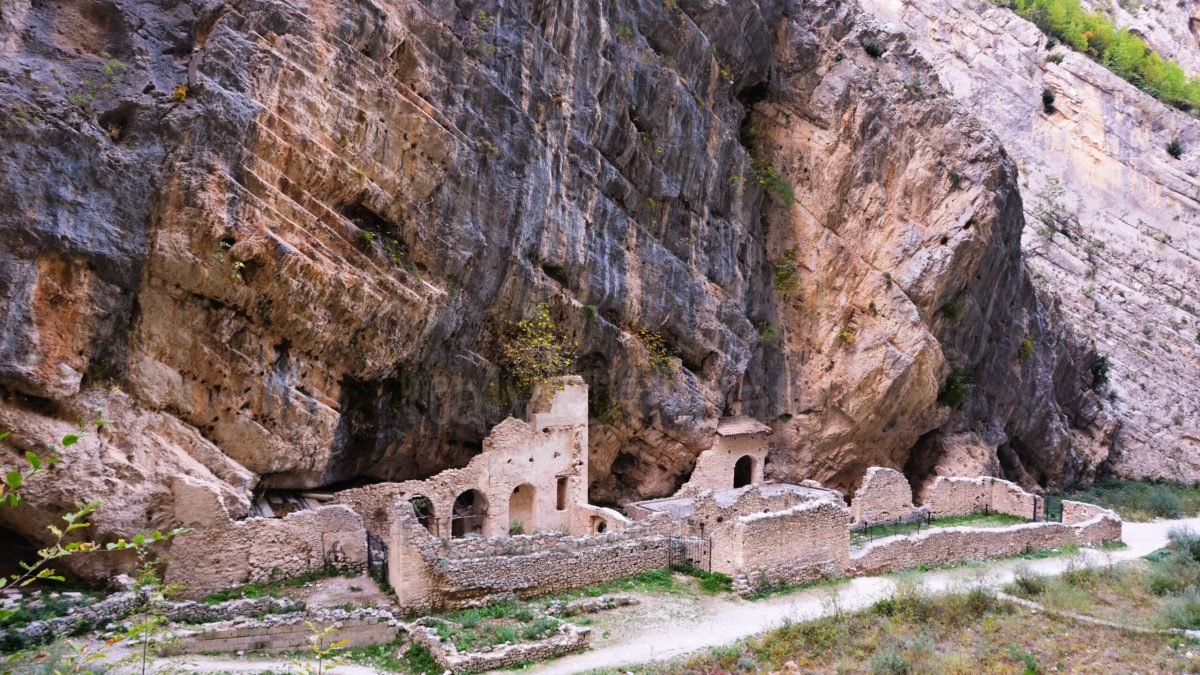
I’ve probably mentioned a hundred times that I love Abruzzo off the beaten path, so I was happy to be back there for another weekend.
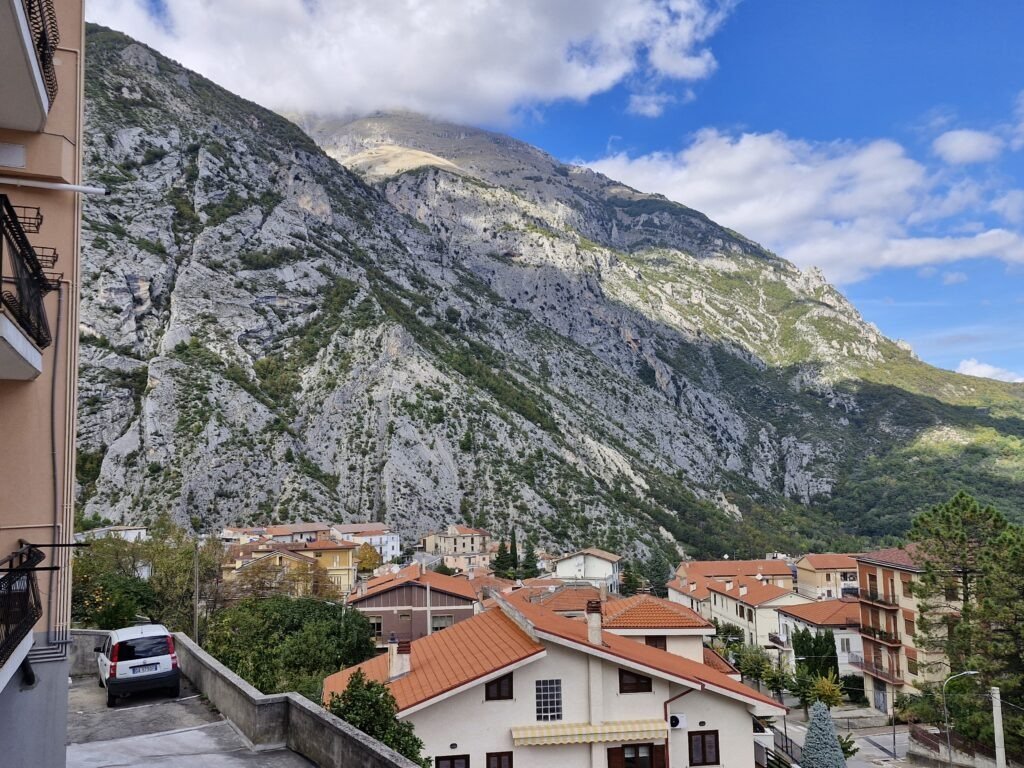
This time we stayed in Fara San Martino in a huge apartment. In the hall, you could ride a bike, and from the balcony we could see the mountains.
Jump to:
S. Angelo di Palombaro: Medieval ruins in the woods
In the afternoon, we drove to Palombaro to see the stone church of S. Angelo di Palombaro, or rather, what was left of it. It’s one of those not-so-obvious things to do in Abruzzo, so something what I like.
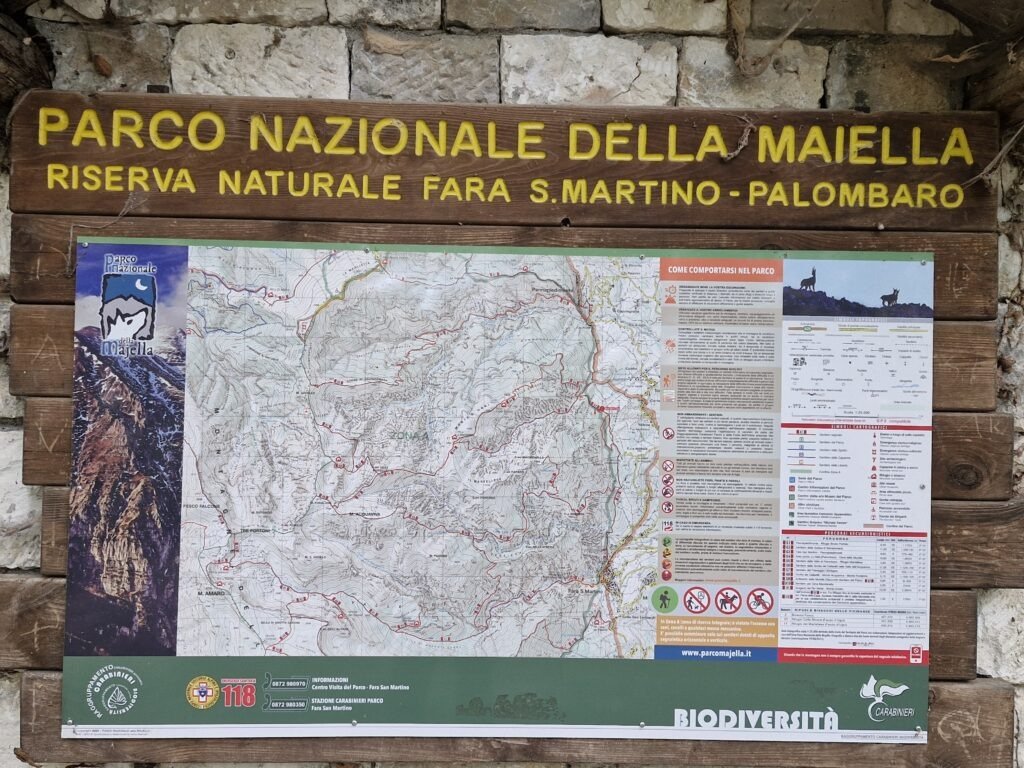
Centuries ago, pagans used the hermitage to worship the fertility goddess Bona. Times changed, pagans disappeared (or rather, were made to disappear), and in the Middle Ages, a church was built in this place.
Getting to the S. Angelo hermitage (and watching out for bears)
We parked along the road. The path to the ruins begins in the forest, so my bear mania kicked in – we were alone in the Abruzzo mountains, and everyone knows that packs of bears run around and eat people.
I still haven’t encountered one, even though I’ve been to Abruzzo a hundred times, but who knows when that day will come.
The wide beaten path on the foot of the mountains leading to the hermitage used to be a picnic area.
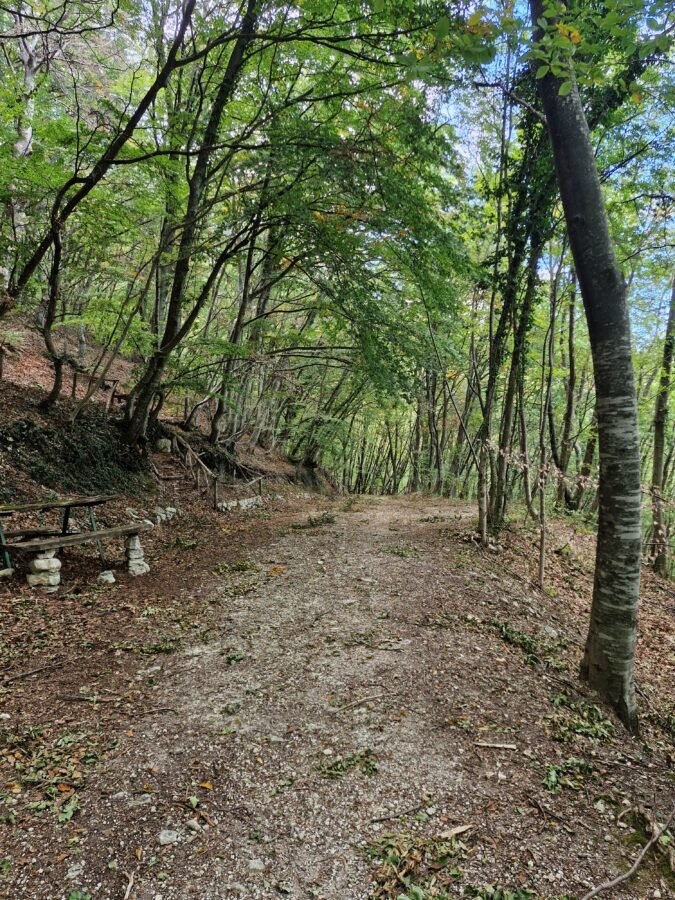
Judging by how it looks now, I assume no one ever goes there. It’s quite typical for Italy – once a popular place now is something rather neglected.
After walking maybe 10 min on the left side of the trail, we saw stairs going up. There was also a not-very-readable sign, which is what these rather hidden places in Abruzzo have in common. Anyway, we started climbing. The path is not difficult, even if some parts are a bit steep.
After more or less 20 min, we got to the end of it and the medieval ruins.
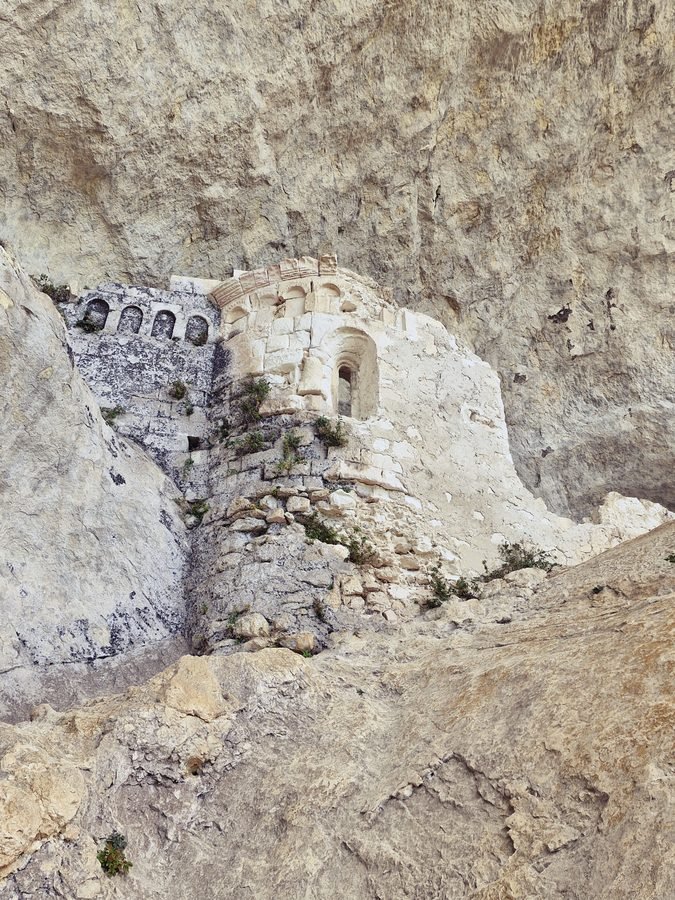
We spent several minutes walking around the remains of the church and taking pictures. There’s nothing else to do, so we got back to he car.
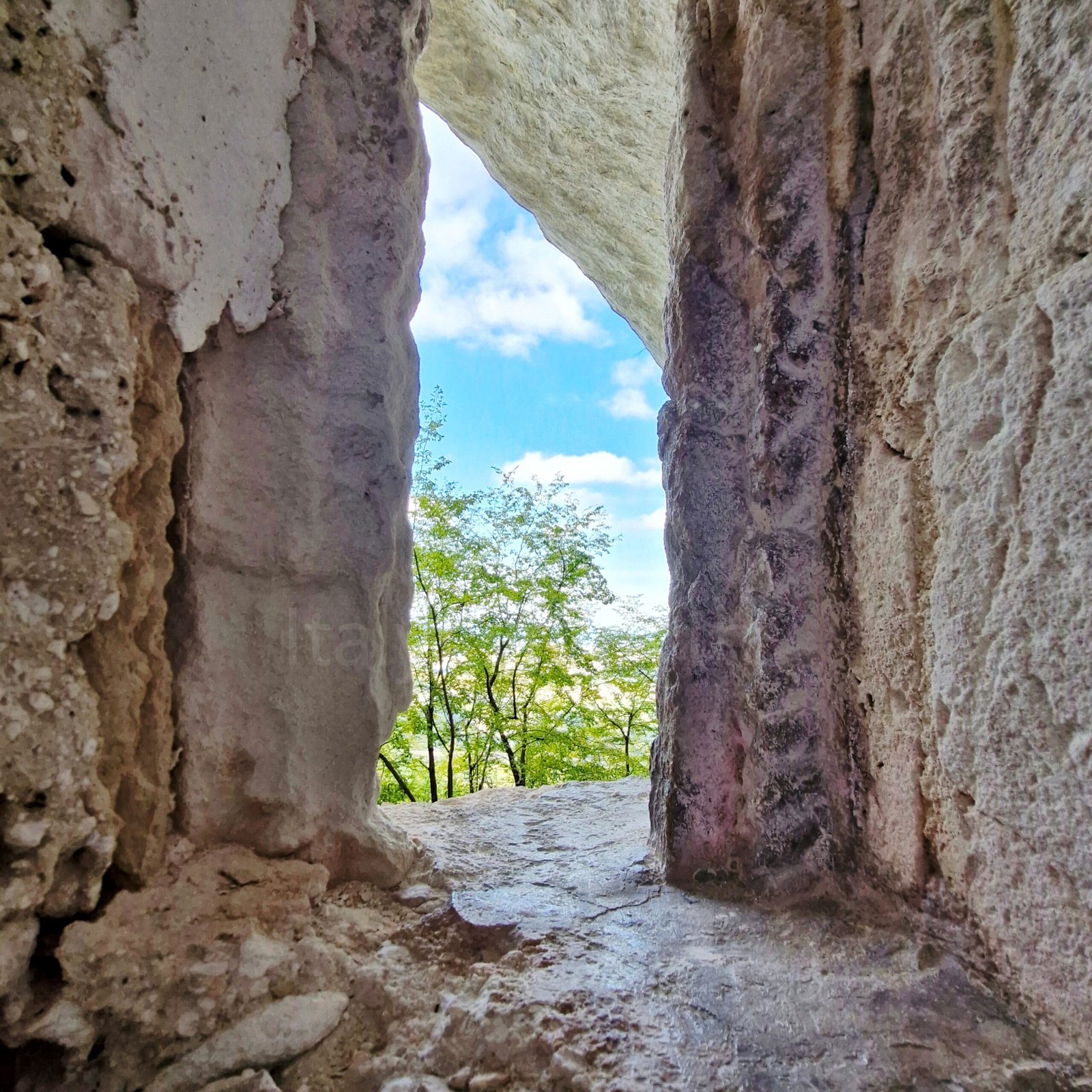
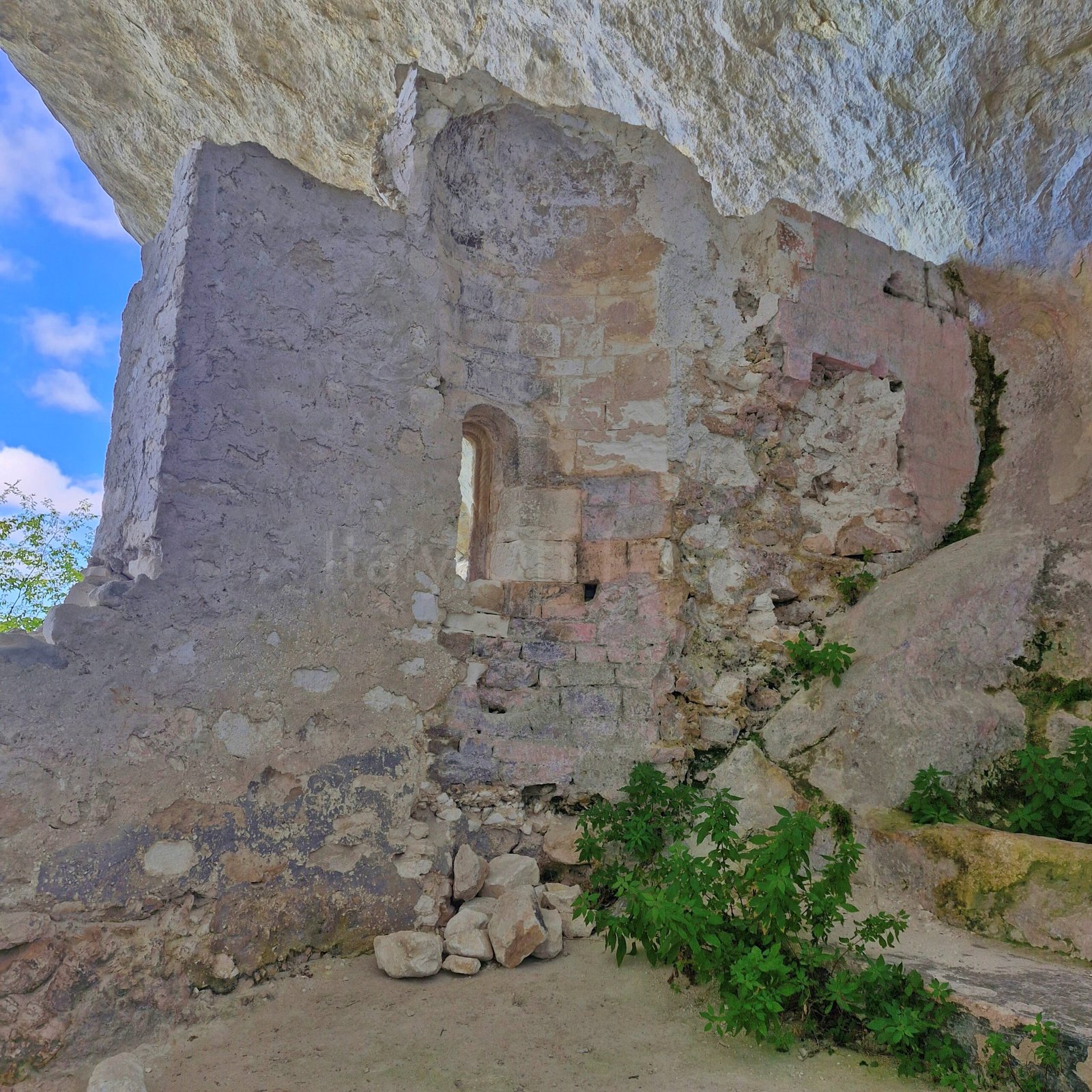
Was it worth climbing to see the church? Well, the walk was short, so I’d say yes – it was OK. It’s always good to burn some calories. But if I had to climb for more than 30 minutes just to see these ruins, I’d have been rather disappointed, to put it mildly.
Looking for the Sorgenti del Fiume Verde (and finding an old pasta workshop)
After this short hiking trail in the Abruzzo mountains, we drove to Sorgenti Il Fiume Verde – the Green River.
I’d been there before, but it was a long time ago; we didn’t remember where exactly it was. Stopping where the river should be, we were shocked by how much it had changed.
There was no river, just dry plants everywhere. Mauro stated that obviously it hadn’t rained for ages, so the river disappeared. Sad. Looking around, we realised that it was another place.
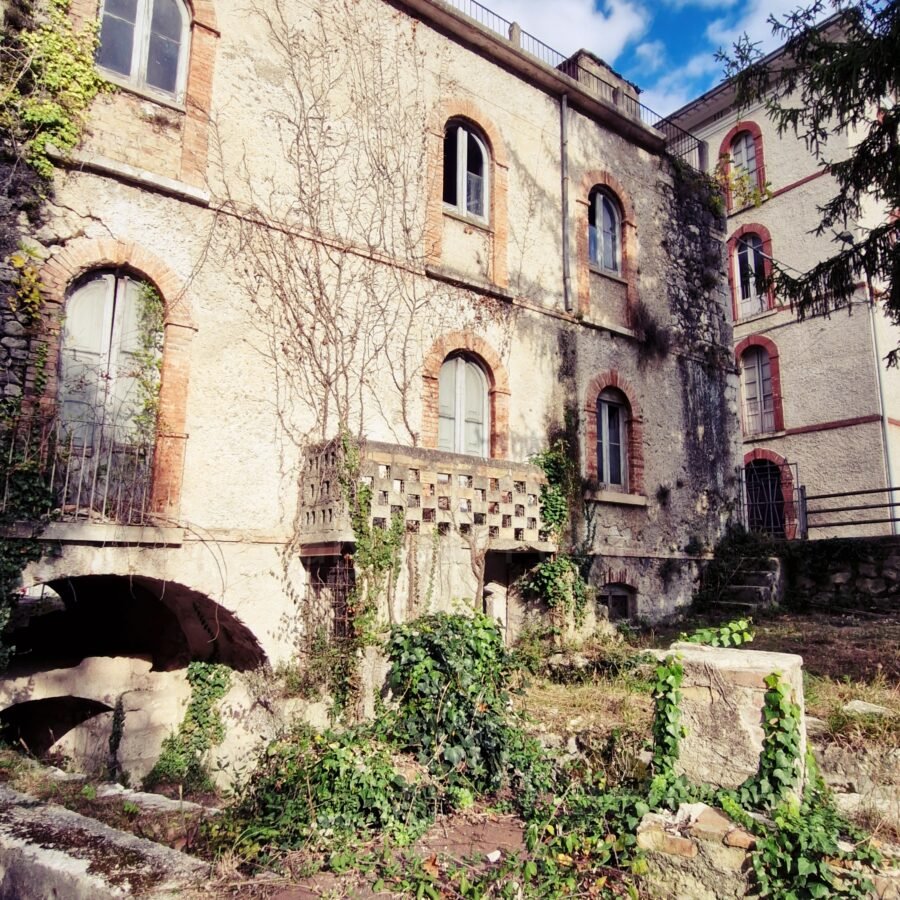
But even so, I found something to for myself – a beautiful, old, abandoned house overgrown with ivy and other plants. It also had a gorgeous courtyard.
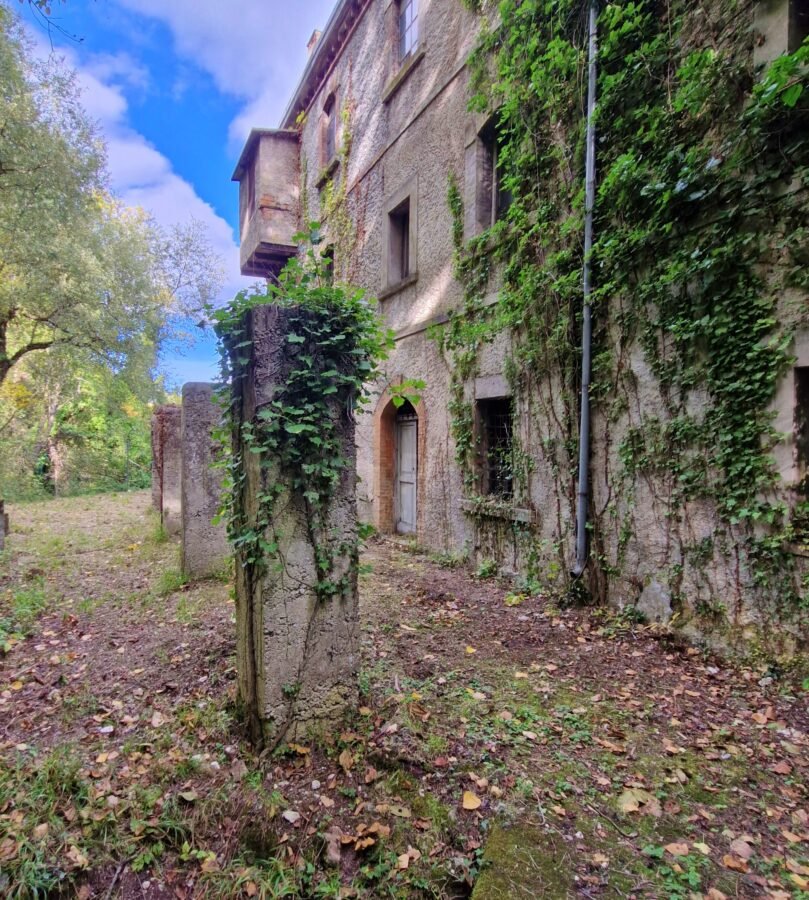
I love such houses. We were in De Ceco factory town, and this building was probably an old pasta workshop. Actually, I preferred these ruins to the previous ones.
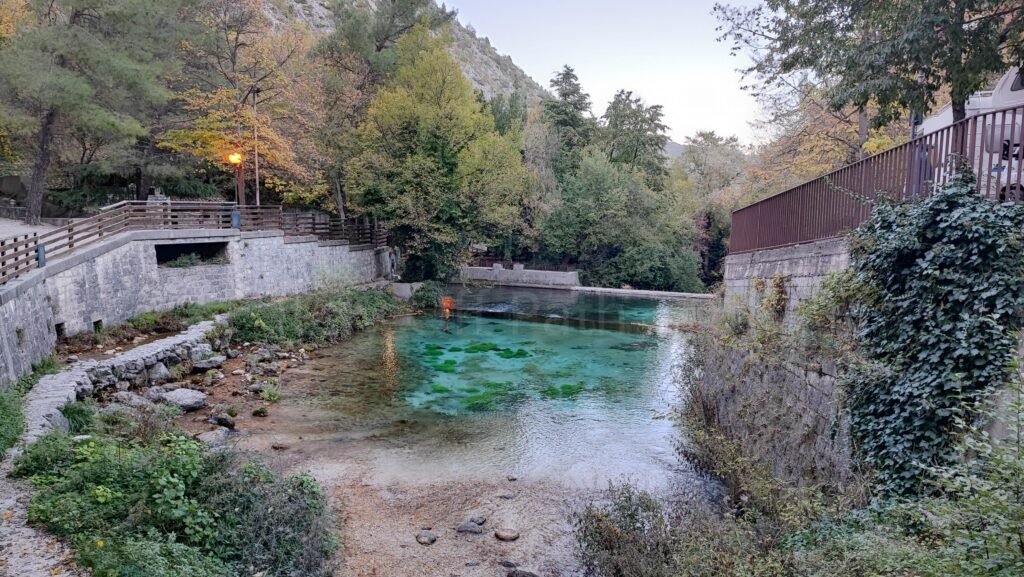
It turned out that Il Fiume Verde was only a few hundred metres away. The green river is truly green, perhaps more turquoise, and in places almost navy blue.
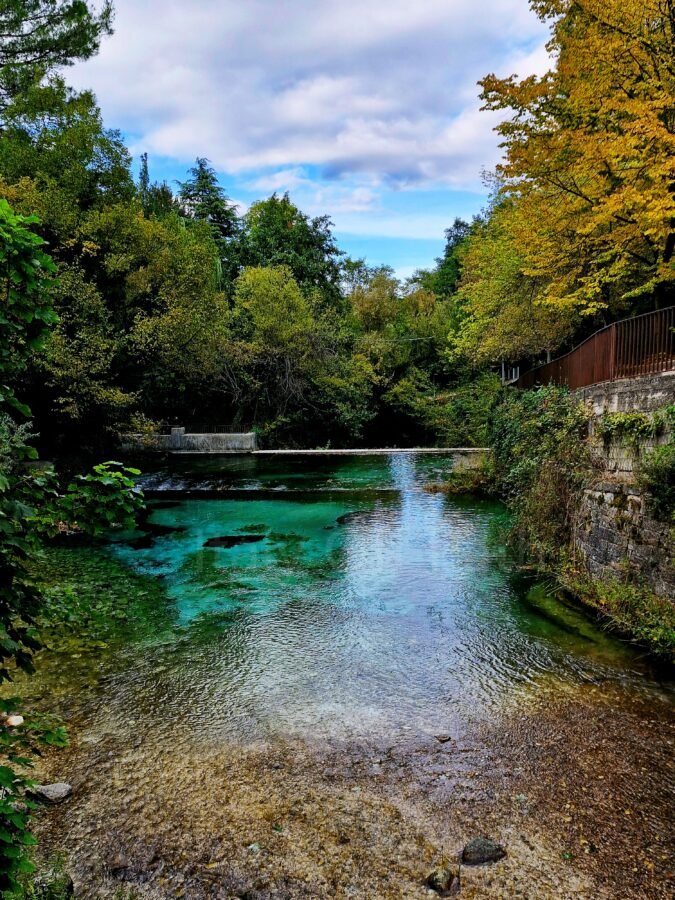
And these unusual features are said to be the reason why the Italian pasta brands De Cecco and Del Verde are made in Fara San Martino. I have no idea what the colour of the river has to do with pasta, but apparently, there is something to it.
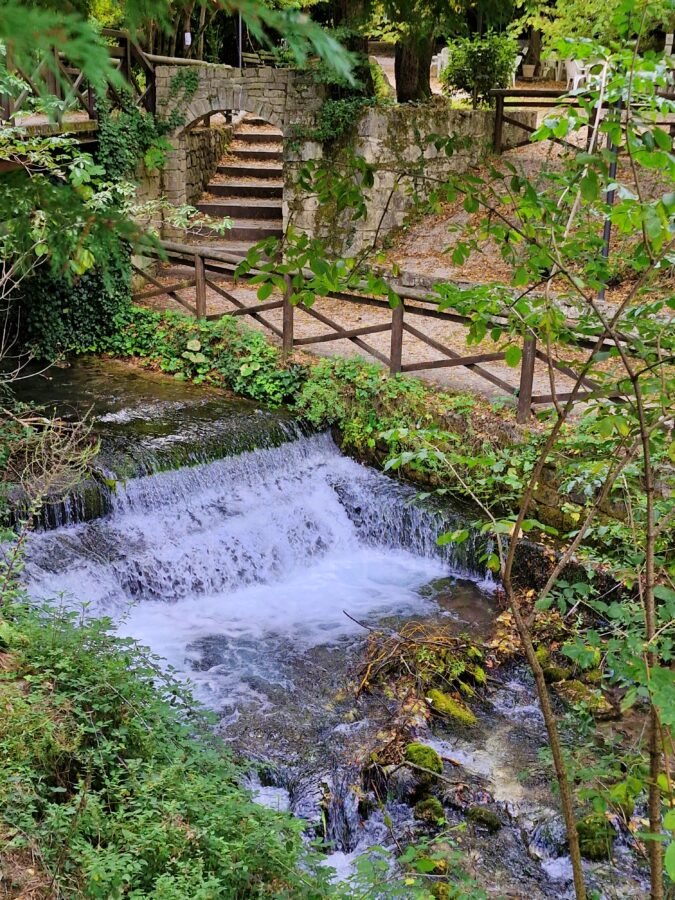
The level of water was rather low, and waterfalls which form at several ledges in the riverbed were really small this time. Still nice enough to enjoy an afternoon walk. Walking up and down, we became hungry.
Mauro found a home restaurant and booked a table. Before dinner, we decided to head to another ruins.
The Benedictine Abbey at Gole di San Martino
If you walk along the river towards the mountains, you’ll get to the Benedictine abbey at Gole di San Martino. Not exactly – but very close to it.
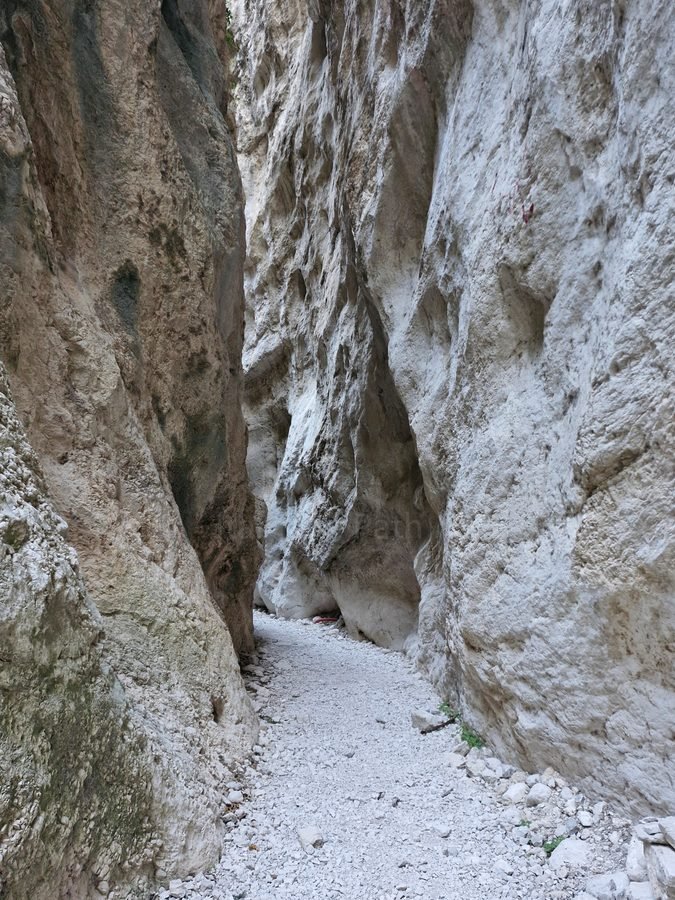
We had also seen it before, but we wanted to refresh our memories. We drove and not walked, there, though.
The abbey was founded in the 9th or 10th century, at least that is what historical records state. According to the local legend, it’s 300 years older.
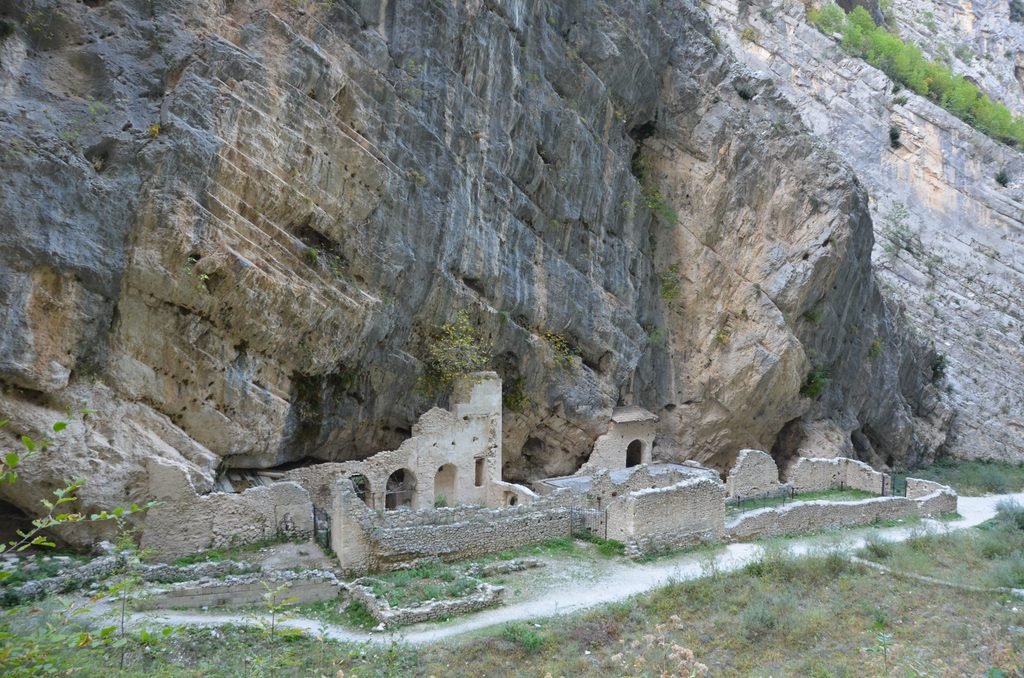
Quite a lot has changed since my first visit to Fara San Martino. Parking used to be free; now you have to pay, although it’s also much bigger.
Years ago, there was a smiling road sign, i.e., a normal sign with eyes and a smile painted on it, standing in front of the entrance to the gorge, welcoming visitors. It has been replaced by a normal sign. Pity, it’s nice when something smiles at you.
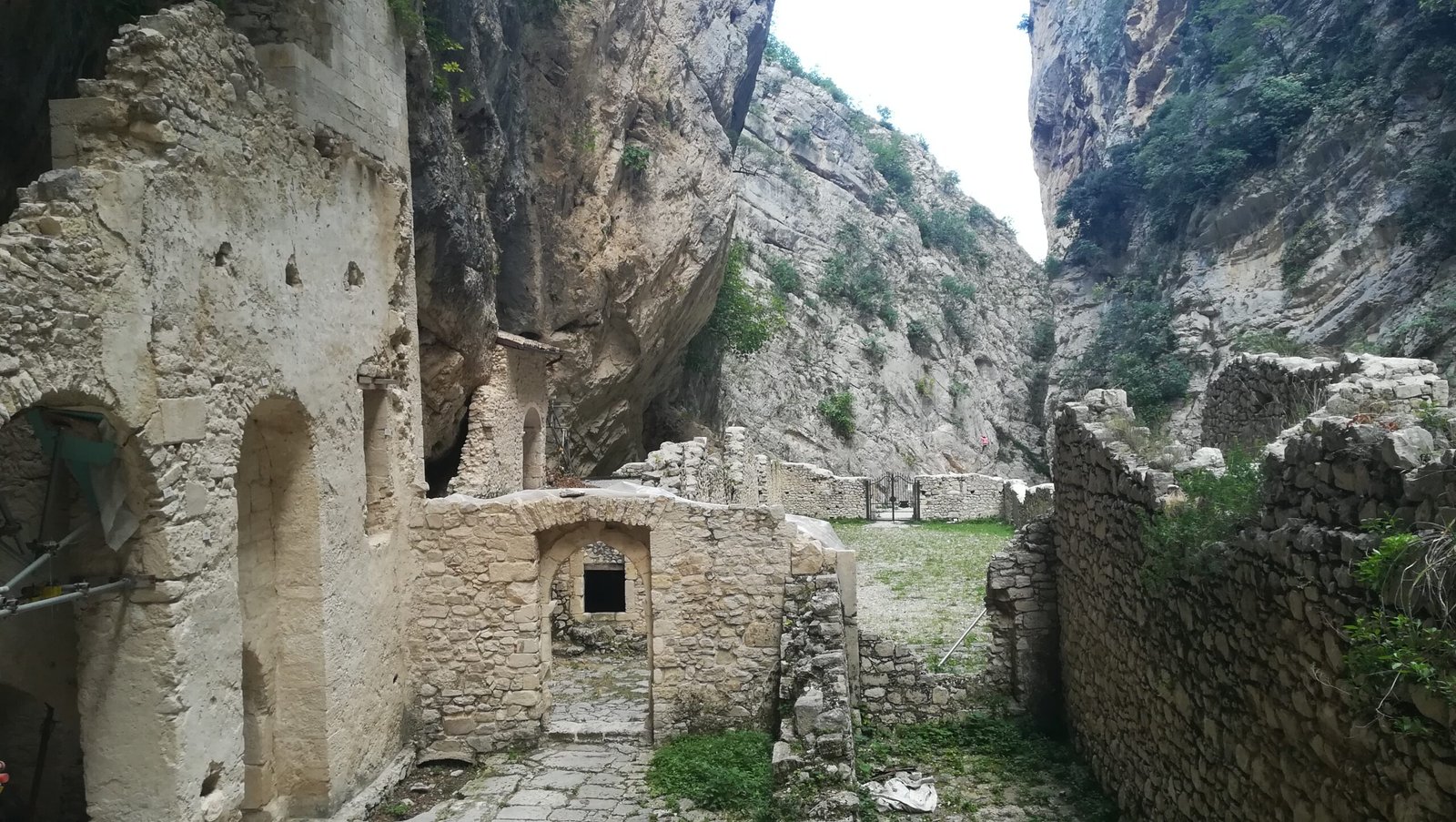
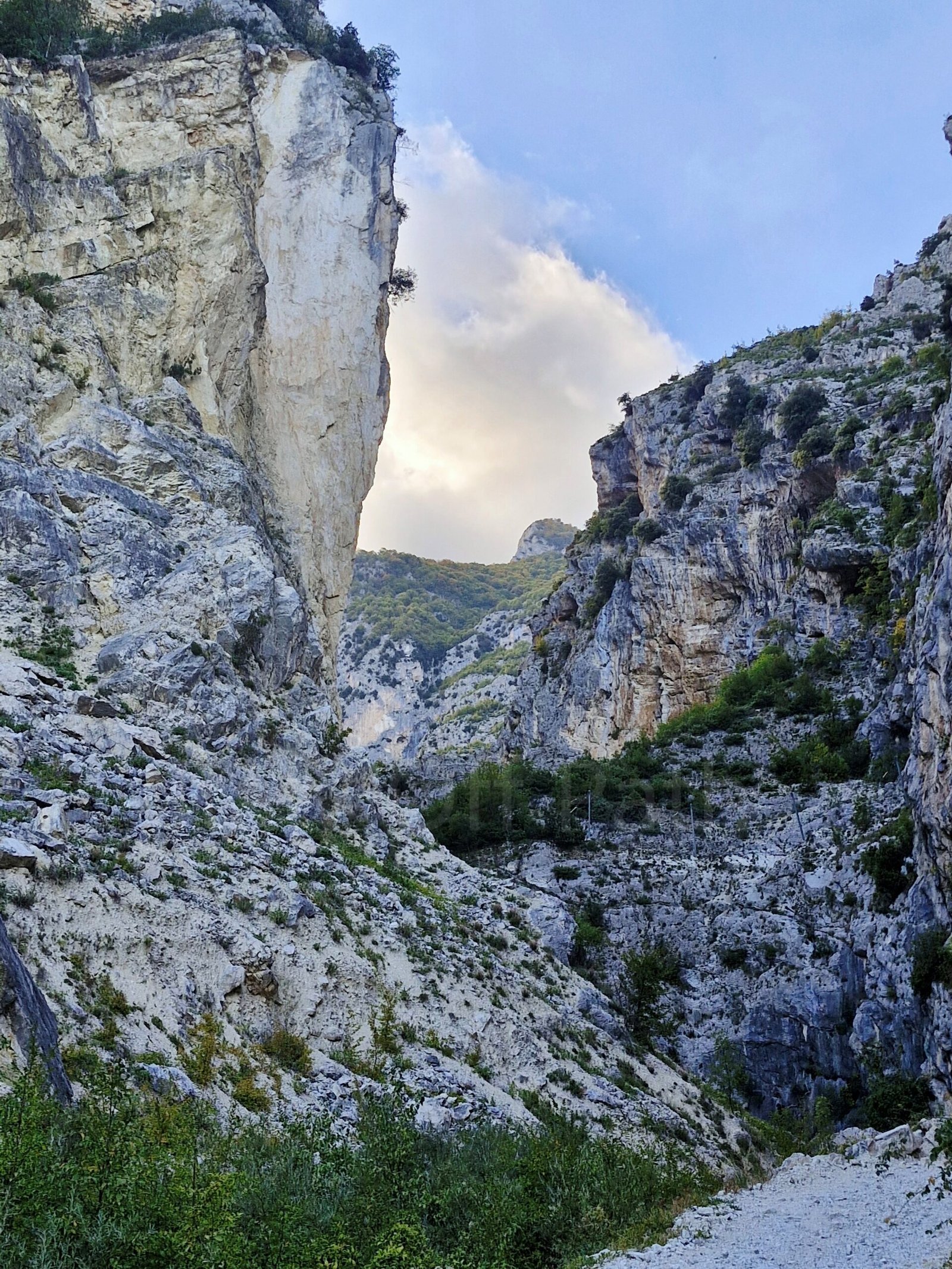
Located in a very picturesque setting, the abbey, or rather its medieval ruins, hasn’t changed at all. The surrounding mountains were also the same.
There are 4 or 5 trails in the Gole di San Martino, and because the view of the abbey is better from the top, it’s worth walking a bit further uphill.
The abbey ended our day of ruins. The next day we had a cave to see.
If this post made you laugh, annoyed you, or just reminded you of your own trip, tell me in the comments or drop me an email. I actually want to hear about your experiences—the good and the frustrating.
Sign up for the newsletter for one post a week (usually Wednesdays at 6:00 PM). No spam, no “magical Italy” fluff. Just honest stories and places off the beaten track. I’ll see you there!